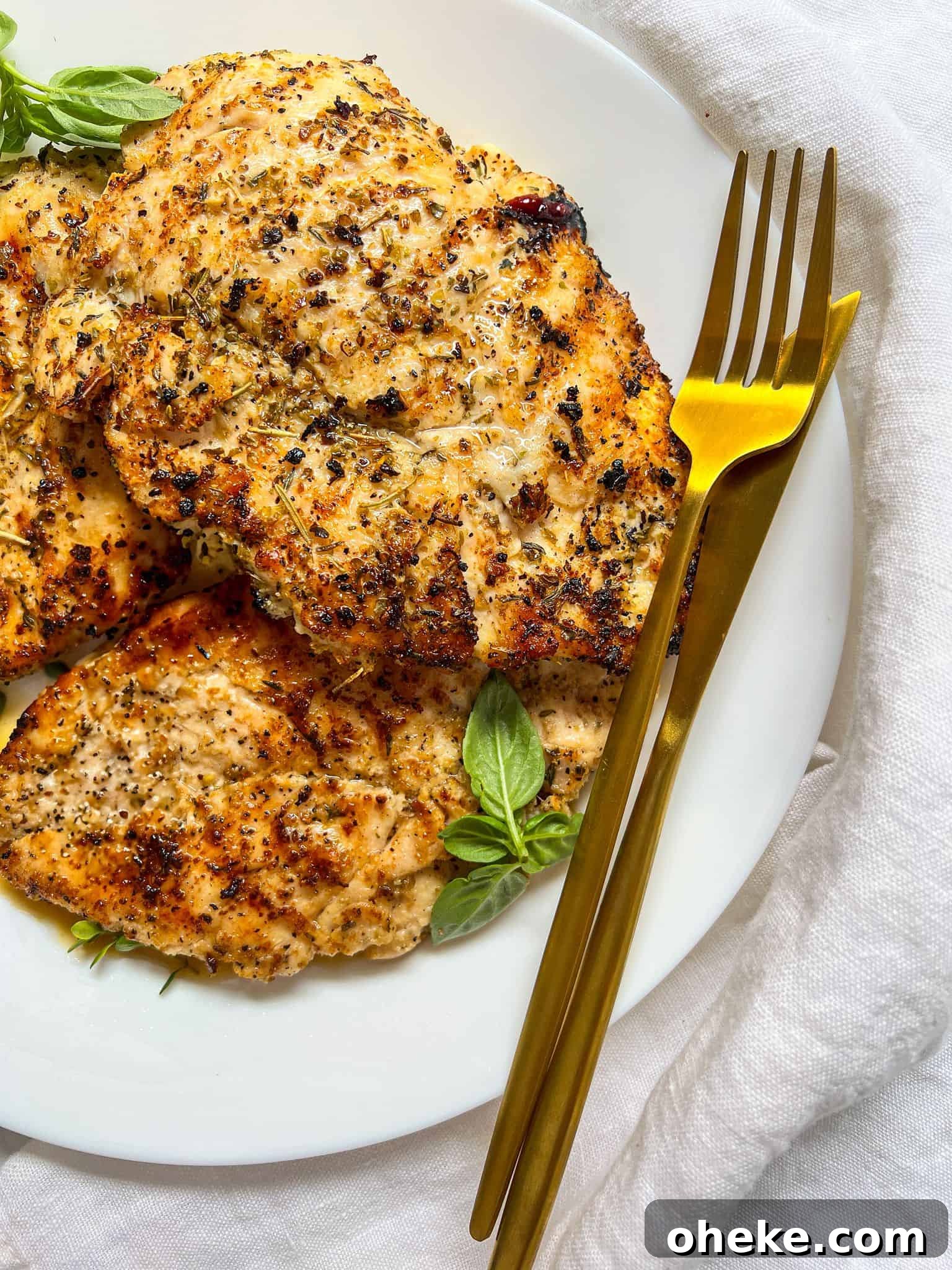
Say goodbye to dry chicken. Today could be the last time you eat a chicken breast that tastes like the bottom of your shoe. This is my reliable technique for making juicy, flavorful chicken breast every time.
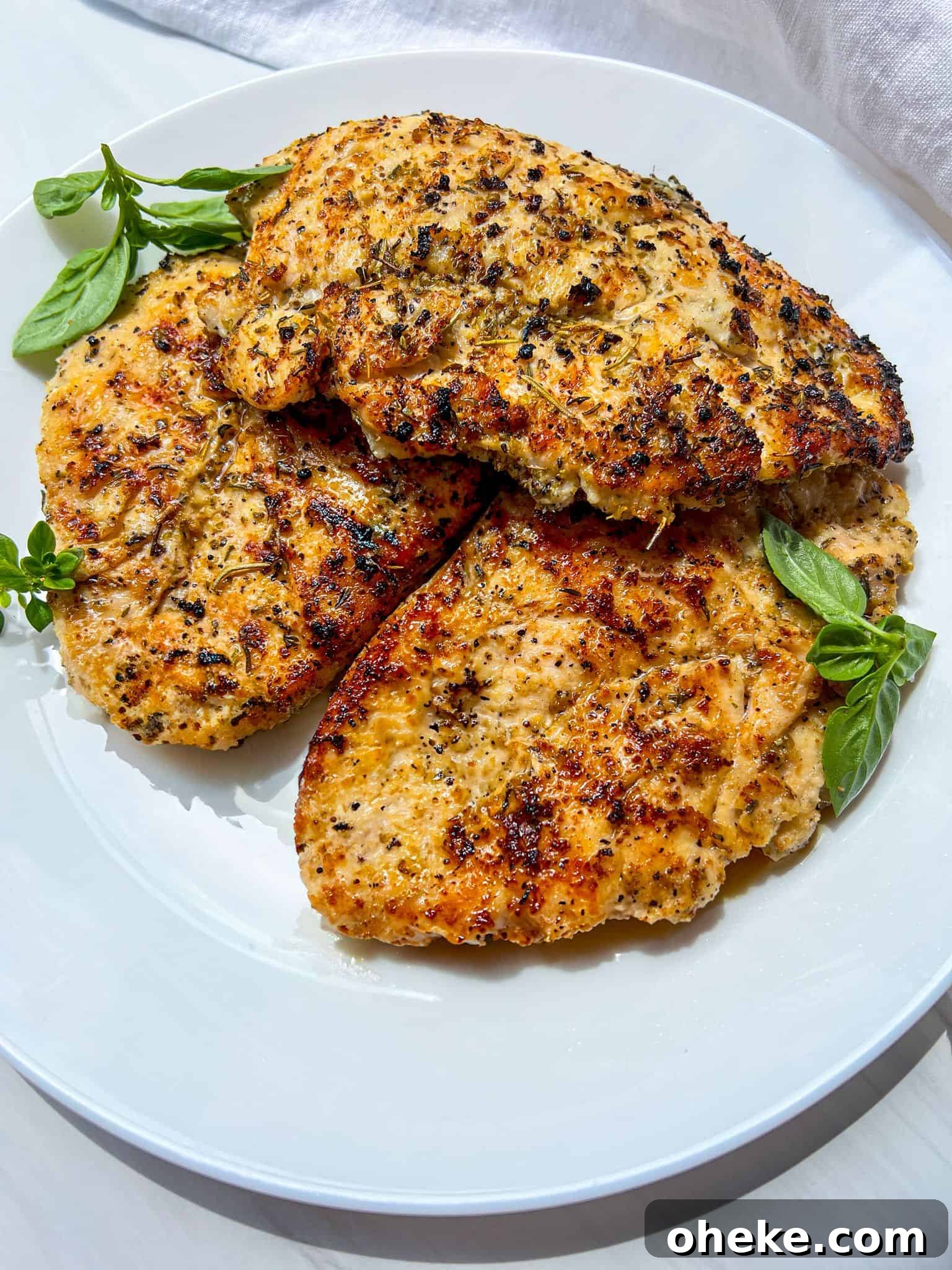
Why You’ll Love My Juicy Chicken Breast
The marinade I use is uncomplicated—oil, salt, and your favorite spices—yet it delivers big flavor. The technique is simple and adaptable to pork, veal, or steak, too. Follow this method and your protein will come out moist, tender, and never overcooked.
Tips for Juicy Chicken Breast
Three key steps ensure succulent chicken every time: tenderize to an even thickness, marinate to add flavor and help tenderize, and watch the cooking time closely so you don’t overcook.
- Chicken breasts are often thicker on one side. Tenderizing with a mallet to even thickness is essential so the meat cooks evenly. Thinner breasts cook faster and more consistently.
- Marinating infuses flavor and helps break down proteins. Overnight in the fridge gives the best results, but even an hour will improve tenderness and taste.
- Don’t overcook. Keep an eye on the pan, set a timer, and use an instant-read thermometer to check for an internal temperature of 165°F (74°C) for fully cooked, safe chicken.
How to Prepare
Remove the chicken from the refrigerator and let it sit at room temperature for about 30 minutes. This avoids uneven cooking.
Place each chicken breast between two pieces of plastic wrap or parchment paper and gently pound with a meat mallet until the thickness is even across the breast.
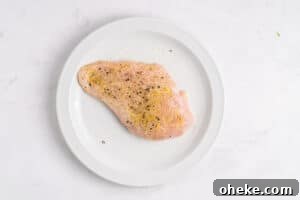
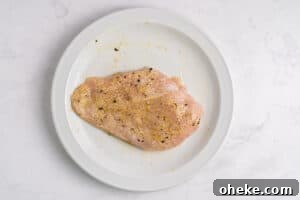
Season both sides with salt and your seasoning of choice. Add a little oil and rub it into the meat so the spices stick and the surface stays moist while cooking.
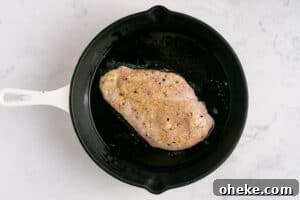
Heat a skillet or grill pan over medium-high heat and add a small amount of oil. When the pan is hot and the oil is shimmering, add the chicken and make sure it sizzles on contact. Then reduce the heat to medium.
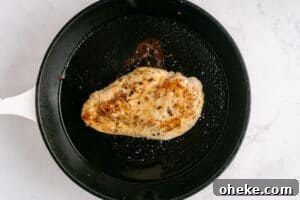
Cook the chicken 3 to 4 minutes per side, depending on thickness, until an instant-read thermometer inserted into the thickest part reads 165°F (74°C).
Remove the chicken from the pan and let it rest loosely tented with foil for at least 5 minutes. Resting lets the juices redistribute and keeps the meat moist.
Nonna’s Tip
Do not place cold chicken straight from the packaging into a hot pan. Letting the chicken come to room temperature prevents the outside from overcooking while the inside remains underdone.
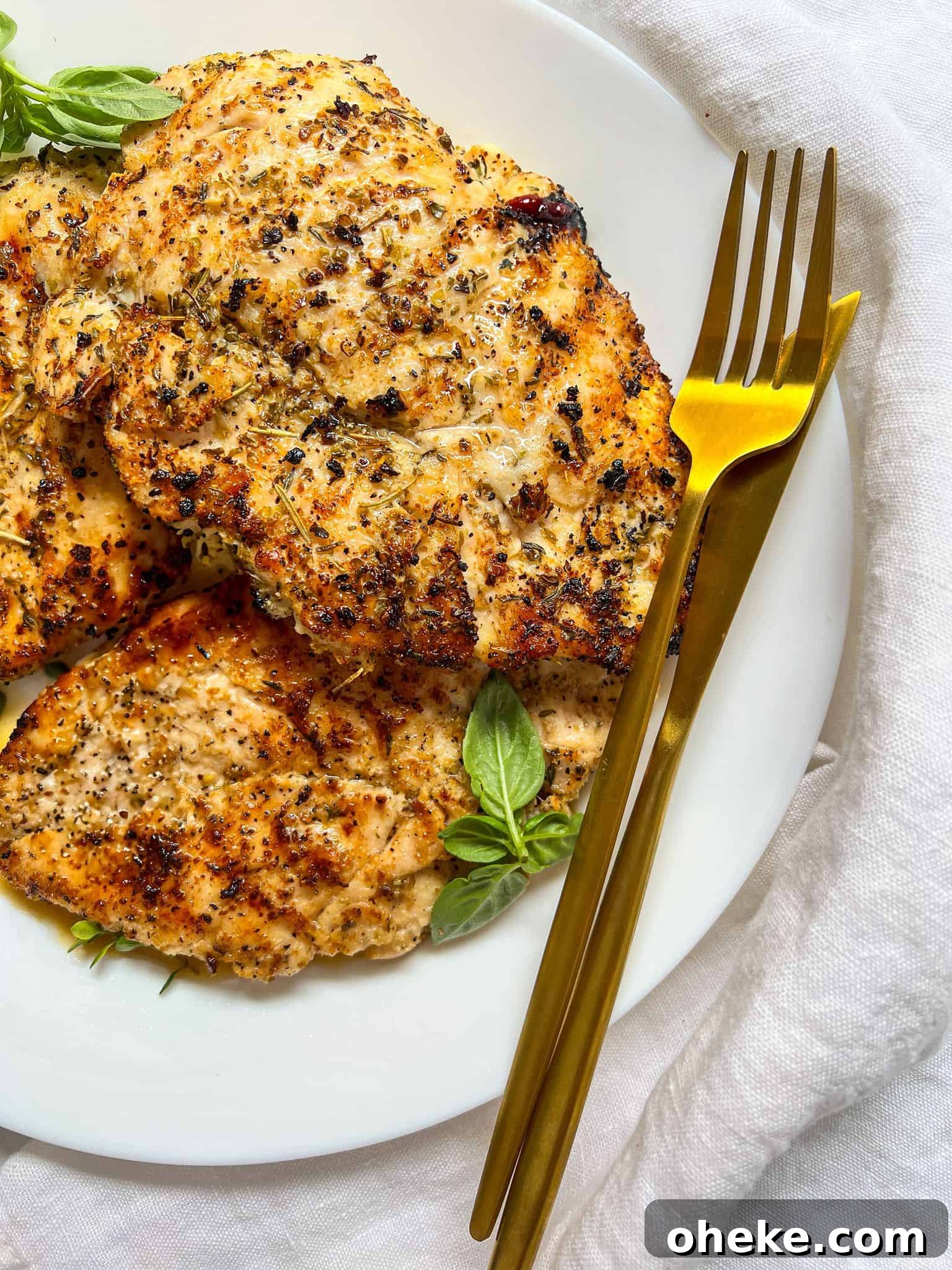
Variations and Substitutions for Juicy Chicken Breast
- Use any seasoning blend you enjoy. Italian seasoning or lemon pepper are great options when you want a familiar flavor profile.
- Add lemon zest for bright, fresh notes—just a little goes a long way.
- The same tenderize-marinate-cook method works well for veal, pork, or steak—adjust cooking times accordingly for different proteins.
Similar Recipes
Greek Lemon Chicken
1 hr 35 mins
Garlic Lemon Chicken Thighs
52 mins
Lemon Pepper Chicken
25 mins
Easy Baked Chicken
55 mins
Crispy Chicken Fingers
25 mins
Baked Parmesan Chicken
1 hr 25 mins
Best Served With
- I like slicing the juicy chicken and adding it to a large salad for lunch or dinner, such as a simple green salad, lemon parmesan salad, or Caesar salad.
- Serve with vegetables like grilled zucchini, Asian-style green beans, or creamy baked broccoli.
- Pair with steamed rice or couscous for a complete meal.
- Leftover chicken is great cubed on pizza, in a wrap, or atop pasta.
Juicy Chicken Breast
Video
Equipment
-
Parchment Paper
-
Meat Mallet or Rolling Pin
-
Skillet or Grill Pan
-
Instant-Read Thermometer
Ingredients
- 3 chicken breasts, boneless and skinless
- 1 teaspoon salt, to taste
- lemon pepper seasoning, to taste
- 2 tablespoons avocado oil
Instructions
-
If using refrigerated chicken, let it come to room temperature for 30 minutes.

-
Place the chicken between plastic wrap or parchment paper and gently pound with a mallet until the thickness is even.
-
Season both sides with salt and chosen seasoning, add oil, and rub it into the meat.
-
Heat a skillet or grill pan over medium-high, add oil, and sear the chicken until it sizzles. Reduce heat to medium and cook 3–4 minutes per side, until an instant-read thermometer reads 165°F (74°C).
-
Remove from the pan and rest, loosely covered with foil, for at least 5 minutes before serving.

Nonna’s Notes
- Seasonings: Use any spices you like—Italian seasoning, lemon pepper, garlic powder, paprika, cumin, or onion powder all work well. Lemon zest brightens the dish.
- Cooking tip: Don’t cook chicken straight from the packaging in a hot pan. Let it warm slightly to avoid uneven cooking.
Nutrition
Nutrition information is automatically calculated and should be used as an approximation.
Common Questions
Use anything heavy, such as a rolling pin or the bottom of a cast-iron skillet, to gently flatten the meat.
Use an instant-read thermometer and remove the chicken once it reaches 165°F (74°C). This is the most reliable way to avoid overcooking.
Wrap the chicken in parchment paper or plastic wrap to contain juices, then lightly pound outward from the center until the thickness is consistent.
Garlic powder, paprika, cumin, and onion powder are all great additions to the marinade.