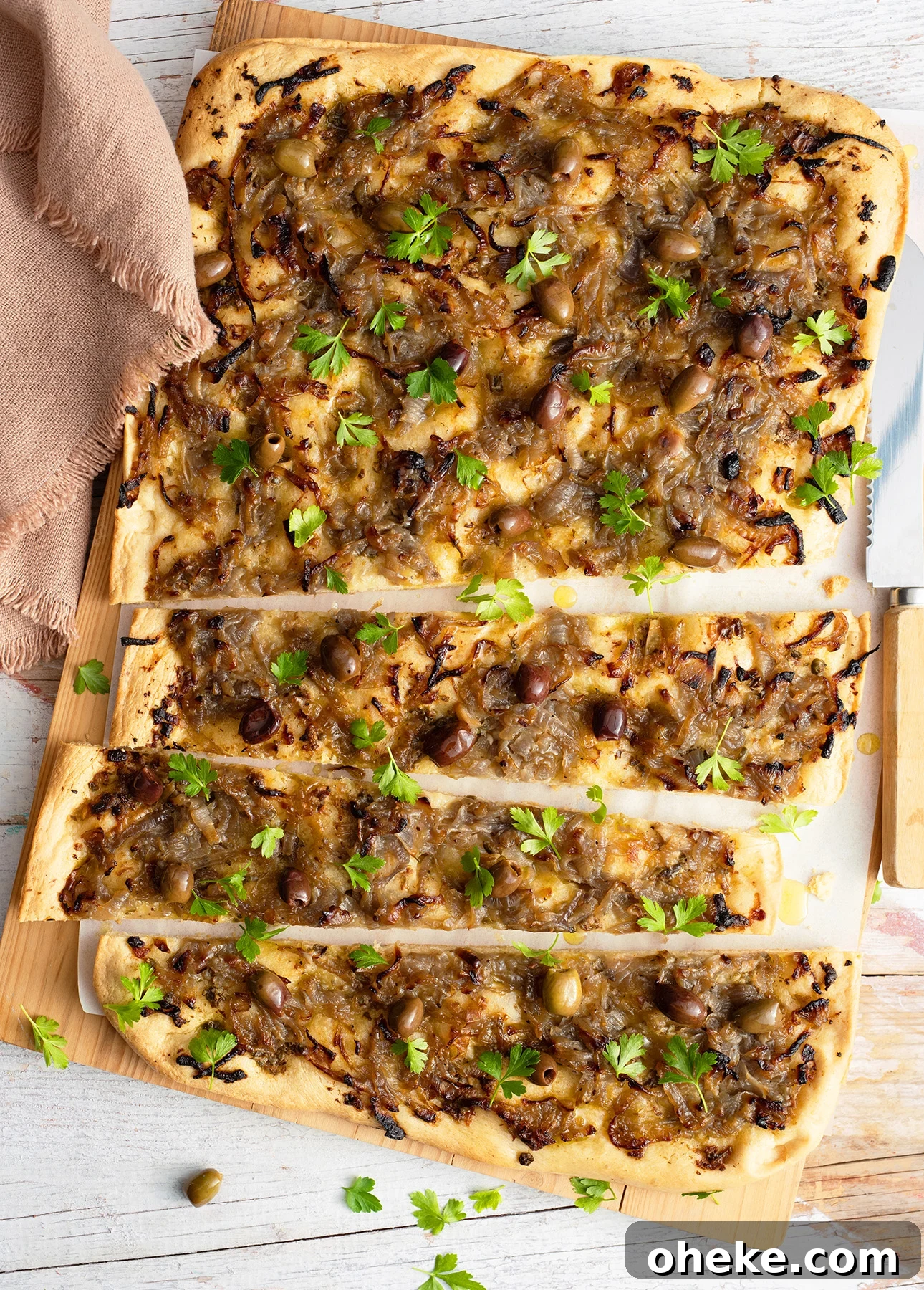
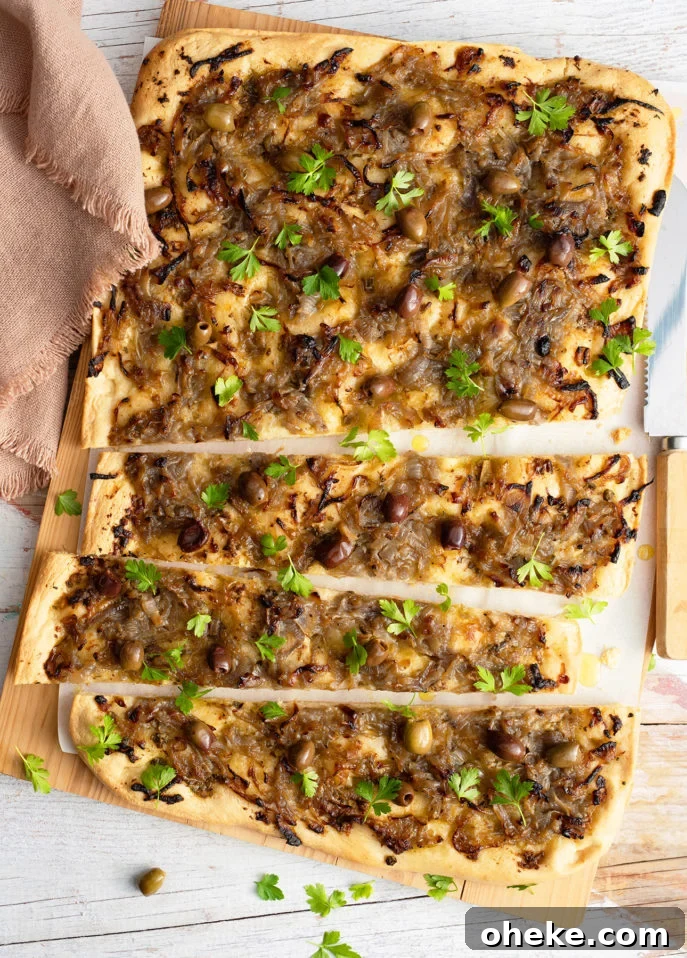
This pissaladière layers melting caramelized onions, a punchy anchoïade, Niçoise olives, and fresh herbs over a golden homemade dough. Serve it warm or at room temperature for l’apéro, lunch, or a picnic.
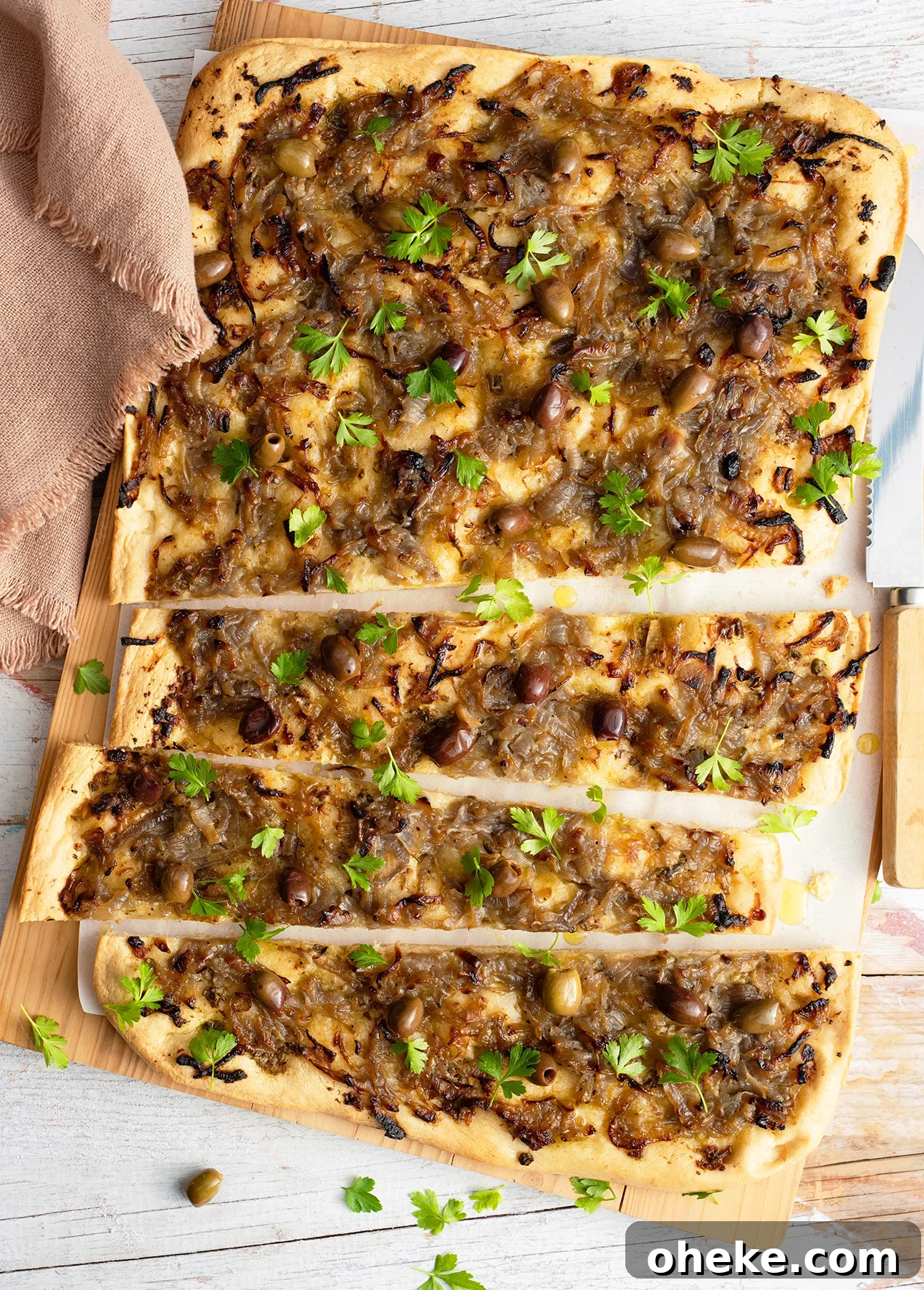
This pissaladière recipe is one of my favorite ways to turn l’apéro into dinner. Pissaladière is a Provençal onion flatbread topped with slow-cooked caramelized onions, a bold anchovy-and-caper anchoïade, black Niçoise olives, and fresh herbs. Each slice tastes like the South of France: salty, sweet, and golden at the edges.
“L’apéro” is short for l’apéritif, the early-evening drink that opens the meal. In France it’s commonly enjoyed in bars and restaurants with small salty snacks, but it’s also a cherished at-home ritual. At my house, l’apéro often grows into a full spread of appetizers that can easily stand in for dinner.
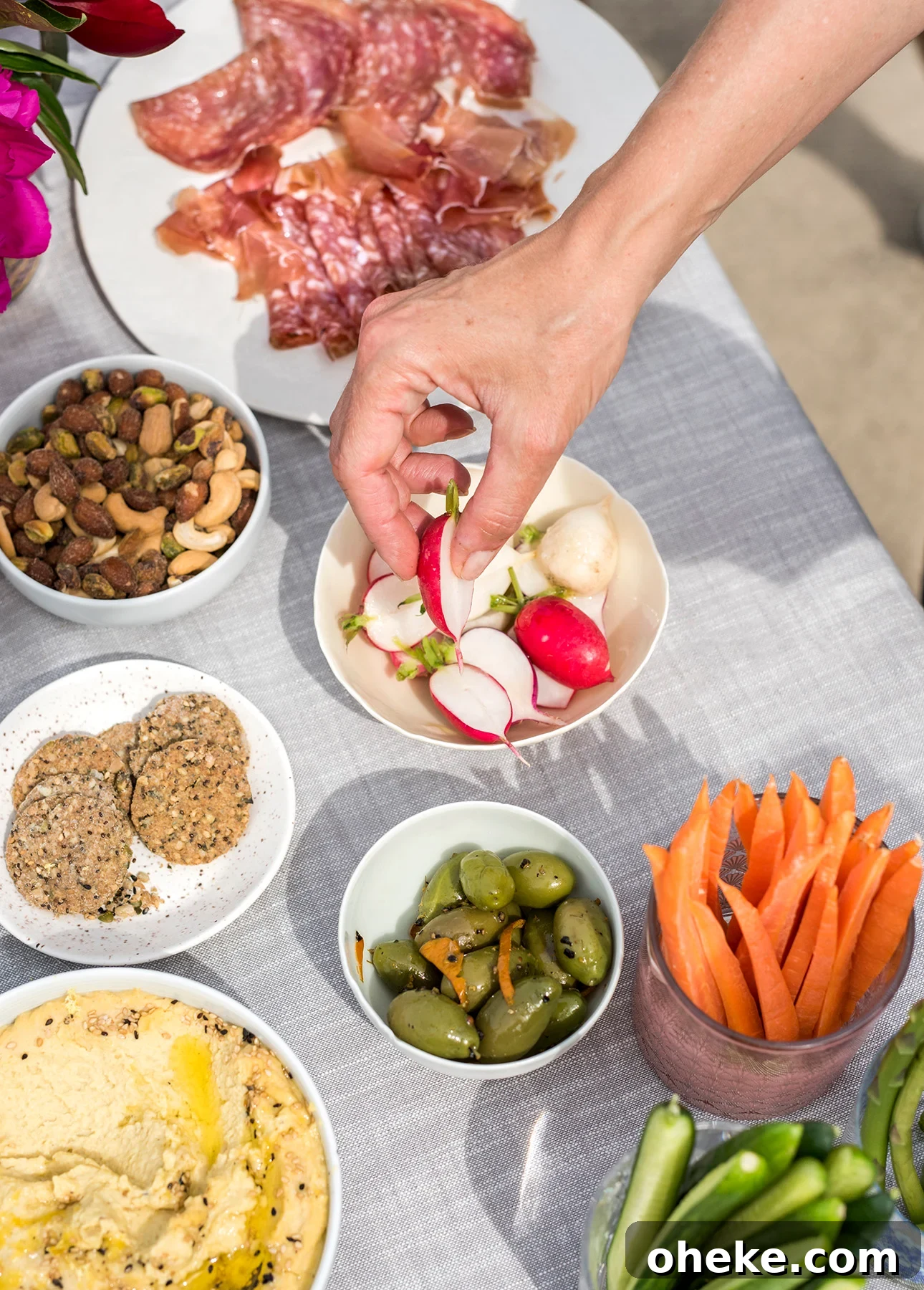
On weeknights l’apéro can be casual—olives, nuts, sliced vegetables, a dip, and chips. On weekends and for celebrations I like to add homemade bites that feel special. Savory madeleines, cheese straws, or a rustic savory cake all elevate the table, and pissaladière is a frequent favorite because it’s both impressive and approachable.
Pissaladière is crowd-pleasing: a crisp-edged flatbread topped with silky onions, anchovy flavor, and briny olives. It does require some time to make the dough and slow-cook the onions, but those elements can be prepared ahead. When guests arrive you assemble, bake, slice, and serve—ideally with a glass of rosé.
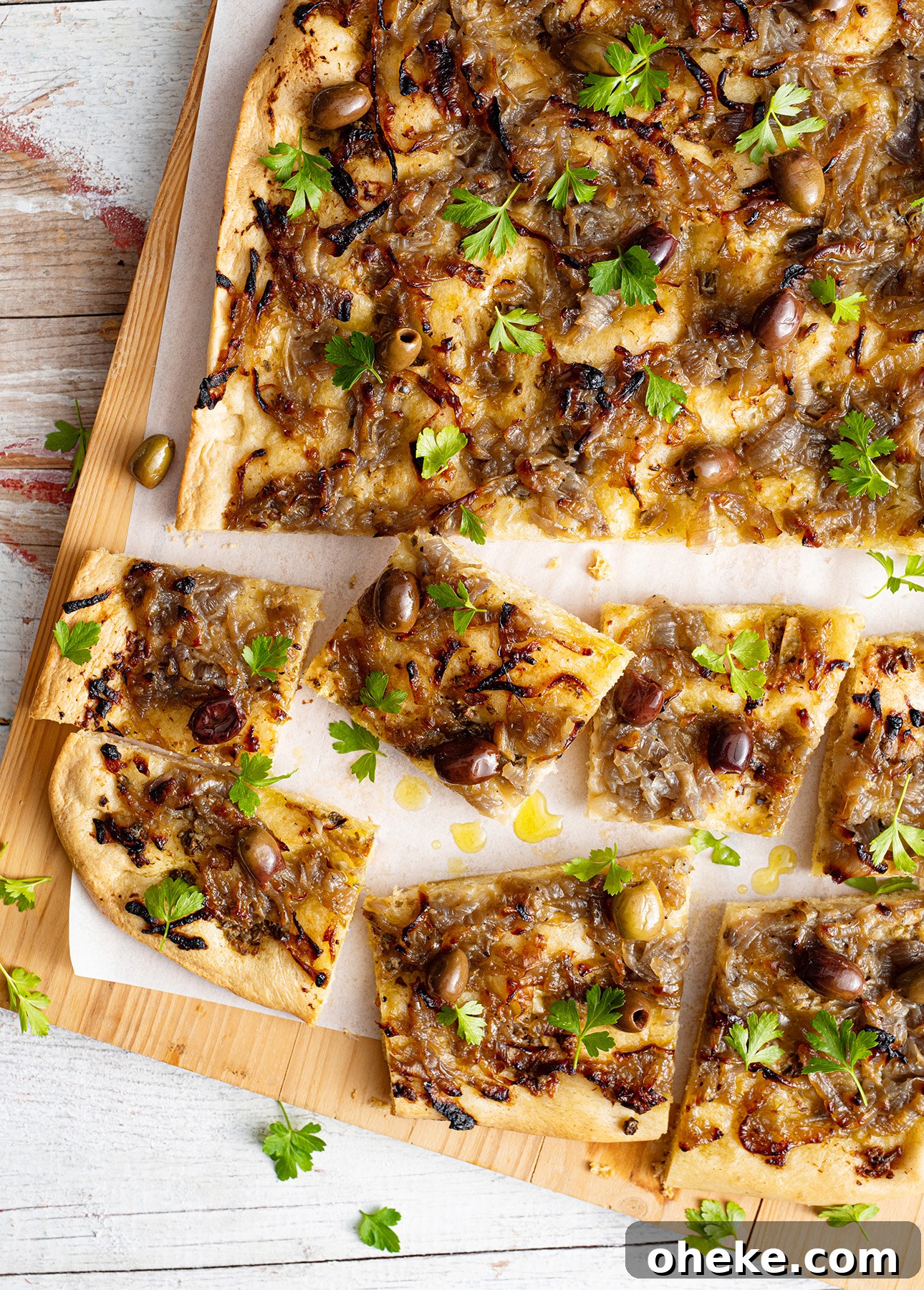
How to Make Pissaladière: RECIPE VIDEO
What is Pissaladière?
Pissaladière is a Provençal onion flatbread from Nice. It’s made from a bread-like dough topped with a generous layer of caramelized onions, anchovies, and small black Niçoise olives. Think of it as a French onion tart with a pizza-like soul—traditionally without tomato sauce or cheese.
The dish has ties to nearby Liguria in Italy, where a similar preparation called pissalandrea spread with onions, anchovies, and olive oil. The name pissaladière comes from pissalat, a salty anchovy-based condiment once used on the dough. In this recipe I revive that spirit by using anchoïade, a garlicky anchovy spread that distributes flavor evenly through every bite.
How Do You Pronounce Pissaladière?
Pissaladière is pronounced roughly pee-sa-la-dyair, with the final syllable closer to “d-yer” than “dee-air.” Say pi – sa – la – d-YER, keeping the “e” in that final syllable short, similar to the vowel in “bet.”
What’s on a Pissaladière?
Caramelized Onions
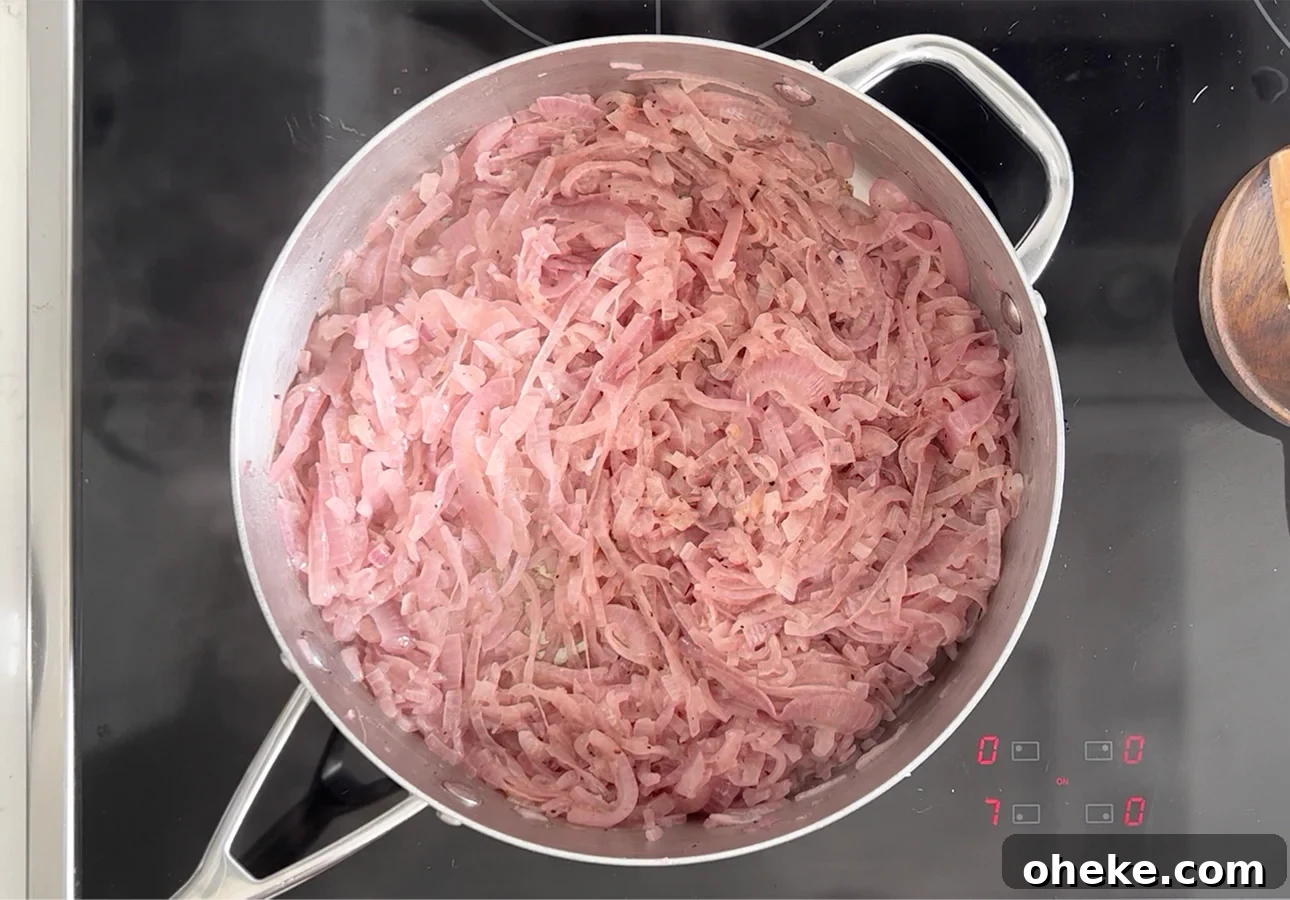
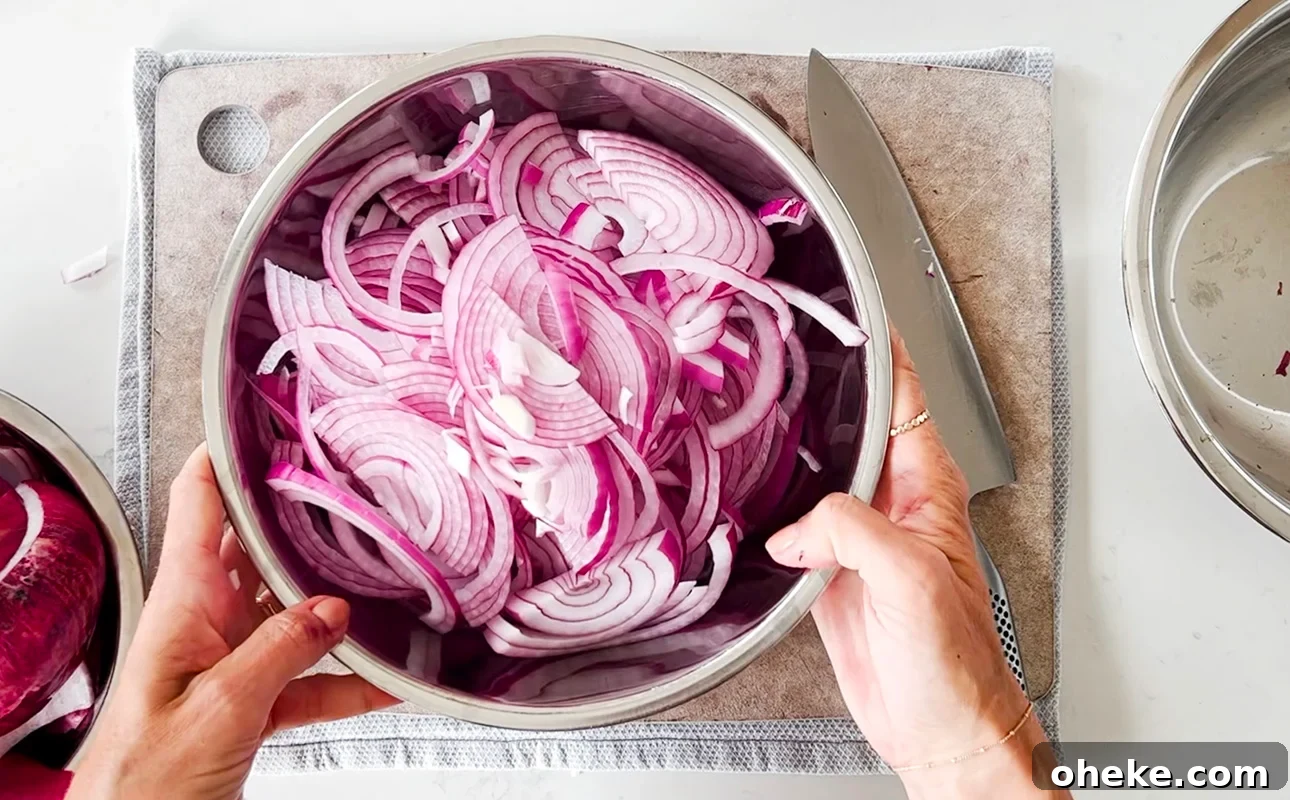
Caramelized onions are the heart of the tart. They should be soft, sweet, and silky rather than deeply browned. Yellow onions are classic and practical; red onions add color but lose much of it when cooked. Use what you have—either works well as long as you cook them low and slow until tender.
Anchoïade Instead of Whole Anchovy Fillets
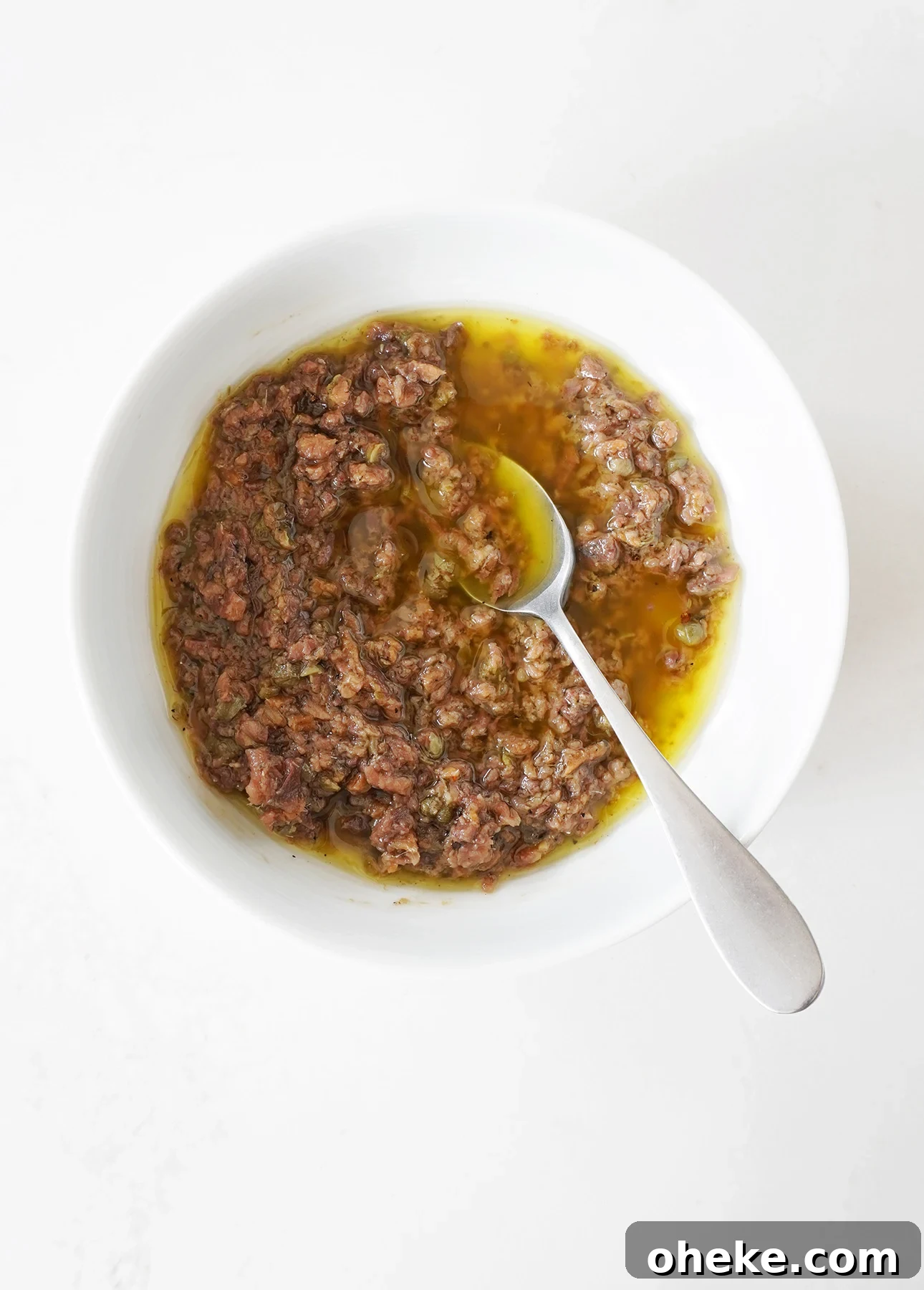
While whole anchovy fillets are traditional, anchoïade spreads the flavor evenly. Anchovy fillets arranged in a pattern over the onions look beautiful but can intimidate guests who think they dislike anchovies. Anchoïade—made with anchovies, olive oil, capers, garlic, and a splash of vinegar—offers the same savory depth in a gentler, more approachable form.
Niçoise Olives and Fresh Herbs
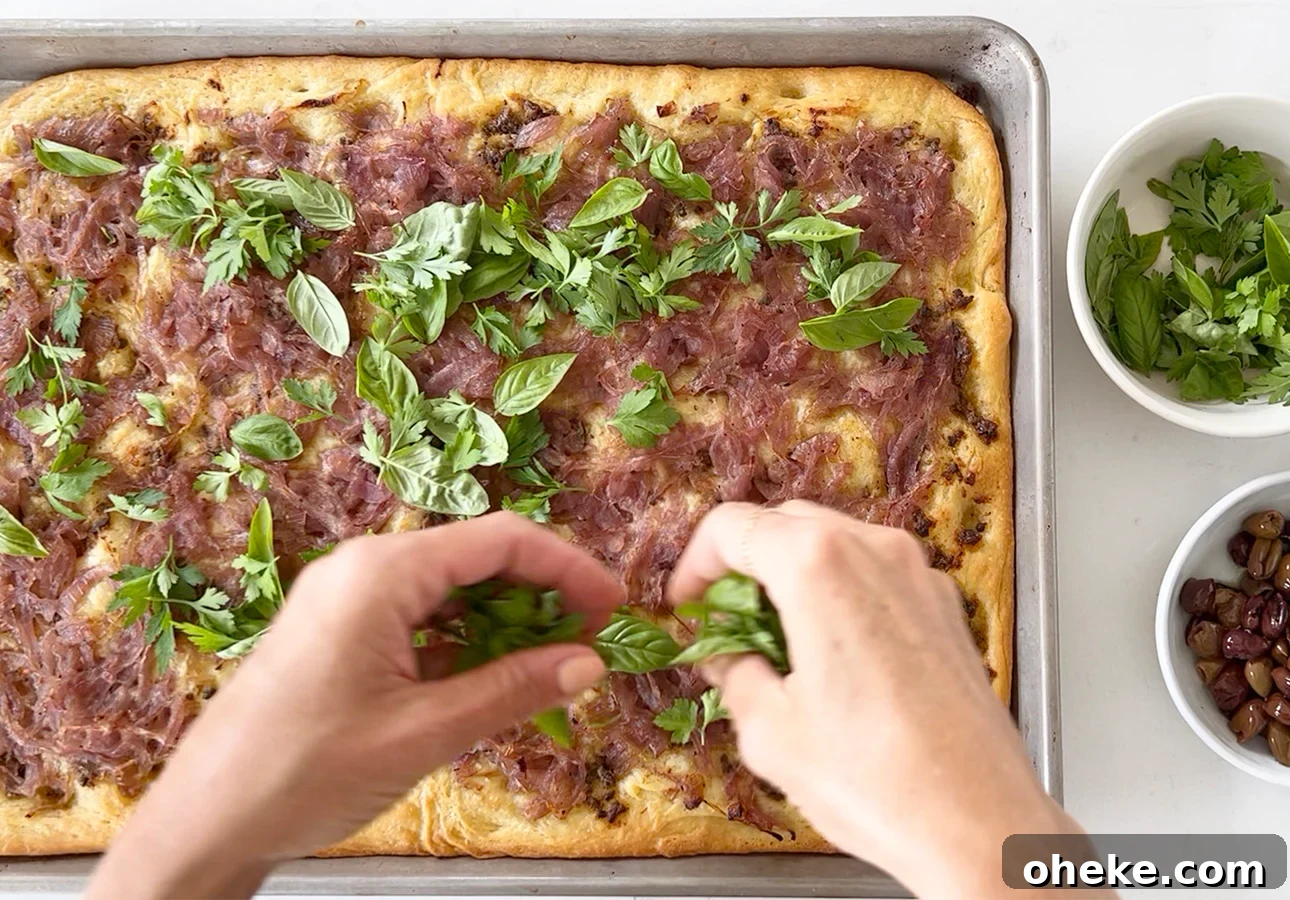
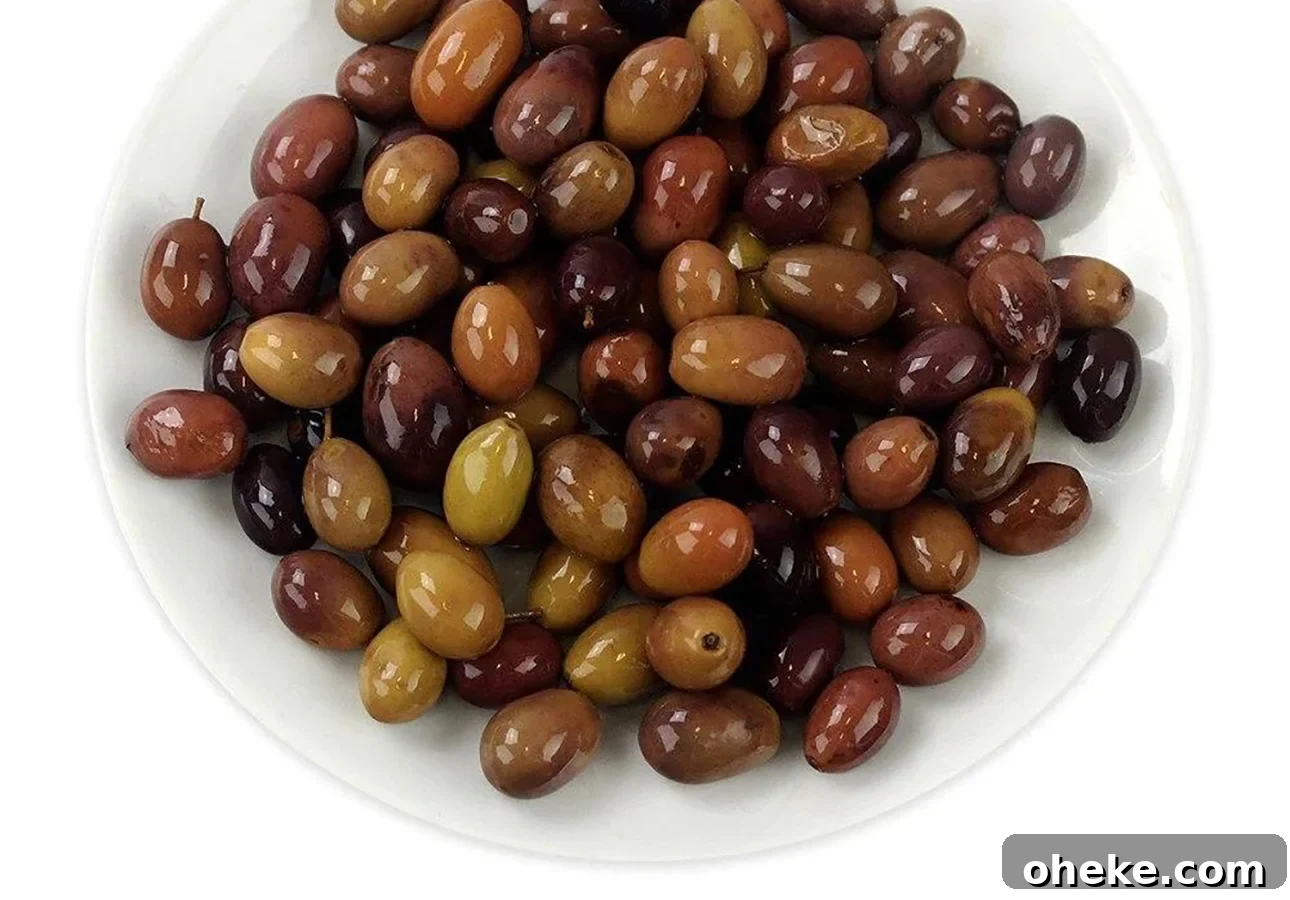
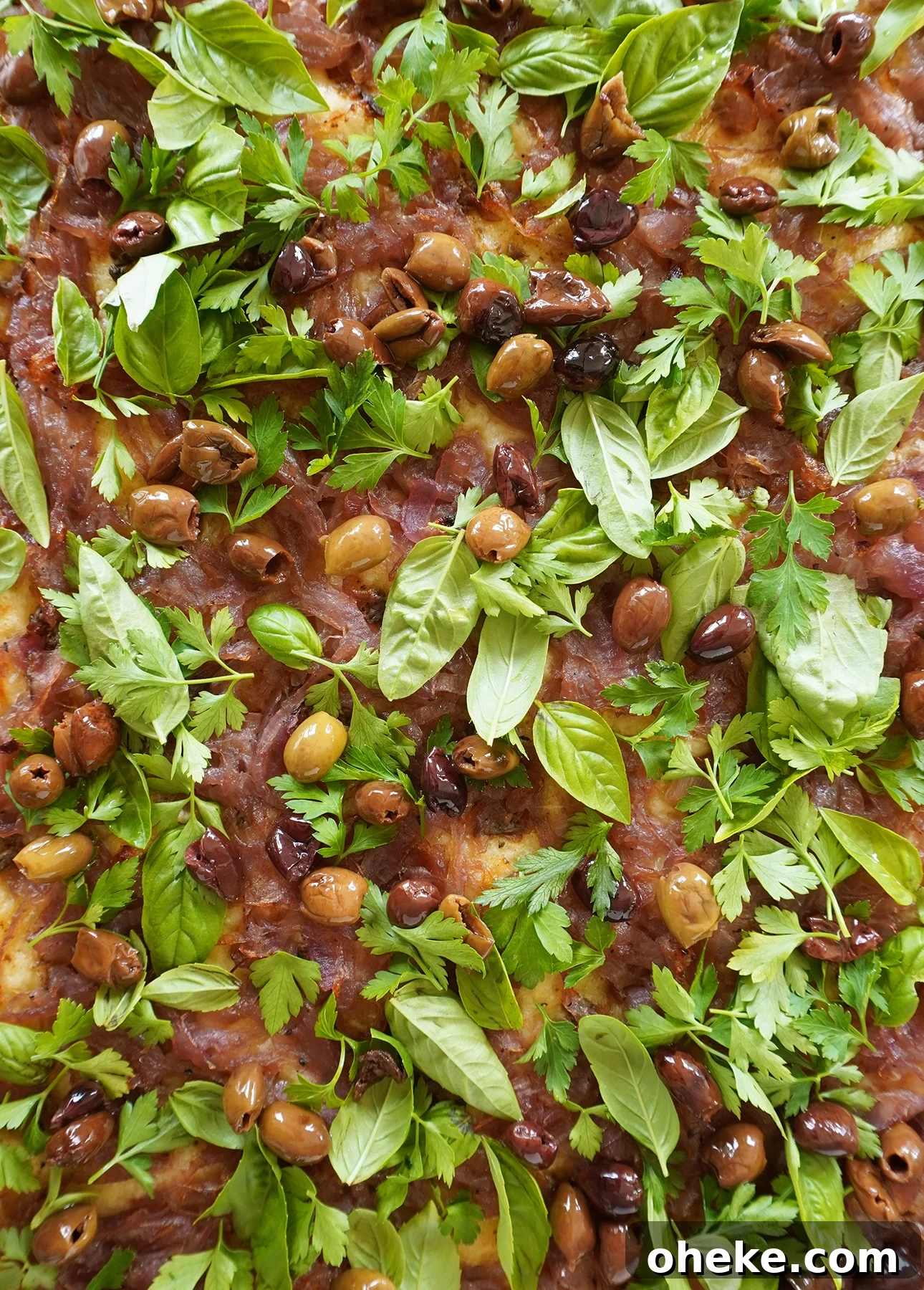
Niçoise olives are the classic choice: small, black, and briny. Pitted olives make the tart easier to eat, so use them when you can. If Niçoise olives aren’t available, Taggiasche are an excellent substitute; Kalamata olives also work, though their flavor differs slightly.
A final handful of fresh herbs—basil, oregano, marjoram, or flat-leaf parsley—adds brightness and aroma to balance the rich toppings.
Helpful Tips for Making Pissaladière
These tips will help you make a balanced, golden pissaladière without turning it into a daylong project.
Plan for three components
Pissaladière is essentially three elements: a soft dough, slow-cooked onions, and anchovy-and-caper anchoïade. The dough needs rising time and the onions need gentle cooking, but none of the steps are difficult. Make them ahead to simplify assembly on the day you serve it.
Choose the right onions
Yellow or red onions both work. Red onions offer attractive color raw, though they fade with cooking. The flavor outcome is similar, so pick what’s available.
Don’t rush the onions
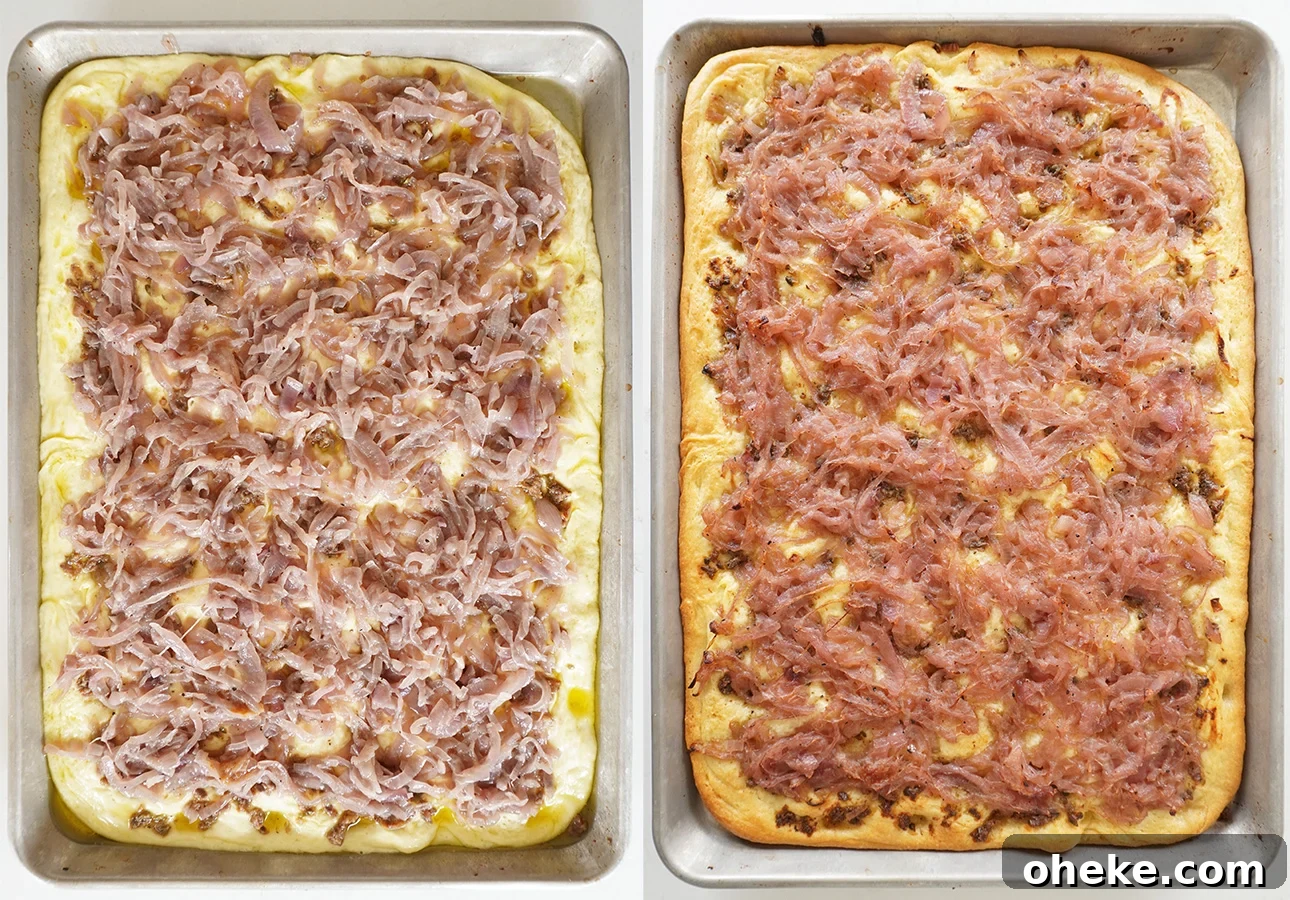
Cook onions low and slow until completely soft and lightly caramelized. If they retain any liquid, uncover and cook a little longer so they won’t make the dough soggy.
Use good oil-packed anchovies
Anchovies packed in oil give the best flavor and texture. Store them in a jar in the refrigerator for easy use, or transfer opened tinned anchovies and their oil to a sealed container.
Pick the best olives you can
Niçoise olives packed in oil are ideal because they’re less salty than brine-packed ones. If possible, use pitted olives for easier eating; otherwise pit them yourself.
Balance the salt
Anchovies, capers, and olives add salt, so taste before adding more. The onions and dough need seasoning, but the final tart can become very salty if you add extra without checking.
Stretch the dough gently
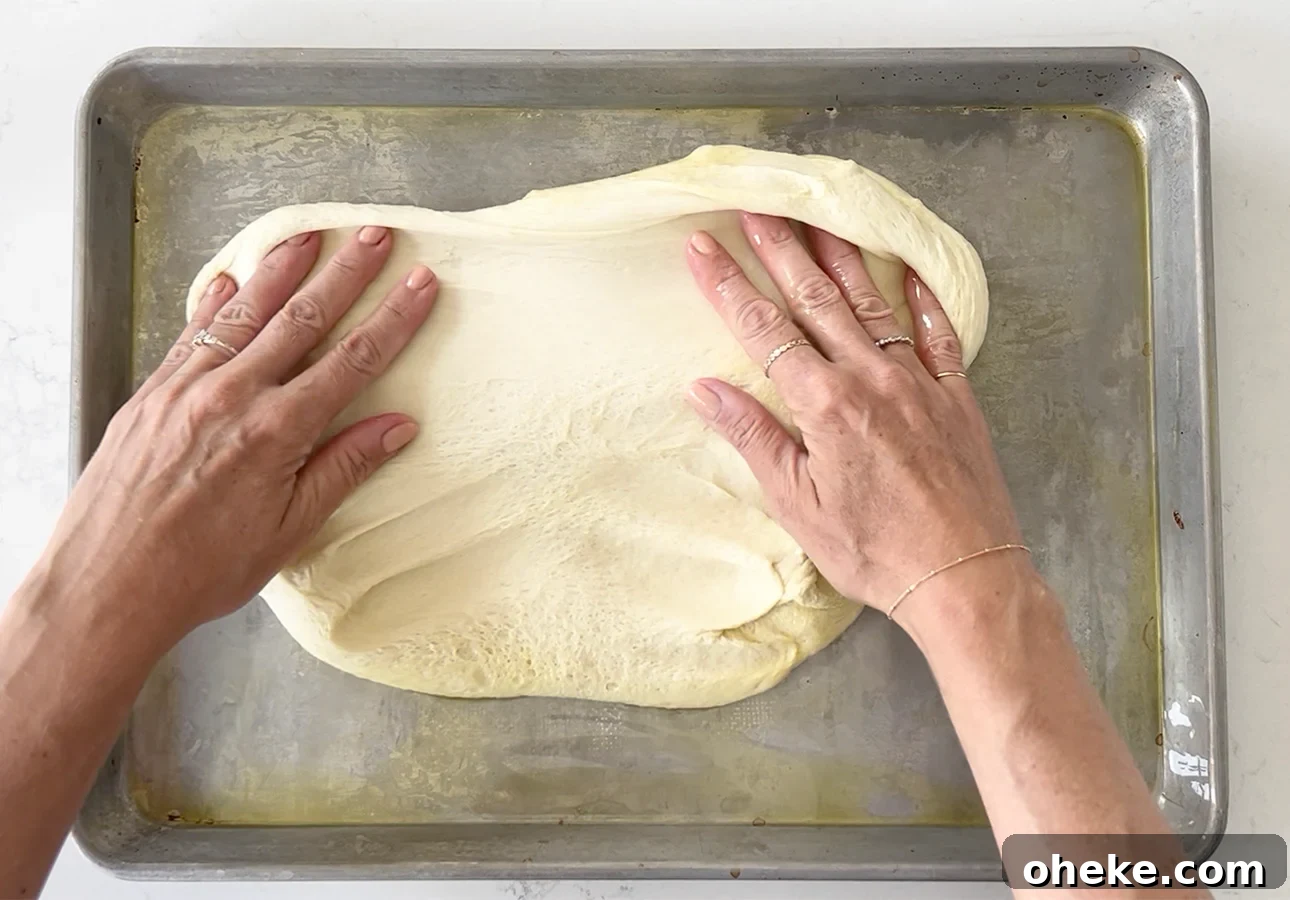
Let the dough rest if it resists stretching; a 5–10 minute pause relaxes the gluten and makes it easier to press into the pan.
Let it rest before slicing
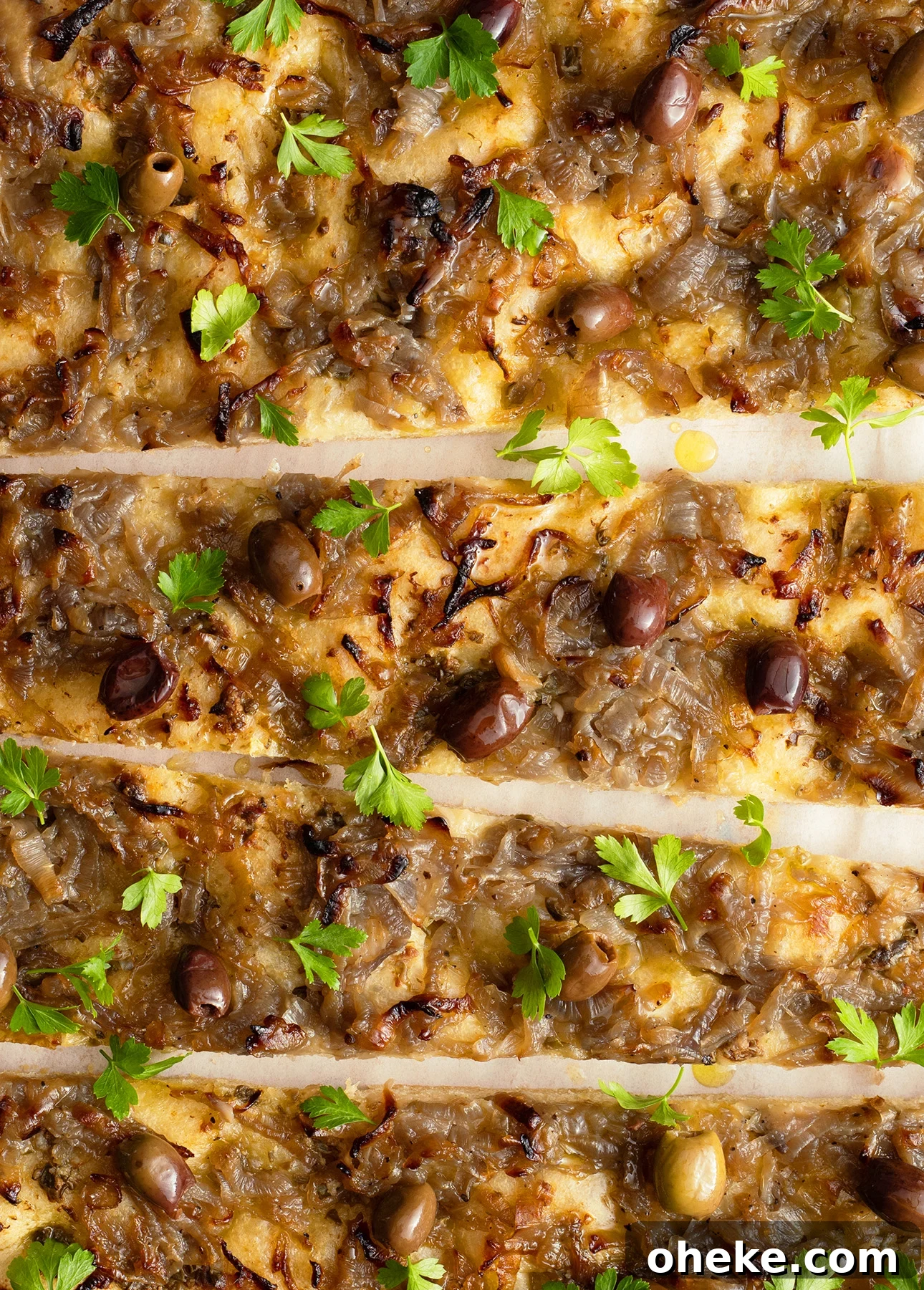
Pissaladière is best warm, but waiting 10 minutes after baking yields cleaner slices as the toppings settle and the crust firms slightly.
Can Pissaladière Be Made Ahead?
This tart is best freshly baked or within a couple of hours of baking. You can prepare the dough, onions, and anchoïade a day ahead, then assemble and bake before serving. If you must bake a day ahead, cool completely, wrap, and refrigerate. Reheat at 325°F (160°C) for about 10 minutes, then add olives and fresh herbs just before serving.
Pissaladière FAQ
What does pissaladière mean?
The name comes from pissalat, a traditional anchovy-based condiment from Nice. Anchovies remain a defining flavor in modern pissaladière.
What is pissaladière in English?
Common English descriptions include Provençal onion flatbread, French onion tart, or onion and anchovy tart—each conveys the idea of a bread base topped with caramelized onions, anchovies, and black olives.
Is pissaladière served hot or cold?
It’s best served warm or at room temperature. I especially enjoy it slightly cooled and cut into squares for l’apéro, though it also pairs well with a crisp salad for lunch.
Does pissaladière have cheese or tomato sauce?
Traditional pissaladière does not include cheese or tomato sauce. The topping relies on onions, anchovies, olives, olive oil, and herbs.
Can I make this without anchovies?
You can omit anchovies, but you’ll lose the savory depth they provide. Anchoïade is a subtle way to incorporate anchovy flavor without obvious fillets.
Can I make pissaladière with puff pastry?
Some modern versions use puff pastry, which yields a richer, flakier tart. This recipe uses a bread dough for the classic flatbread texture.
Pissaladière Recipe
Ingredients
For the Dough
- 1 tsp active dry yeast
- 1 tsp granulated sugar
- 1 1/4 cups warm water (about 115°F / 45°C)
- 1/4 cup extra-virgin olive oil
- 1 tsp kosher salt (or fine sea salt)
- 3 1/2 cups all-purpose flour, plus more as needed
For the Caramelized Onions
- 1 tbsp extra-virgin olive oil, plus more for drizzling
- 1 tbsp butter
- 2 lbs onions (red or yellow), peeled, halved, and thinly sliced
- 1 tsp kosher salt
- Freshly ground black pepper, to taste
For the Anchoïade
- 6 anchovy fillets, mashed or very finely chopped
- 1 tbsp capers, drained and finely chopped
- 1 clove garlic, grated or finely chopped
- 1 tbsp red wine vinegar
- 1/4 cup extra-virgin olive oil
To Serve
- 1/2 cup Niçoise olives, preferably packed in oil, pitted or not
- 1 handful fresh herb leaves (basil, oregano, marjoram, and/or flat-leaf parsley)
Instructions
- For the dough, STAND MIXER METHOD: In a stand mixer bowl combine yeast, sugar, and warm water. Let sit until foamy, about 10 minutes. Mix in oil and salt. Add half the flour and combine, then add the rest of the flour. Attach the dough hook and knead on medium-low for 8–10 minutes until smooth. If dough is too sticky, add up to 1/4 cup more flour, 1 tbsp at a time. Transfer to a lightly oiled bowl, cover, and let rise in a warm place until doubled, about 1 1/2 hours.
- For the dough, HAND METHOD: In a large bowl stir yeast, sugar, and warm water; let foam for about 10 minutes. Stir in oil and salt, add flour, and bring together into a rough dough. Turn onto a floured surface and knead 10 minutes until smooth. If sticky, add flour 1 tbsp at a time (up to 1/4 cup). Transfer to a lightly oiled bowl, cover, and let rise until doubled, about 1 1/2 hours.
- For the caramelized onions: While the dough rises, heat butter and oil in a large sauté pan over medium. Add sliced onions, salt, and pepper; reduce heat to low, cover, and cook, stirring occasionally, until very soft and beginning to caramelize, about 25 minutes. Uncover and cook 2–3 minutes more to evaporate any liquid. Transfer to a bowl to cool.
- For the anchoïade: In a small bowl combine anchovies, capers, garlic, red wine vinegar, and olive oil. Stir to combine and set aside.
- To bake: Generously oil an 18 x 13-in (45 x 33 cm) baking sheet. Transfer dough to the sheet and gently press with your fingers to fill the pan. Cover and let rise until nearly doubled, about 1 hour. Preheat oven to 500°F (260°C) for at least 30 minutes. Uncover the dough and dimple the surface with your fingers. Brush the entire surface with the anchoïade. Scatter the caramelized onions over the dough, leaving a 1-inch border. Bake 20–25 minutes until edges are golden.
- Remove from the oven and let cool about 10 minutes.
- Serving: Scatter with olives and fresh herbs and serve immediately.
- Storage: You can make the components ahead and assemble before baking. If baked a day ahead, cool completely, wrap, and refrigerate. Reheat at 350°F (175°C) for 8–10 minutes, then garnish with olives and herbs just before serving.
- Notes: Traditional pissaladière may use whole olives with pits; pitted olives are easier to eat. If Niçoise olives aren’t available, Taggiasche or Kalamata are acceptable substitutes.
Did you make this?
Tell me how you liked it! Leave a comment or tag a photo with @foodnouveau on Instagram.