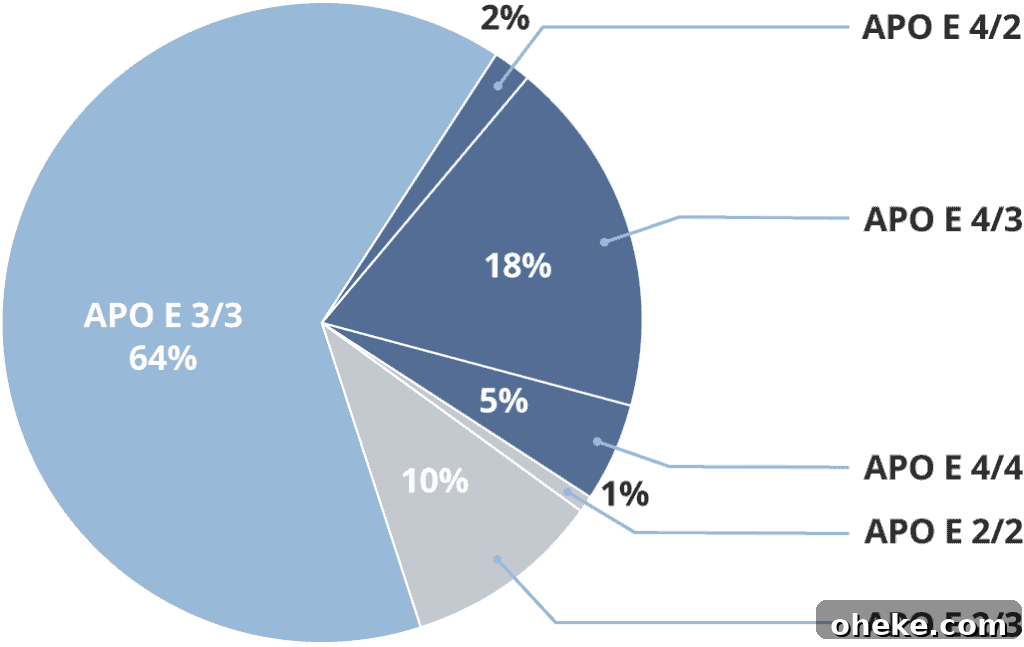
There has been significant discussion lately about the APOE4 gene and how genetic differences influence the body’s response to dietary fat. If high-carbohydrate, low-fat diets were once thought to be harmful for some people, it is equally important to understand why higher-fat diets can be beneficial for others. The key lies in individual genetic makeup—specifically the APOE gene.
APOE, or apolipoprotein E, comes in three common isoforms. Each person inherits two copies, one from each parent, and those copies guide how the body makes apolipoprotein E, a protein that binds with fats to form lipoproteins. Lipoproteins transport cholesterol and other lipids through the bloodstream, so differences in APOE can change how a person handles cholesterol and dietary fat.
APOE Gene Types
There are three major versions of the APOE gene, and each tends to respond differently to dietary fat:
- APOE2 – Often better adapted to a higher-fat, lower-carbohydrate diet; saturated fats may be tolerated well.
- APOE3 – Considered neutral or versatile; suitable for a range of dietary patterns.
- APOE4 – Tends to do better on diets higher in monounsaturated fats and lower in saturated fats; responds differently to cholesterol intake.
Because people have two gene copies, these isoforms combine into six possible genotypes (E2/E2, E2/E3, E2/E4, E3/E3, E3/E4, and E4/E4). Each genotype can influence baseline cholesterol levels and metabolic responses to dietary fat.
When you increase dietary fat—especially on a high-fat, low-carbohydrate plan—your body raises lipoprotein production. Since lipoproteins carry cholesterol, higher dietary fat intake commonly leads to increased cholesterol synthesis. In practice, a high-fat diet often functions equivalently to a higher-cholesterol diet, which is why genetic context matters.
APOE 2 Carriers Thrive On High Fat
Many APOE2 carriers appear to tolerate and even thrive on diets that are higher in fat. Cholesterol plays essential roles in hormone production, cell membranes, and overall physiology, so a diet that supports healthy lipid metabolism can be beneficial when the genetic background is appropriate.
Research indicates that APOE4 carriers are more sensitive to dietary cholesterol and saturated fats. For these individuals, a diet emphasizing monounsaturated fats and fewer saturated fats—often combined with reduced carbohydrate intake—may be a better fit. In contrast, APOE2 carriers typically show lower baseline cholesterol and often tolerate higher fat intake without adverse changes.
The influence of APOE genes is dose dependent: heterozygotes (for example, E2/E3) often have different lipid profiles than homozygotes (for example, E4/E4). APOE4 in particular has been associated with higher cholesterol and with increased risk for certain conditions in some studies. Because of these associations, many practitioners suggest tailoring dietary fat types and amounts based on genotype and regular monitoring of blood lipids.
I recently tested my own APOE status and found I am a mix of APOE3 and APOE4. That genotype suggests I might benefit from a Mediterranean-style approach with a greater emphasis on monounsaturated fats, moderate overall fat, and limited saturated fat. However, individual response can vary, so regular cholesterol checks and consultation with a healthcare professional remain important.
As a reminder, I am not a medical professional. The information presented here reflects research observations and personal experience, not personalized medical advice. If you are uncertain about the best diet for your genetics or health profile, consult a qualified healthcare provider and include lipid testing in routine checkups to guide dietary decisions.
Further Reading On APOE Genes
- GHHealthWatch — resources and summaries about APOE and cholesterol
- Genetic Home Reference (GHR) — gene summaries and clinical implications
- Mediterranean diet meal plans — practical examples of diets higher in monounsaturated fats