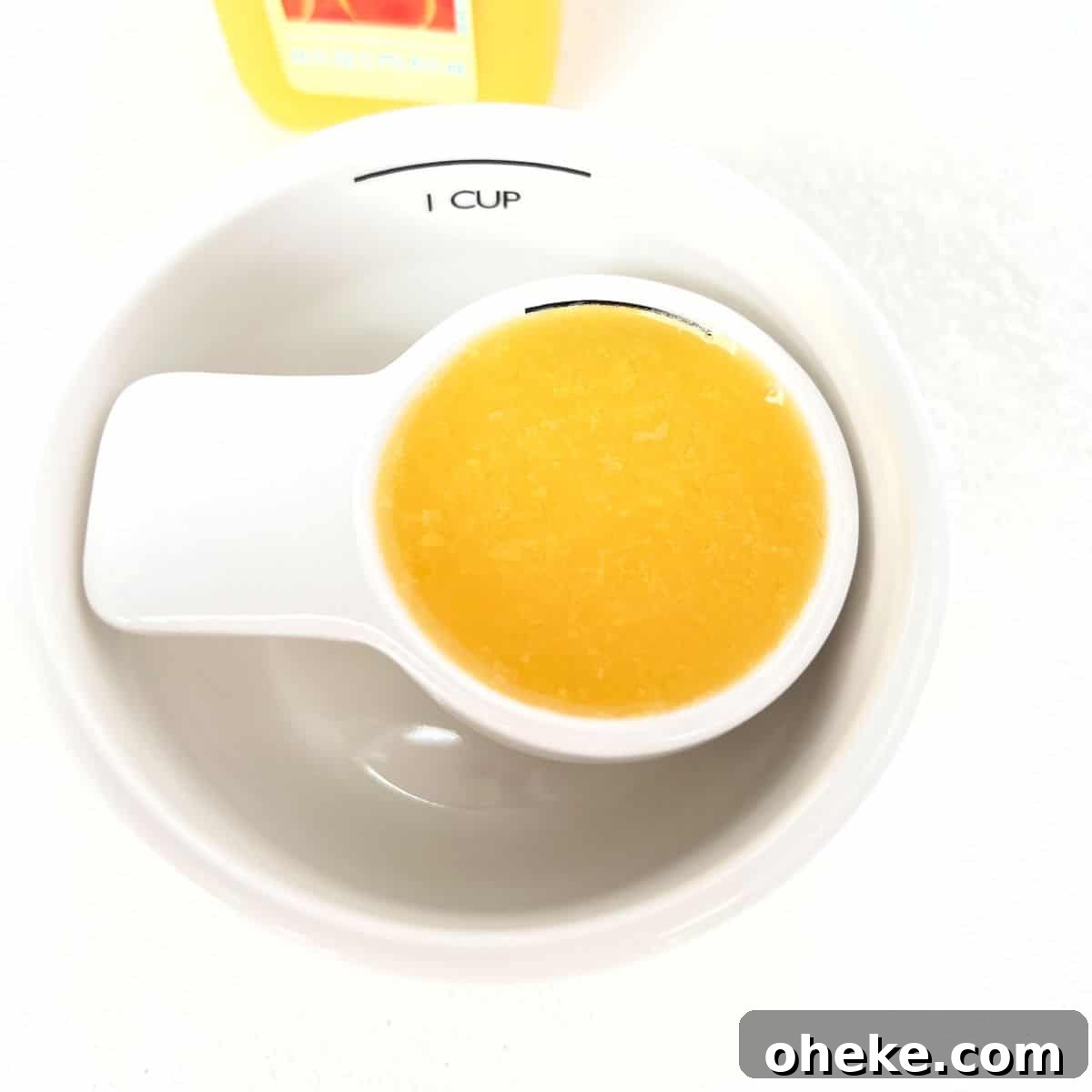
Wondering, “¼ cup is how many ounces?” The quick answer: ¼ cup equals 2 fluid ounces.
Before converting cups to ounces, there are a few points to keep in mind to ensure accurate measuring.
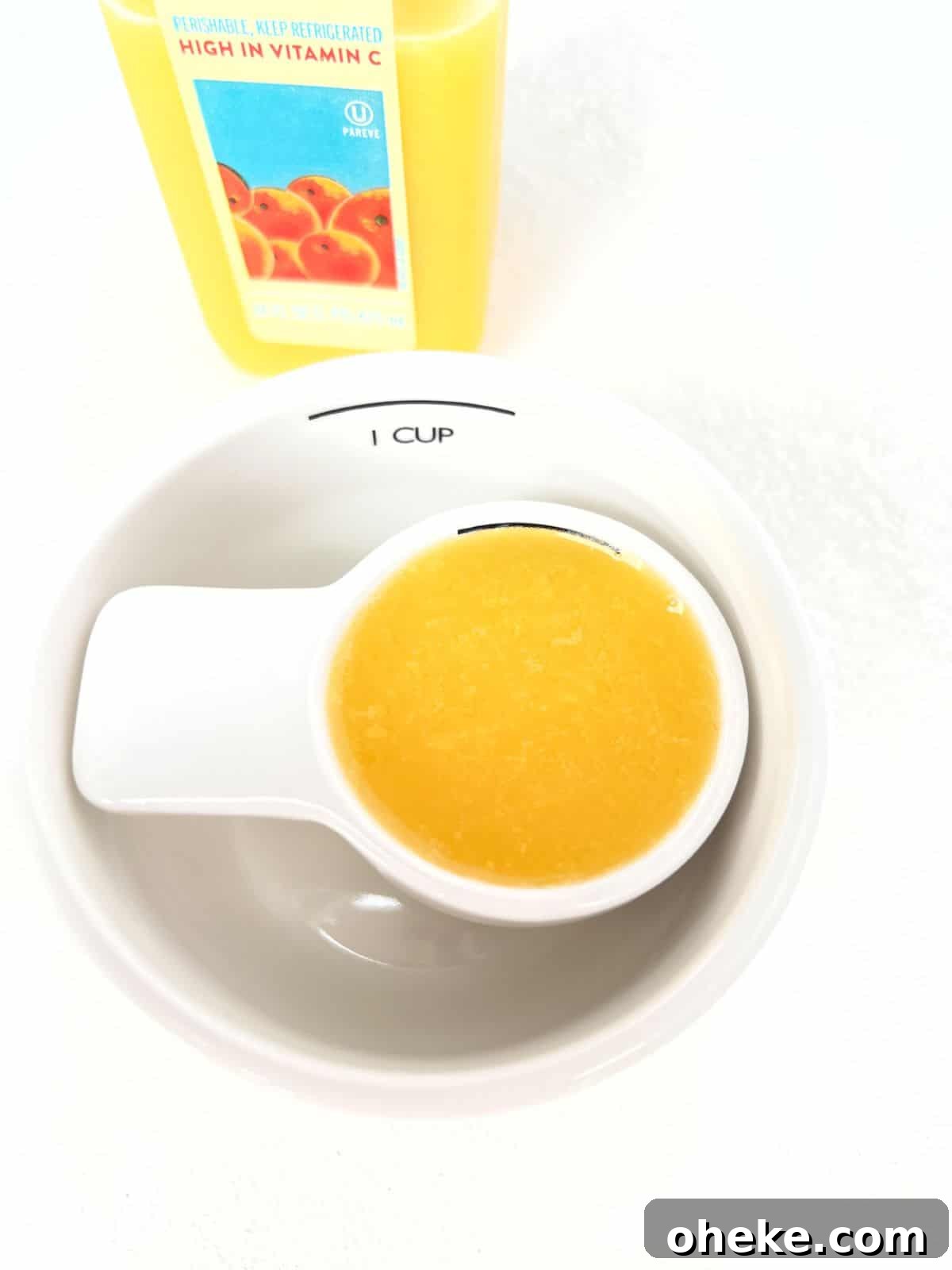
Whether you’re preparing a marinade, energy bites, or cupcakes, precise measurements often make the difference between success and disappointment. If you’re newer to cooking or baking, converting between cups and ounces can feel confusing—especially when you’re short on time. Taking an extra moment to measure correctly helps avoid recipe mishaps. This concise guide will help you convert ¼ cup to ounces confidently.
[feast_advanced_jump_to]
How Many Ounces are in ¼ Cup
Tip Memorize how many ounces are in a cup, and you can easily work out fractions. There are 8 fluid ounces in one cup, so ¼ cup equals 2 fluid ounces.
There are different measurement systems—US Customary (legal cup) and Imperial—and although they differ slightly, the difference usually doesn’t affect everyday recipes when you use the same measuring tools for all ingredients. A US legal cup is 240 milliliters (8 fluid ounces), while an Imperial cup is 250 milliliters (about 8.33 fluid ounces). These values describe volume (liquid ounces), not weight.
How to Measure ¼ Cup in Ounces
In household cooking, “ounces” typically means fluid ounces (a volume measurement).
- The most accurate way to measure liquid ounces is with glass or plastic liquid measuring cups that show both cups and ounces.
- How many ounces in ¼ cup: 2 fluid ounces. To measure ¼ cup, pour the liquid into a measuring cup to the 2-ounce line.
- You can use a one-ounce shot glass for small measurements—fill it twice to equal 2 ounces, which equals ¼ cup.
- For dry ingredients, the most reliable method is to weigh them on a kitchen scale rather than converting by volume.
How to Convert Ounces to Cups of Dry Ingredients
Tip Fluid ounces and ounces (weight) are not the same. An ounce as a unit of weight differs from a fluid ounce, which measures volume.
Dry ingredients are most accurately measured by weight (grams or ounces on a scale) or by established cup-to-gram conversions for specific ingredients. Many home cooks rarely measure dry ingredients by ounces unless following a recipe that specifies weight.
If a recipe lists dry ingredients in grams, use a kitchen scale to get accurate measurements. Otherwise, look up the grams-per-cup value for that specific ingredient. For most home baking that isn’t highly sensitive, small differences in volume measurements won’t ruin the outcome, but professional bakers rely on weight for precision.
Bottom line: The most accurate way to measure dry ingredients in ounces is by weight using a food scale.
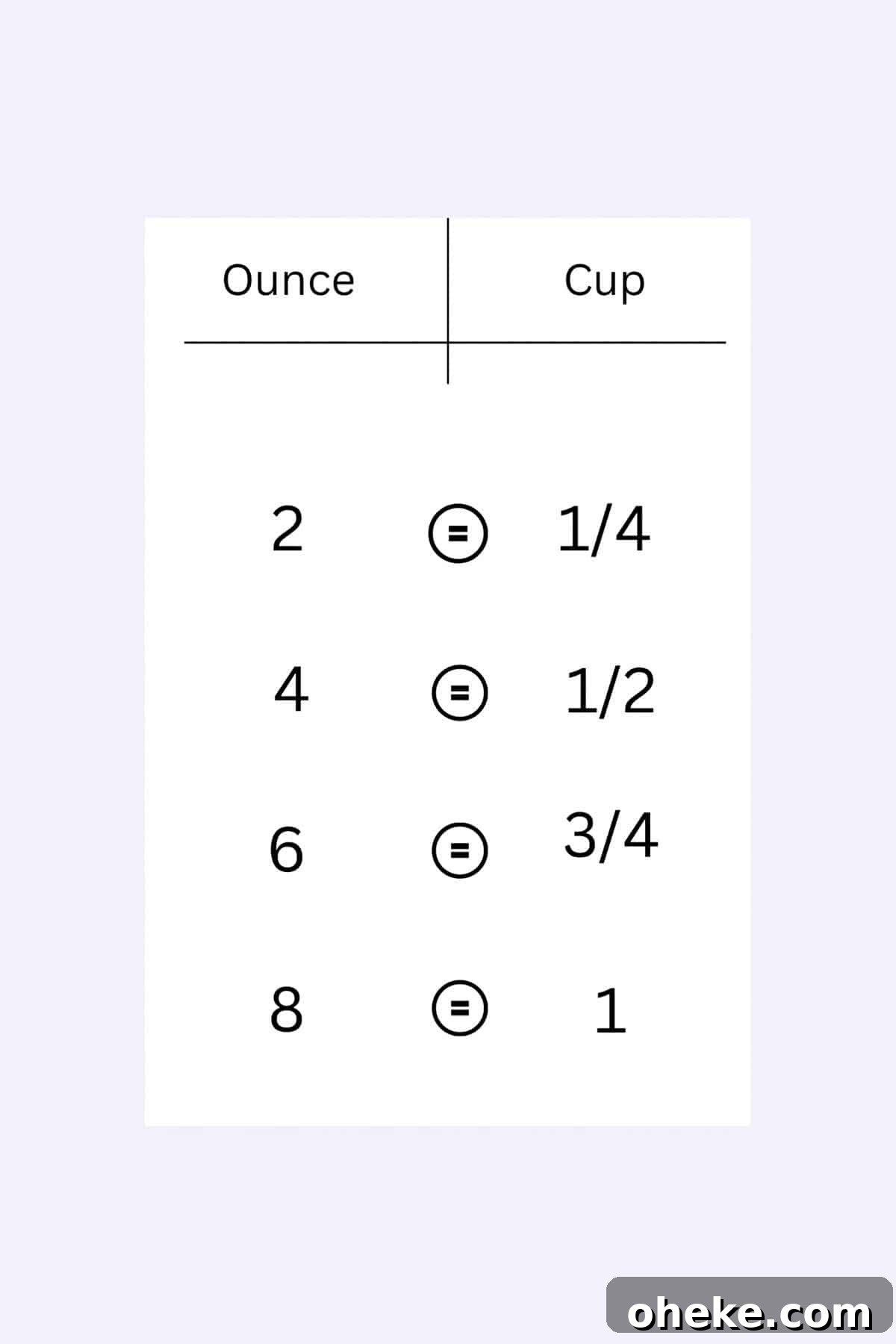
My Cups to Ounces Conversion Chart
Conversion Notes
- There are 8 fluid ounces in one cup. To convert ounces to cups, divide the number of ounces by 8. For example, 112 ounces ÷ 8 = 14 cups.
- If a recipe calls for 2 fluid ounces, divide 2 by 8 to get 0.25, which is ¼ cup.
- Helpful volume relationships: 2 cups = 1 pint; 2 pints (4 cups) = 1 quart.
- For many conversions, a simple calculator on your phone is sufficient.
Dietitian Mom Tip
Involve kids in measuring to give them practical math practice. Ask them to figure out how many ounces are in ¼ cup or to convert amounts when you only have a ¼-cup measure—it’s a simple way to reinforce division and fractions.
Questions You May Have
For fluid ounces (volume), yes. For ounces by weight, it depends on the ingredient’s density.
In volume terms, ¼ cup of cream cheese is 2 fluid ounces.
Weights vary by cheese type. As a rough guide: about 1.5 ounces for soft/crumbly cheese, 1 ounce for semi-hard cheese, and roughly 0.75 ounce for very hard cheese per ¼ cup. For best results, weigh cheese on a scale.
There are 2 fluid ounces in ¼ cup of water.
In volume terms, ¼ cup of butter equals 2 fluid ounces; for baking, many recipes measure butter by tablespoons (4 tablespoons = ¼ cup) or by weight.
A ¼ cup of walnuts is roughly 1 ounce by weight, though this can vary with how the nuts are broken or packed.
Did I answer your question of “¼ cup is how many ounces?” I hope so—feel free to leave a comment if you have more questions.