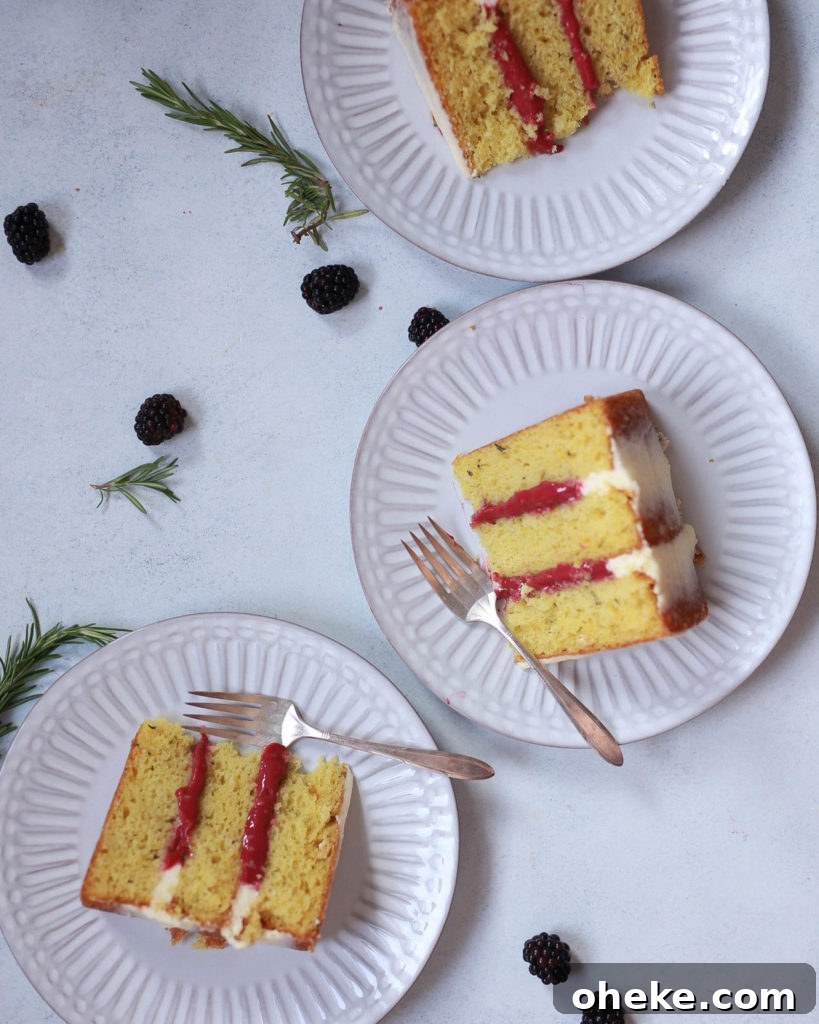
Over the past year people have occasionally messaged me on Instagram asking if I sell my baked goods. My standard reply was, “LOL I’m just a home baker.” That’s true — until a few weeks ago when someone asked if I could make desserts for a baby shower. For reasons I can’t fully explain, I said yes. Maybe it was the clarity of the request — a specific event on a set date — or that the person’s taste aligned with what I enjoy baking. Whatever the reason, I suddenly found myself with my first baking “commission”: two cakes.
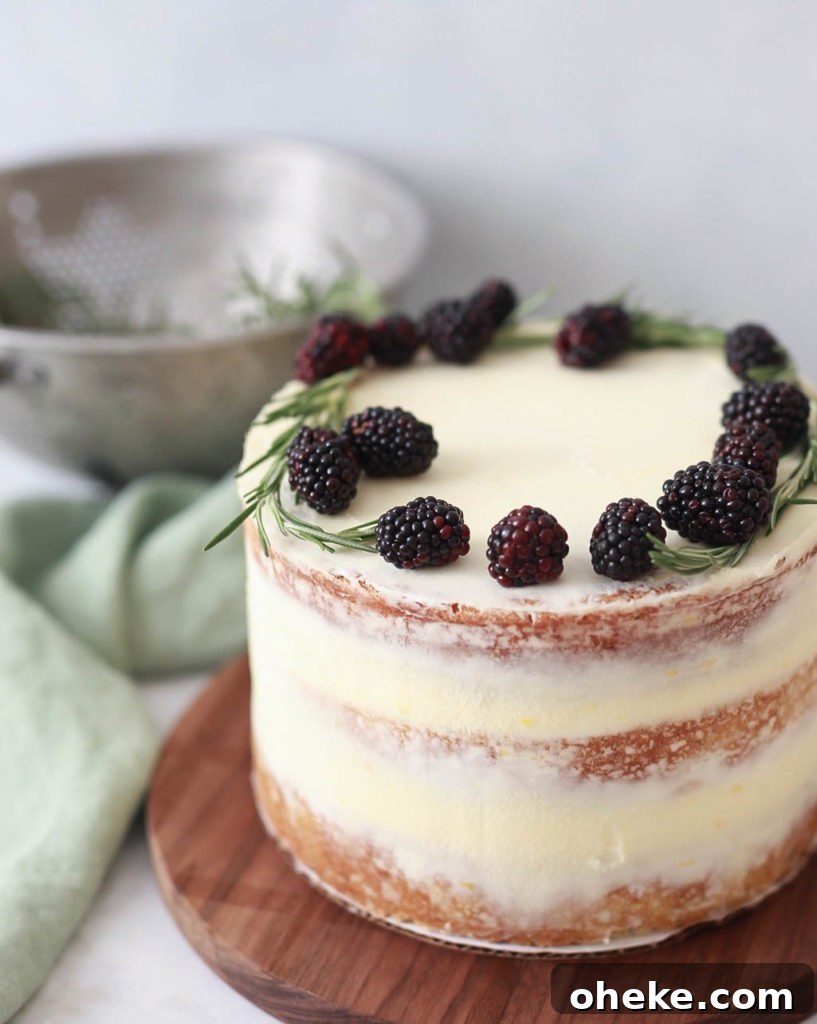
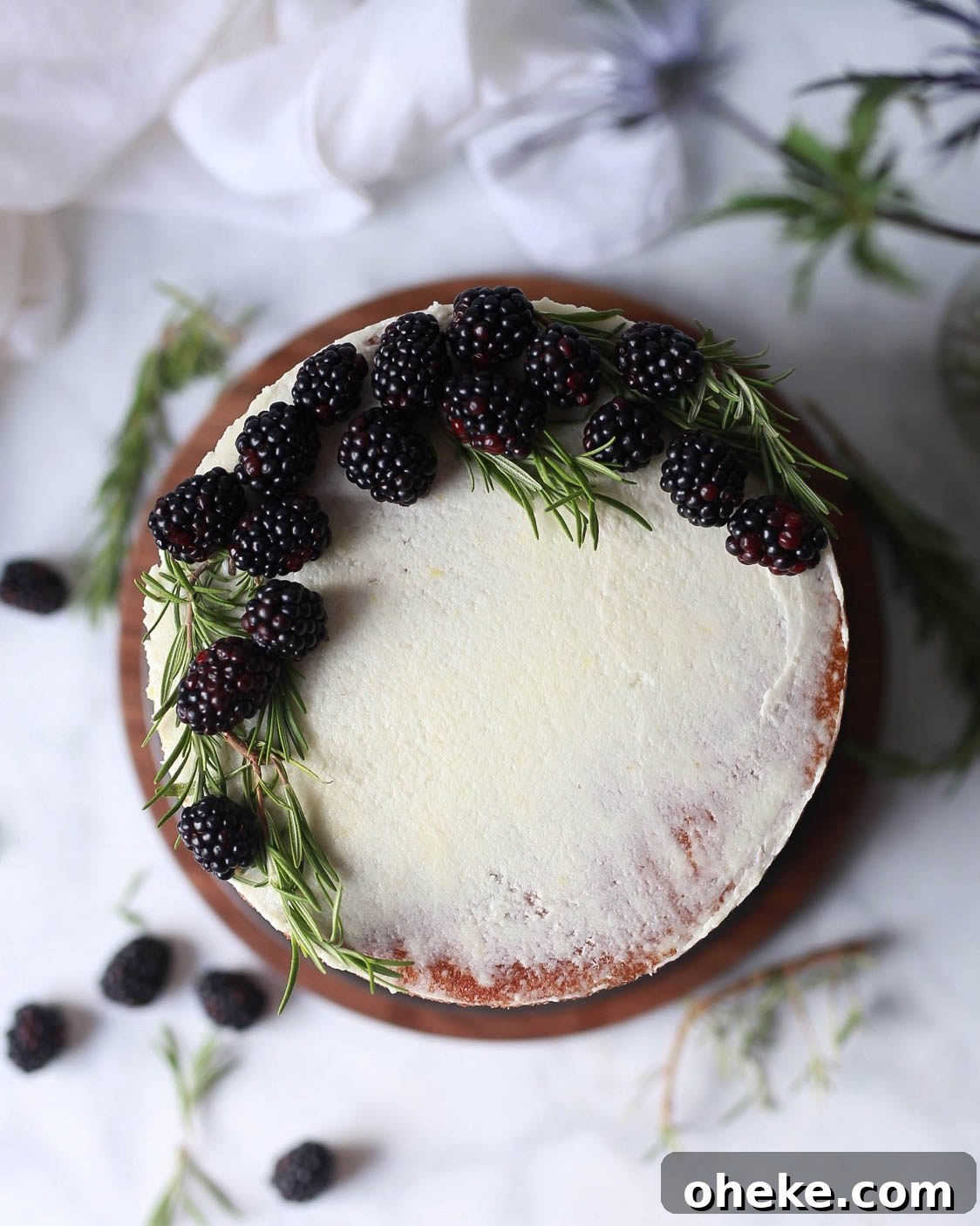
I proposed a lemon rosemary olive oil cake with blackberry curd and mascarpone buttercream even though I hadn’t made that exact cake before and didn’t have a finished recipe at hand. The idea didn’t arrive from nowhere: the client mentioned she liked olive oil cakes and sent inspiration photos that included a naked-style layer cake topped with rosemary, blackberries, and figs. I’d also been experimenting with blackberry curd recently. All those influences came together and I typed, “How about a lemon rosemary olive oil cake with blackberry curd and mascarpone buttercream?” The answer was “Yes!” — and so the work began.
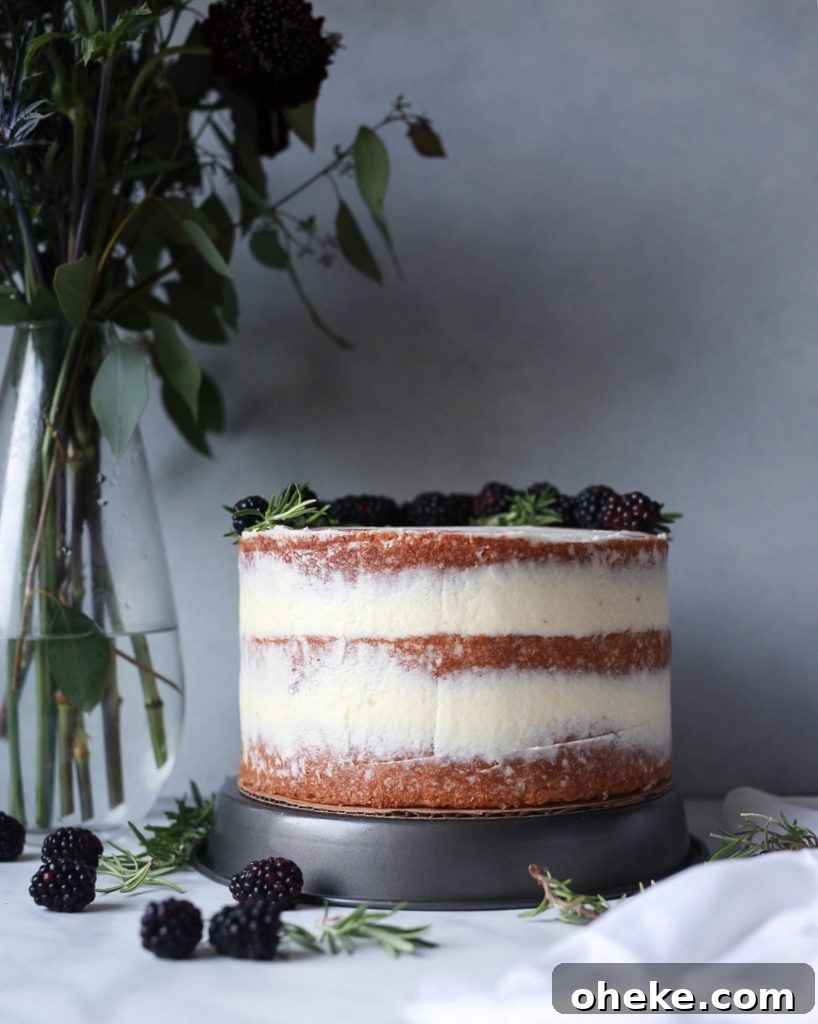
After some research, I adapted a lemon olive oil cake recipe by Chelsweets. The original recipe yields a 6-inch, 3-layer cake; worried that might be too small for a 20-person baby shower, I doubled the quantities and baked an 8-inch cake. The result was large and impressive — but a warning: if your fridge space or arm strength is limited, consider halving the quantities and making the 6-inch version instead.
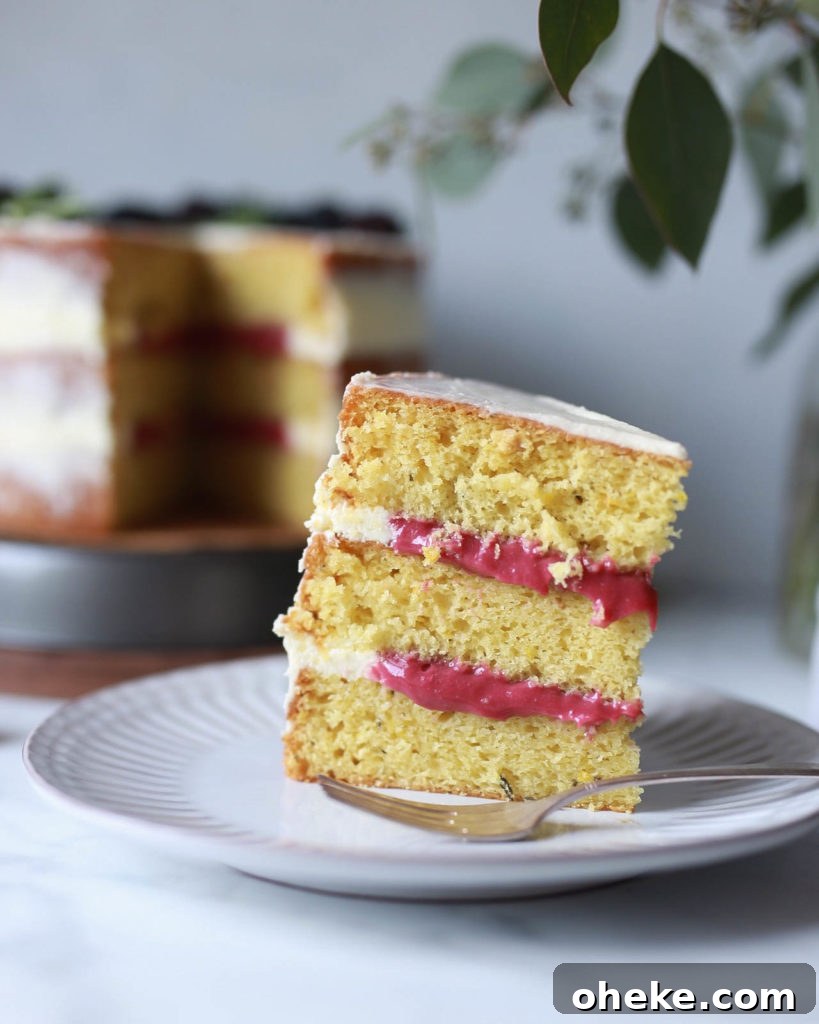
I was nervous about how the cake would be received. Baking on commission for the first time is inherently anxiety-inducing, and rosemary and olive oil are distinctive flavors that not everyone prefers. I was thrilled to learn that the guests loved it. Below is the recipe I used; I hope you enjoy it too.
A few notes before the recipe:
- Use a high-quality, fruity extra-virgin olive oil and taste it first. The olive oil flavor is prominent, so it should complement the other ingredients rather than overwhelm them.
- The blackberry curd quantity makes just enough to fill a three-layer, 8-inch cake. If you make a 6-inch cake, you may still want to make the full amount of curd — it’s worth it.
- I provide a range for the powdered sugar in the frosting because sweetness is personal. I prefer a less sweet finish; if you prefer sweeter frosting, use the higher end of the range.
Lemon Rosemary Olive Oil Cake with Blackberry Curd and Mascarpone Buttercream
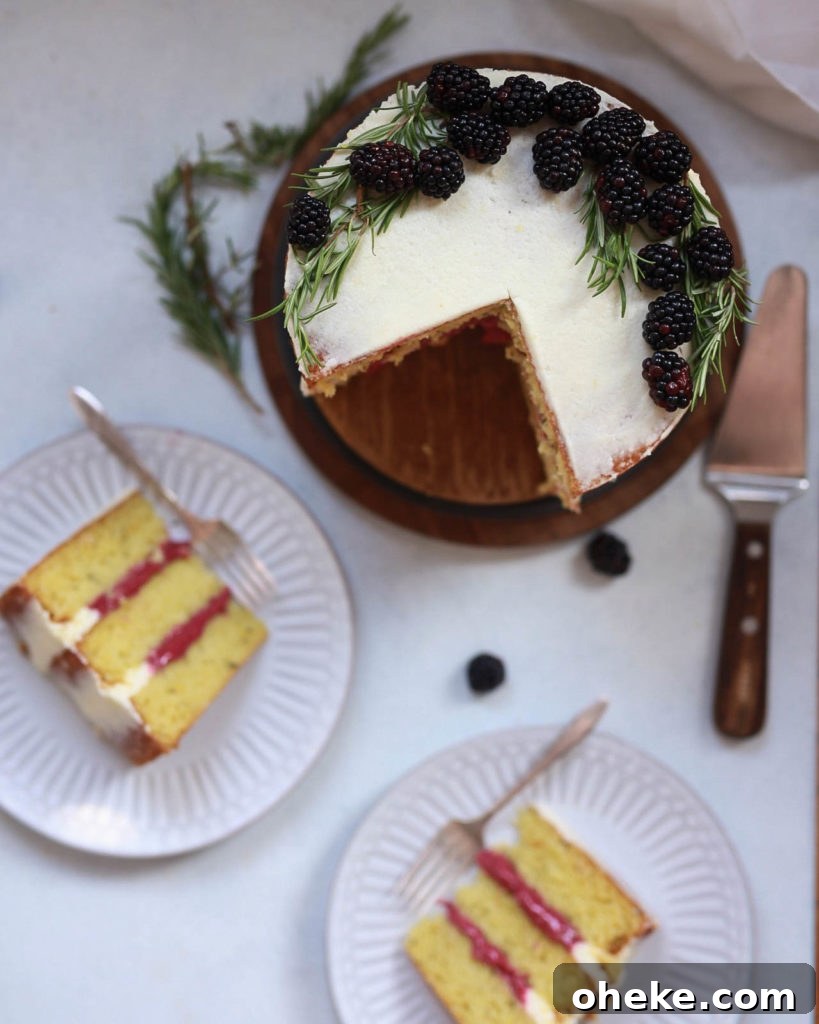
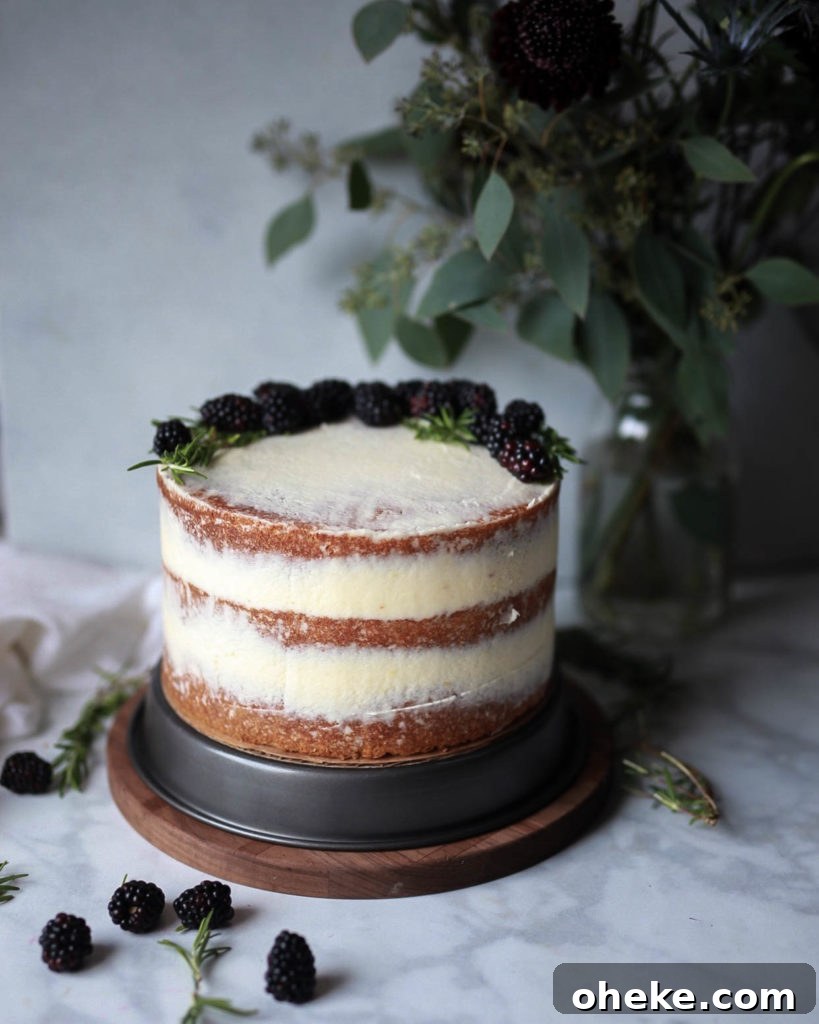
A subtly herbal layer cake filled with sweet-tart blackberry curd and frosted semi-naked with a lightly sweet mascarpone buttercream. The lemon-rosemary olive oil cake layers are adapted from a Chelsweets olive oil cake recipe; the blackberry curd is based on a Sugar Salt Magic curd recipe.
Ingredients
For the lemon rosemary olive oil cake layers:
- 4 large eggs at room temperature
- 400 g granulated sugar
- 500 g all-purpose flour
- 2 tsp baking powder
- 2 tsp baking soda
- 1.5 tsp table salt or fine sea salt
- 3 medium lemons zested and juiced
- 1.5 tbsp finely chopped fresh rosemary
- 1 1/3 to 1 1/2 cups whole milk
- 1 1/3 cup extra virgin olive oil
For the blackberry curd:
- 170 g fresh blackberries
- 1 large egg
- 2 large egg yolks
- 75 g unsalted butter at room temperature, cut into pats
- 100 g granulated sugar
- 1 tbsp cornstarch
- juice of half a lemon
For the mascarpone buttercream:
- 6 oz. unsalted butter at room temperature
- 12 oz. mascarpone cheese at room temperature
- 250-300 g powdered sugar
- zest of half a lemon
- 1 tsp lemon juice
To decorate:
- fresh blackberries and rosemary sprigs
Instructions
Make the blackberry curd:
-
Rinse the blackberries, place them in a microwave-safe bowl, and microwave on high for 1 minute. Mash the berries with a fork and press the mash through a sieve to yield about 1/2 cup blackberry juice.
-
Have the cornstarch and lemon juice measured and ready to combine quickly when needed.
-
In a small heavy-bottomed saucepan whisk the egg, egg yolks, sugar, and blackberry juice. Place over low heat, add the butter, and heat while whisking constantly until the mixture is steaming and begins to thicken (about 160–170°F). This usually takes 6–12 minutes.
-
Quickly whisk the cornstarch and lemon juice together, add the slurry to the curd mixture, and continue whisking until the curd thickens substantially. For a precise target, heat the curd to 185°F, then remove from the stove and whisk for a minute or two to stop the cooking.
-
Scrape the curd into a clean bowl, cover the surface directly with plastic wrap, cool to room temperature, then refrigerate for at least 6 hours or overnight.
Make the cake layers:
-
Position a rack in the center of the oven and preheat to 350°F.
-
Grease three 8-inch cake pans, line the bottoms and sides with parchment, and grease the parchment.
-
Whisk together the flour, baking powder, baking soda, and salt in a medium bowl; set aside.
-
Zest and juice the lemons. You should have about 1/2–2/3 cup lemon juice; add milk to the juice to make 2 cups total liquid.
-
In a bowl or measuring jug, whisk together the milk-lemon mixture, lemon zest, chopped rosemary, and olive oil; set aside.
-
In a stand mixer with the whisk attachment, beat the eggs and sugar for about 2 minutes on medium speed until light and thick.
-
Alternately add the dry ingredients and the olive oil mixture to the egg-sugar mixture: add 1/3 of the flour, mix until just combined, then 1/2 of the olive oil mixture; repeat, finishing with the final 1/3 of flour. When the last addition is almost incorporated, turn off the mixer and fold the batter gently with a spatula to ensure even mixing.
-
Divide the batter evenly among the three prepared pans (about 605 g per pan).
-
Bake for about 33–37 minutes, or until a wooden skewer inserted into the center comes out clean. If unsure about your oven’s temperature, begin checking at 30 minutes.
-
Cool the cakes in the pans for 10–20 minutes, then turn them out onto a wire rack to cool completely.
-
When cool, level the tops with a serrated knife. You can assemble and frost immediately or freeze the layers for later use.
-
To freeze layers: double-wrap each in plastic wrap, place in a freezer bag, and stack on a baking sheet to stabilize. Freeze up to 2–3 weeks. Frozen layers are easier to frost because they’re firmer and less crumbly.
Make the frosting:
-
Beat the butter and mascarpone in a stand mixer or with an electric mixer until light and fluffy. Add the powdered sugar gradually until you reach your preferred sweetness, then mix in the lemon juice and lemon zest.
Assemble the cake:
-
Place one cake layer, cut side up, on a cake stand or board. Pipe a generous ring of frosting around the edge and fill the center with half the blackberry curd.
-
Place the second layer, cut side down, on top. Pipe another ring of frosting and fill the center with the remaining curd.
-
Top with the final layer, cut side down. Spread frosting over the top and use a bench scraper or offset spatula to smooth the top and sides. For a semi-naked look, keep the frosting thin — you’ll likely have leftover icing.
-
Decorate with fresh blackberries and rosemary sprigs.
Recipe Notes
- The Chelsweets olive oil cake recipe is an excellent base and includes a helpful video showing how to level layers and achieve a semi-naked finish, which I found invaluable.
- Freezing layers before frosting makes them easier to work with: they’re firmer, less crumbly, and the cold helps the room-temperature frosting set on contact.
- The rosemary flavor is noticeable but subtle. If you love rosemary, increase the amount to 2 tablespoons.