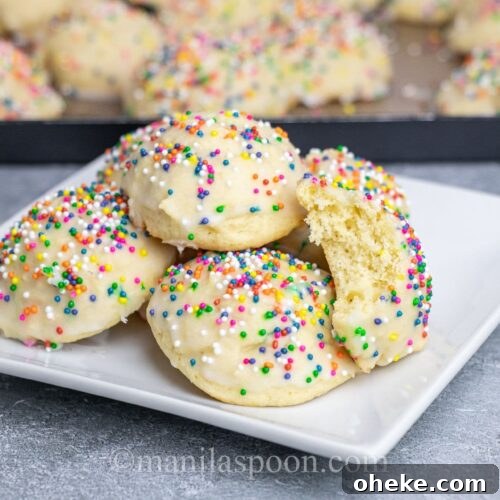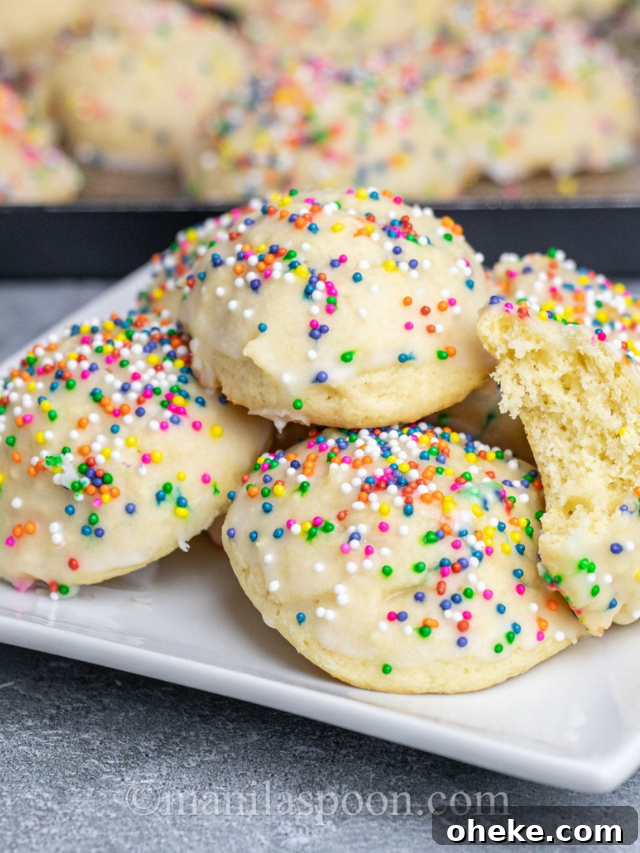
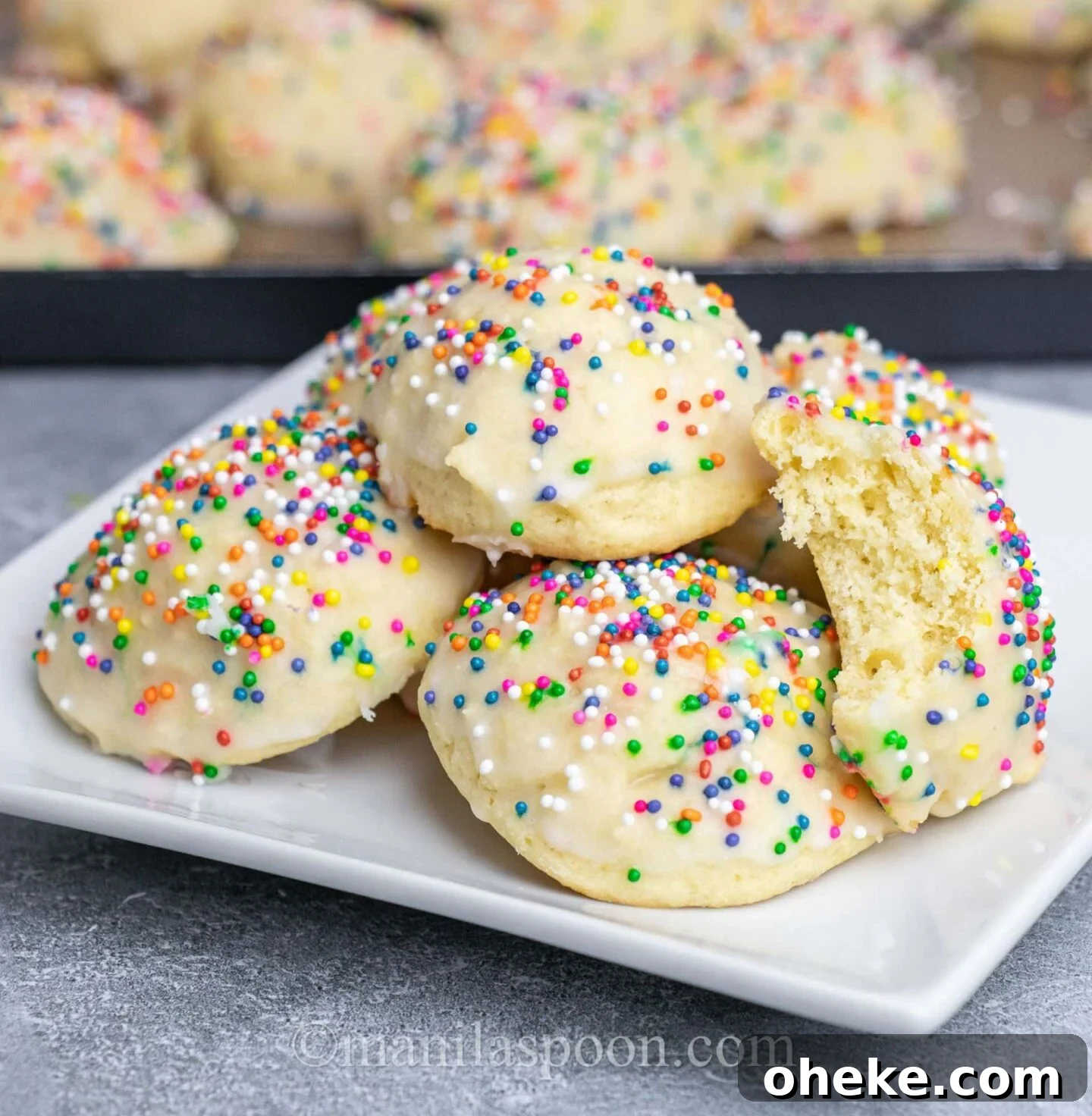
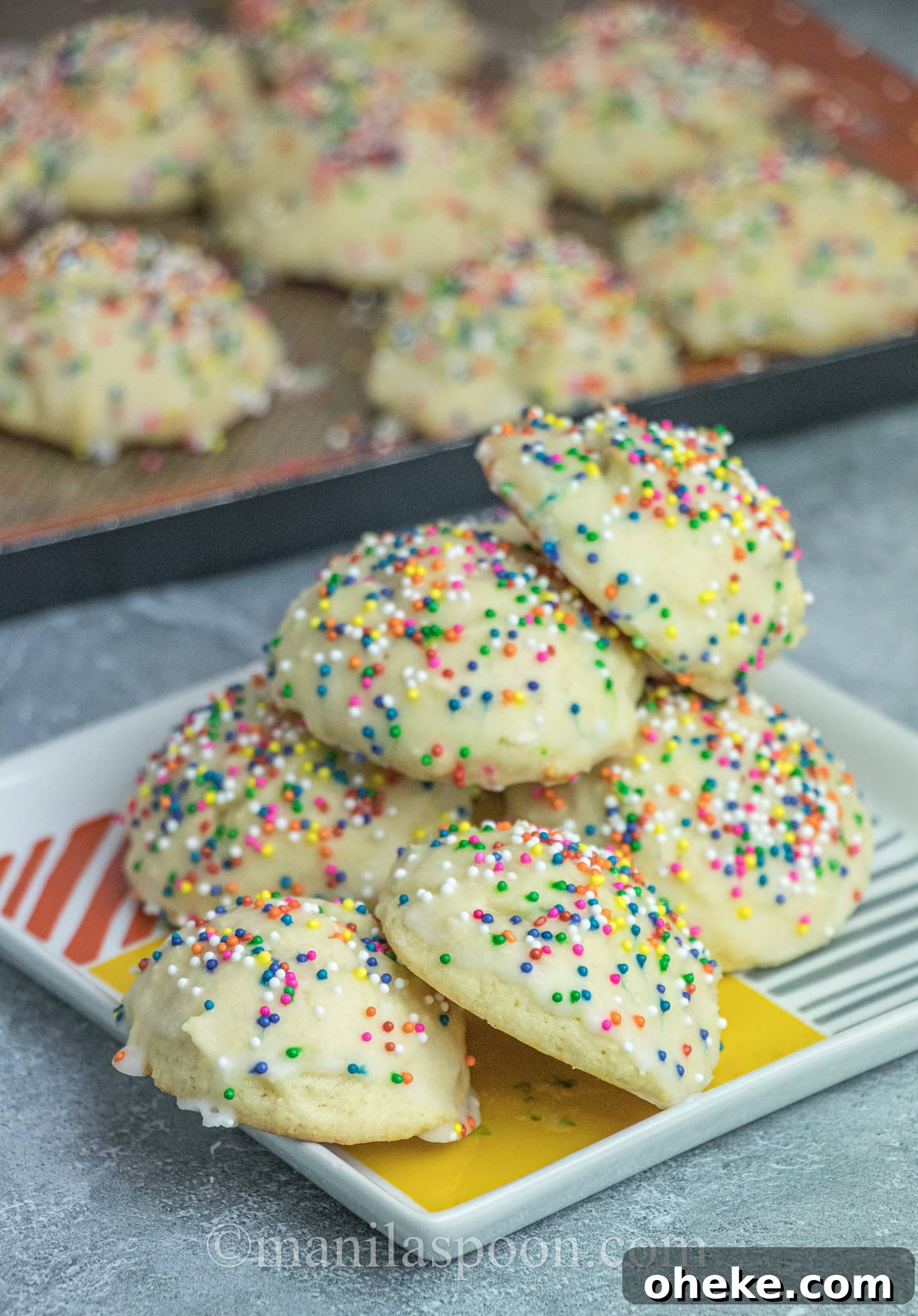
These Italian anise cookies are a holiday favorite: tender, lightly licorice-flavored cookies topped with a sweet glaze and colorful sprinkles. This recipe yields a large batch, making it ideal for cookie exchanges, edible gifts, or bringing to holiday gatherings and family get-togethers.
While cleaning out a closet recently I found my daughter’s 4th Grade Heritage Fair Cookbook, filled with recipes contributed by students and their families. The fair included a tasting of many of those family favorites and showcased dishes from several countries. My daughter Sophie added a coconut rice cake from the Philippines, and I noticed several Italian recipes too — including this classic anise cookie.
My daughter and I decided to try the cookies and were delighted with the results. The batch disappeared fast when we brought some to church coffee hour the next day — they paired perfectly with coffee. These cookies are now on my must-bake list for the holidays.
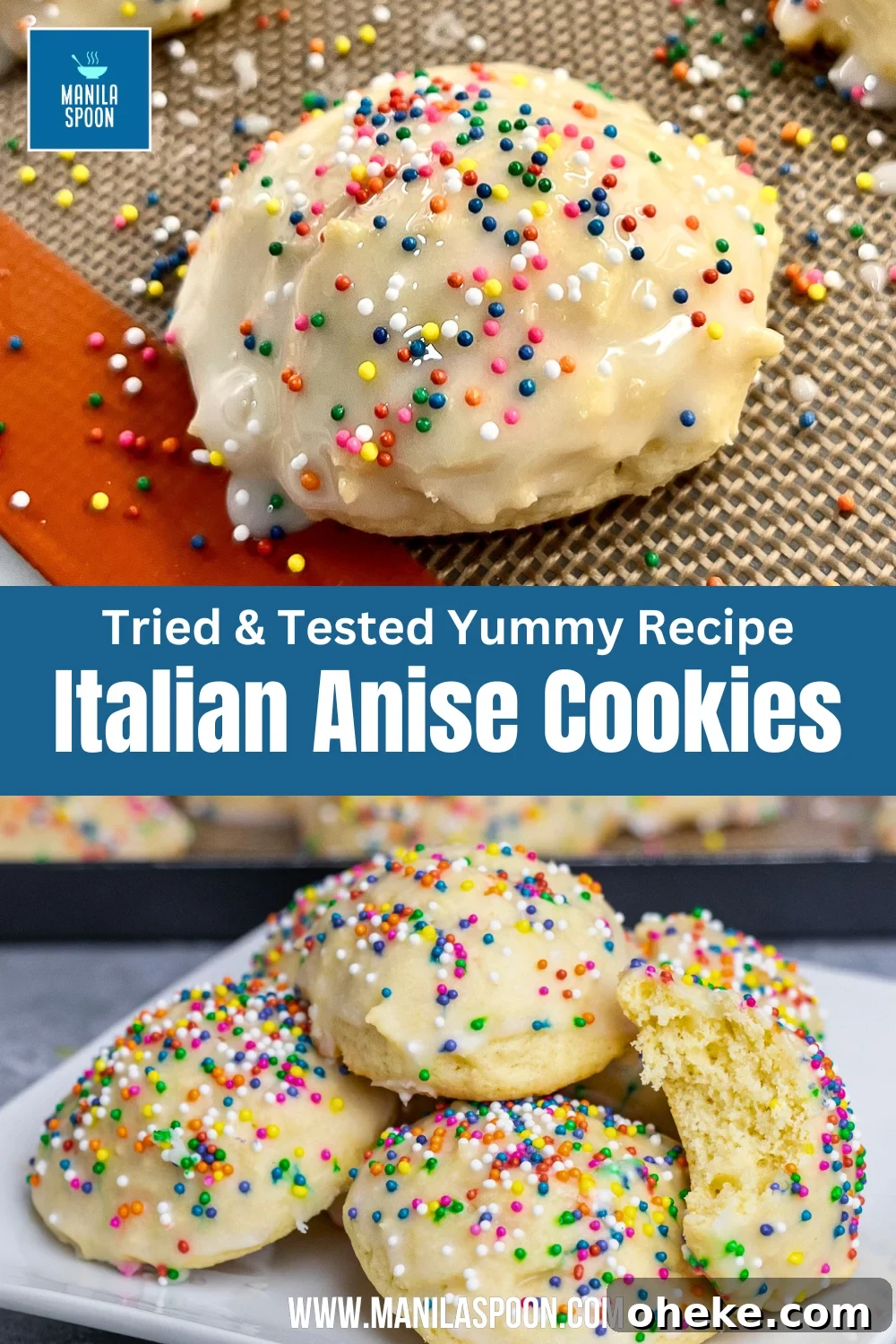
Where do these Anise Cookies come from?
Italian anise cookies trace their roots to Italy and are traditionally enjoyed at Christmastime and during other celebrations. They are typically small, round cookies with a tender crumb, dipped in a sugar glaze and decorated with sprinkles. While popular during the holidays, they are delicious any time of year.
The defining flavor comes from anise extract, which gives a mild licorice note. If you enjoy licorice flavors, you’ll likely love these; if not, they remain adaptable with alternative extracts (see substitution notes below).
Substitutes for anise extract
The recipe calls for anise extract, which adds a subtle licorice character. If you’re unsure about licorice flavor, try the recipe with anise first — the amount used is balanced and not overpowering. If you prefer to avoid anise altogether, substitute vanilla extract or a citrus-flavored extract for a different but still delicious result.
Batch size and make-ahead tips
This recipe makes a large batch—about seven dozen cookies. If you want fewer cookies, simply halve the ingredient amounts. You can bake the cookies a few days in advance and glaze them later so they look freshly made when served.
Storage
Store glazed or unglazed cookies in an airtight container at room temperature for up to two weeks. For longer storage, freeze unglazed cookies for up to a month. To freeze, cool the baked cookies completely, arrange them in a single layer on a baking sheet and freeze until solid, then transfer to a freezer-safe bag or container. Thaw at room temperature before glazing.
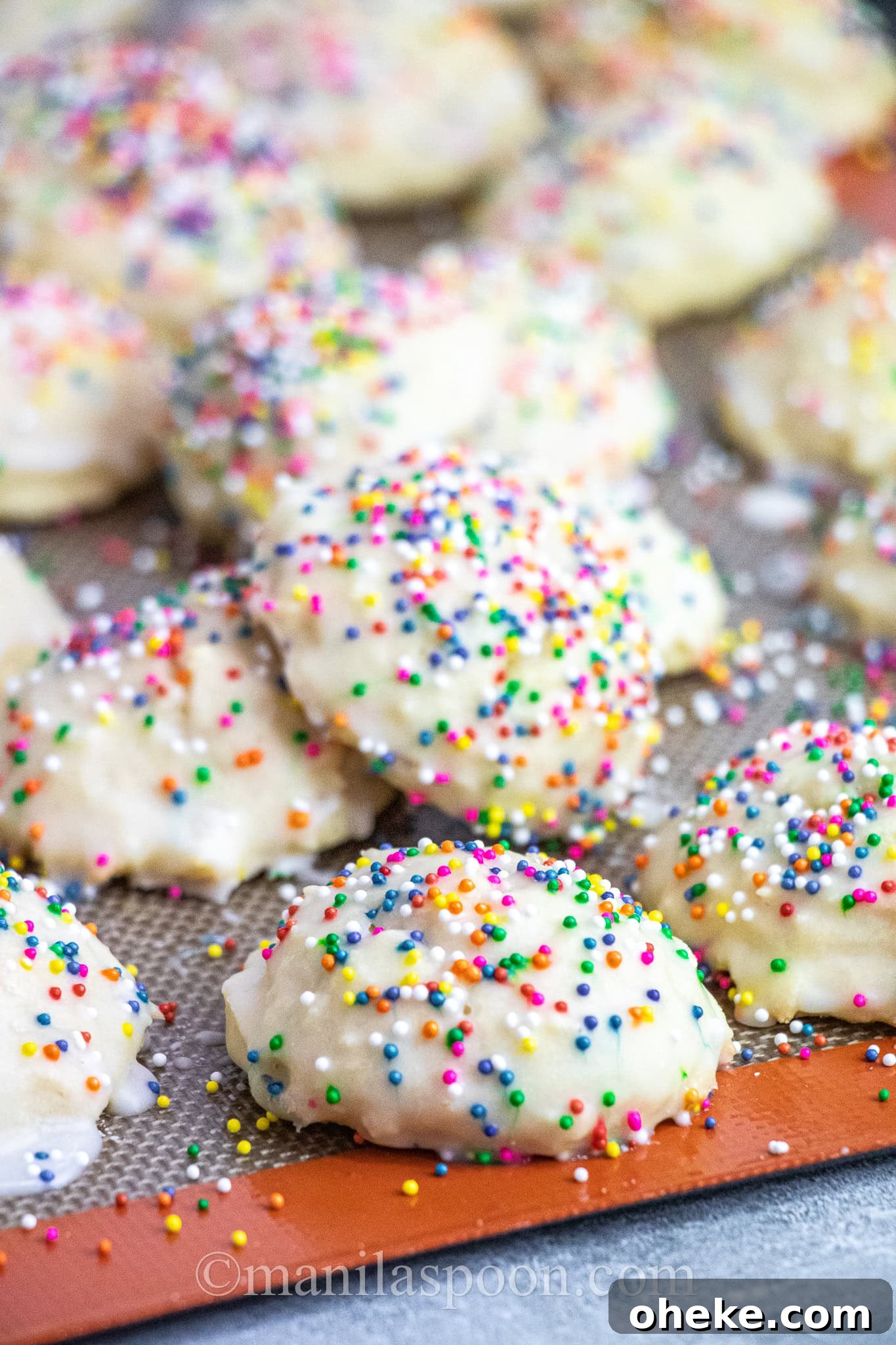
Ingredients for Italian Anise Cookies
- 1/2 pound butter, softened
- 1 cup white sugar
- 6 large eggs
- 2 teaspoons anise extract (or substitute vanilla extract)
- 4 cups all-purpose flour
- 4 teaspoons baking powder
- Pinch of salt
- 3 3/4 cups confectioner’s (powdered) sugar (for icing)
- 2 teaspoons vanilla extract (for icing)
- 5–6 tablespoons milk (adjust for desired icing consistency)
- Assorted multi-colored sprinkles for decoration
How to make Italian Anise Cookies
1. In a large bowl, cream the softened butter and sugar until light and fluffy. Beat in the eggs and the anise (or vanilla) extract.
2. In a separate bowl, whisk together the flour, baking powder, and salt. Gradually add the dry ingredients to the creamed mixture and mix until combined.
3. Drop the dough by rounded teaspoonfuls onto ungreased baking sheets. Chill the dough balls for about an hour in the refrigerator or freeze for 15–20 minutes until firm. Arrange the chilled dough balls on parchment-lined baking sheets.
4. Bake in a preheated 350°F (175°C) oven for 9–11 minutes, or until the bottoms are just lightly browned. Remove cookies to wire racks and cool completely.
5. For the icing, whisk together the confectioner’s sugar, vanilla, and just enough milk to reach a thin but creamy consistency.
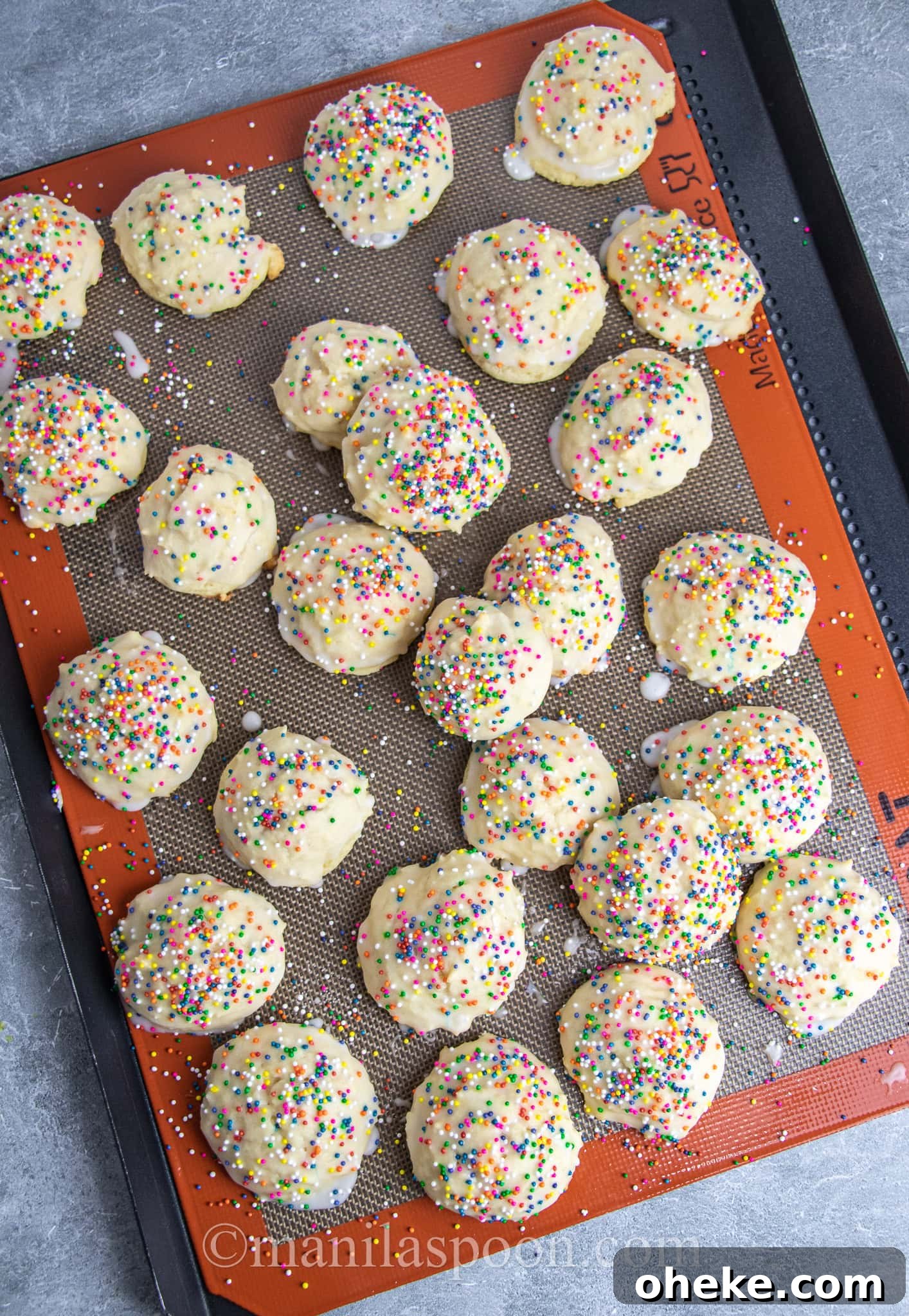
6. Dip each cooled cookie in the icing, allowing excess to drip off, then top with sprinkles. Let the icing set before serving or packaging.
Notes and tips
This recipe yields about seven dozen small cookies. Halve the ingredient quantities if you prefer to make a smaller batch. The cookies freeze well unglazed, which is handy for preparing ahead and glazing right before serving.