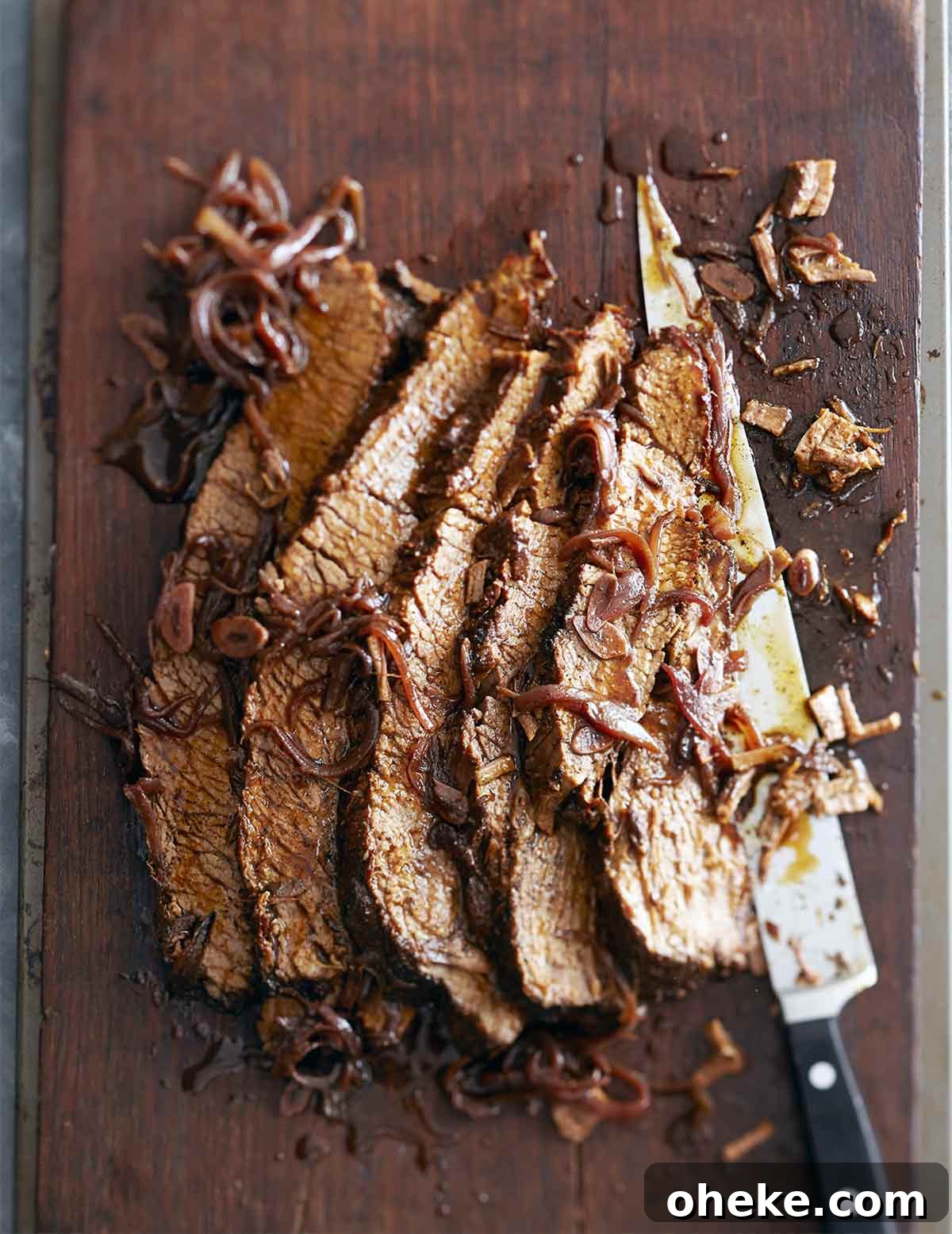
This braised brisket with red wine and honey is sweet, tangy, and melt-in-your-mouth tender — a hearty roast that feeds a crowd and delivers deeply satisfying flavor.
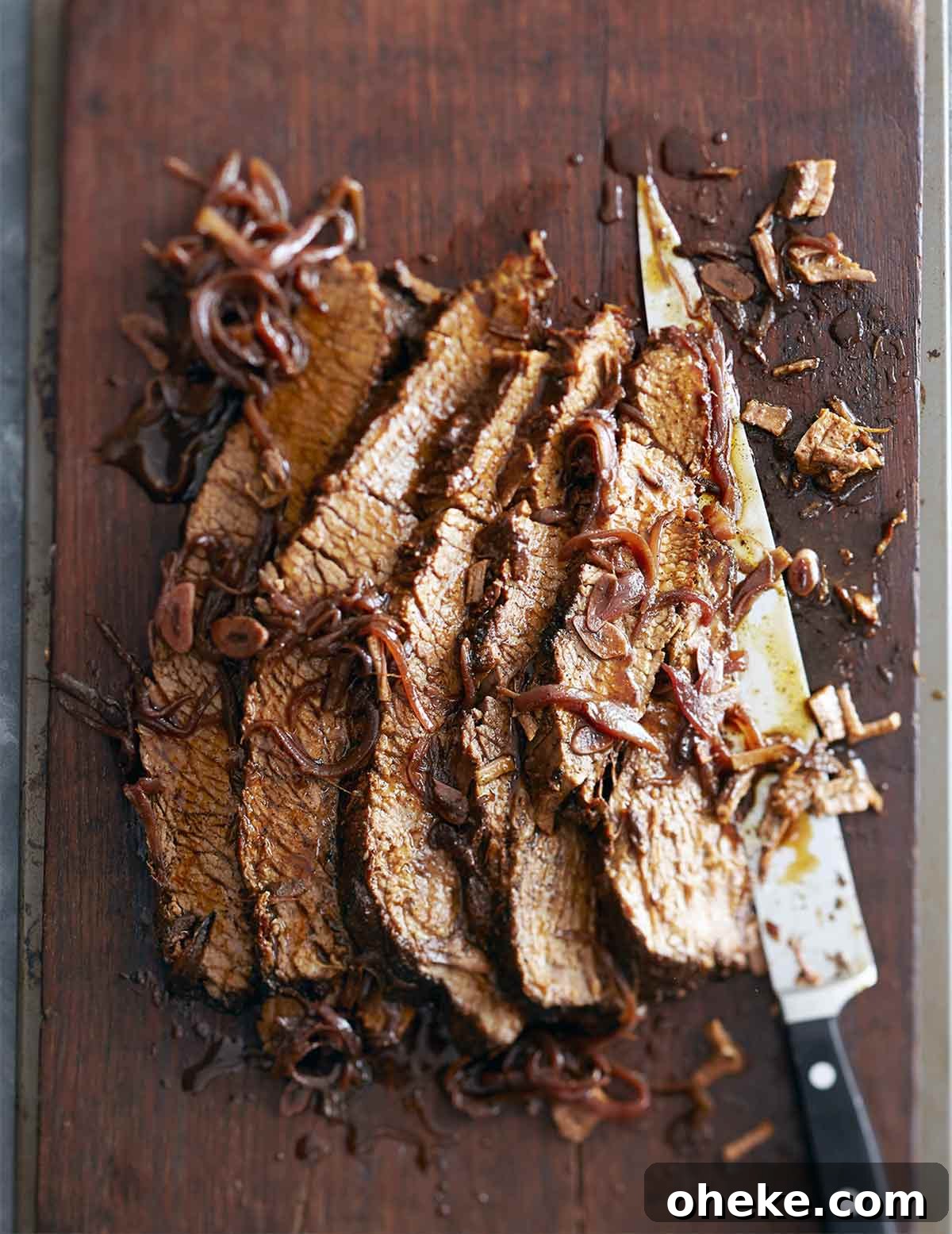
Braised beef brisket holds a special place in Jewish cooking, and this version, infused with red wine and honey, is an elegant, slightly boozy take on that tradition. The meat slowly simmers in wine, honey, and aromatics until it becomes tender and flavorful throughout. It’s comfort food with a refined edge, perfect for a weekend dinner or a holiday table. — David Leite
Brisket FAQs
Second-cut brisket, sometimes called deckle, is fattier and richer than first-cut brisket. Its texture and flavor are closer to short ribs. It may be harder to find in some grocery stores; ask your butcher if it’s not on display.
Yes. If only first-cut brisket is available, the recipe will still be excellent. Second-cut offers a slightly richer texture, but your guests won’t mind if you use first-cut.
Use a very sharp knife so you slice cleanly rather than crush cells that release irritants. Chilling onions in the refrigerator or in ice water for 30 minutes before slicing can also reduce tearing.
Mashed potatoes are perfect for soaking up the juices. Roasted vegetables — like fennel, parsnips, or a squash side — also complement the brisket nicely. Simple green vegetables or a light salad balance the richness.
Braised Brisket with Red Wine and Honey
David Leite
8 to 10 servings
Ingredients
- 4 to 5 pounds brisket, preferably second-cut
- Kosher salt and freshly ground pepper
- 1 tablespoon mild olive or vegetable oil
- 3 large yellow onions, halved through the roots and thinly sliced
- 8 sprigs fresh thyme
- 8 garlic cloves, thinly sliced
- 2 bay leaves
- 1 1/2 cups dry red wine
- 3 tablespoons balsamic vinegar
- 1/4 cup honey
- 1 teaspoon onion powder
- 1 teaspoon garlic powder
- 1 cup chicken stock or canned chicken broth
Instructions
- Preheat the oven to 325°F (160°C). Generously season both sides of the brisket with salt and pepper.
- Heat the oil in a Dutch oven or large heavy pot over medium-high heat. Add the brisket and brown on both sides, 8 to 10 minutes total. If it doesn’t fit, sear in batches.
- Remove the brisket and set it aside. Add the onions, thyme, garlic, and bay leaves to the pot, then pour in 1/2 cup (120 ml) of the wine and the balsamic vinegar. Cook, stirring often, until the onions soften and become fragrant, about 5 minutes.
- Whisk the remaining 1 cup (240 ml) wine with the honey, onion powder, garlic powder, stock, and 1 teaspoon salt until combined.
- If using a Dutch oven: Lay the brisket on top of the onions and pour the wine mixture over it. Cover and transfer to the oven. If using a pot: Transfer the onion mixture to a roasting pan, top with the brisket, pour the wine mixture over, cover tightly with foil, and transfer to the oven.
- Bake for 2 hours. Remove, uncover, and carefully flip the brisket. Cover and continue roasting until fork-tender, 1 1/2 to 2 1/2 hours more, depending on size.
- Remove the brisket and let it rest loosely covered with foil for 10 to 15 minutes before slicing. Slice across the grain into thin slices.
- Discard thyme sprigs and bay leaves. Spoon onions around the sliced brisket and drizzle with pan juices. Serve hot.
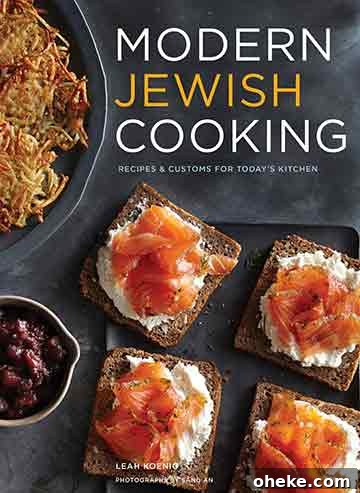
Adapted From
Modern Jewish Cooking
Nutrition
Nutrition information is automatically calculated and should be used as an approximation.
Tried this recipe?
Mention @leitesculinaria or tag #leitesculinaria on Instagram!
Recipe Testers’ Reviews
This recipe passed a rigorous blind-testing process and earned the Leite’s Culinaria stamp of approval. Here are a few tester notes:

Elie Nassar
This brisket is beefy and robust, balanced by caramelized onions and the sweet-savory notes of red wine and honey. It smells wonderful while it cooks. I recommend cooking it a day ahead — refrigerating overnight makes trimming fat easier and improves slicing and flavor.

Rashmi Primlani
The house filled with an intoxicating aroma while this brisket roasted. Caramelized onions and the wine reduction were highlights. Adding potatoes or root vegetables to the braise turns it into a one-pan meal. If the top of the brisket dries, consider adding an extra cup of stock.

Anna Scott
Slow, low cooking yields a fork-tender roast and a rich sauce. I used first-cut brisket and homemade chicken stock with excellent results. After about 4 hours total (2 hours, flip, then 2 hours), my brisket fell apart — perfectly cooked. Serve with mashed potatoes and a green vegetable.

Linda Pacchiano
Rich, deep flavors make this a classic braised brisket. For convenience, sear and sauté the onions a day ahead, refrigerate, then finish the braise the next day. Straining the pan juices and serving onions separately is a nice option if some diners prefer plain slices.