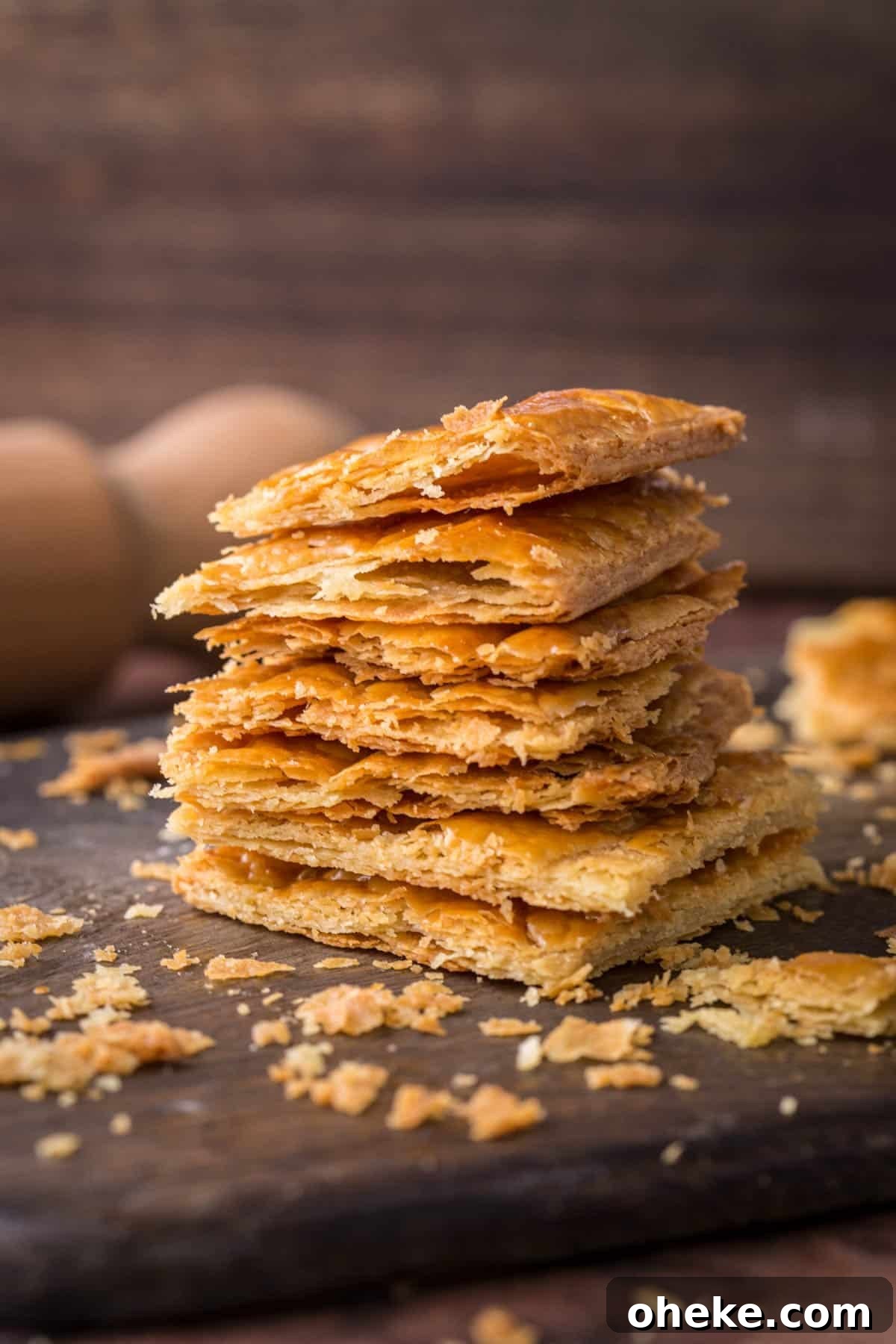
This Gluten-Free Puff Pastry is a quicker, easier alternative to traditional puff pastry because it uses the rough-puff method. That means less time spent chilling and folding yet still delivers crisp, buttery, flaky layers. The pastry relies on a simple three-flour gluten-free blend (no xanthan gum needed) so you’re not tied to any single brand. Use it for sweet or savoury bakes — apple turnovers, a Beef Wellington or a salmon en croûte all work beautifully.
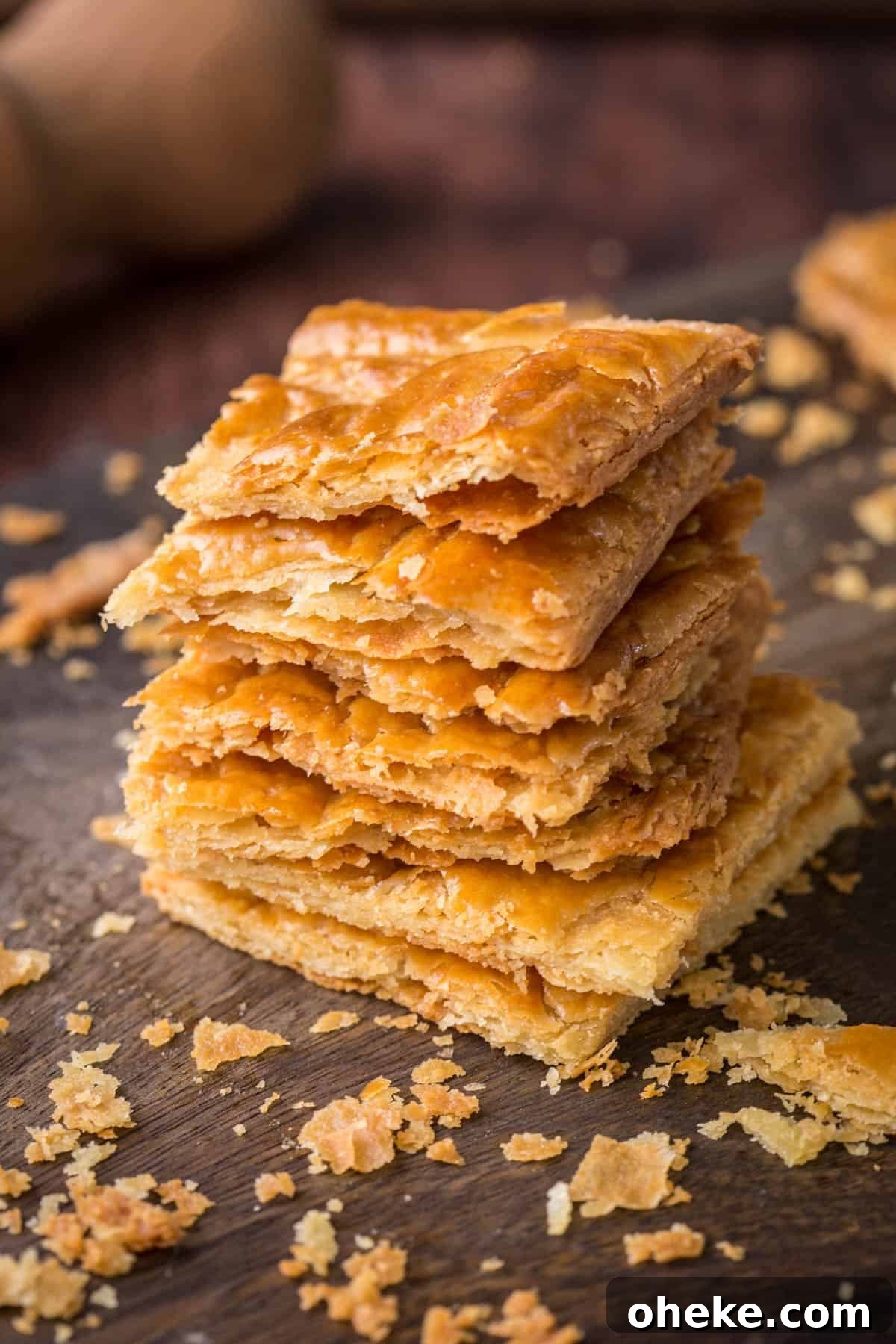
Gluten-Free Puff Pastry Dough
This dough produces a wonderfully flaky texture with a rich buttery flavour. The rough-puff technique is the easiest way to make puff pastry at home: it’s faster than classic puff, uses real butter for superior flavour, and creates distinct layers without an all-day process. The recommended flour mix — chickpea, cassava and tapioca — provides structure and elasticity so the pastry rolls without breaking.
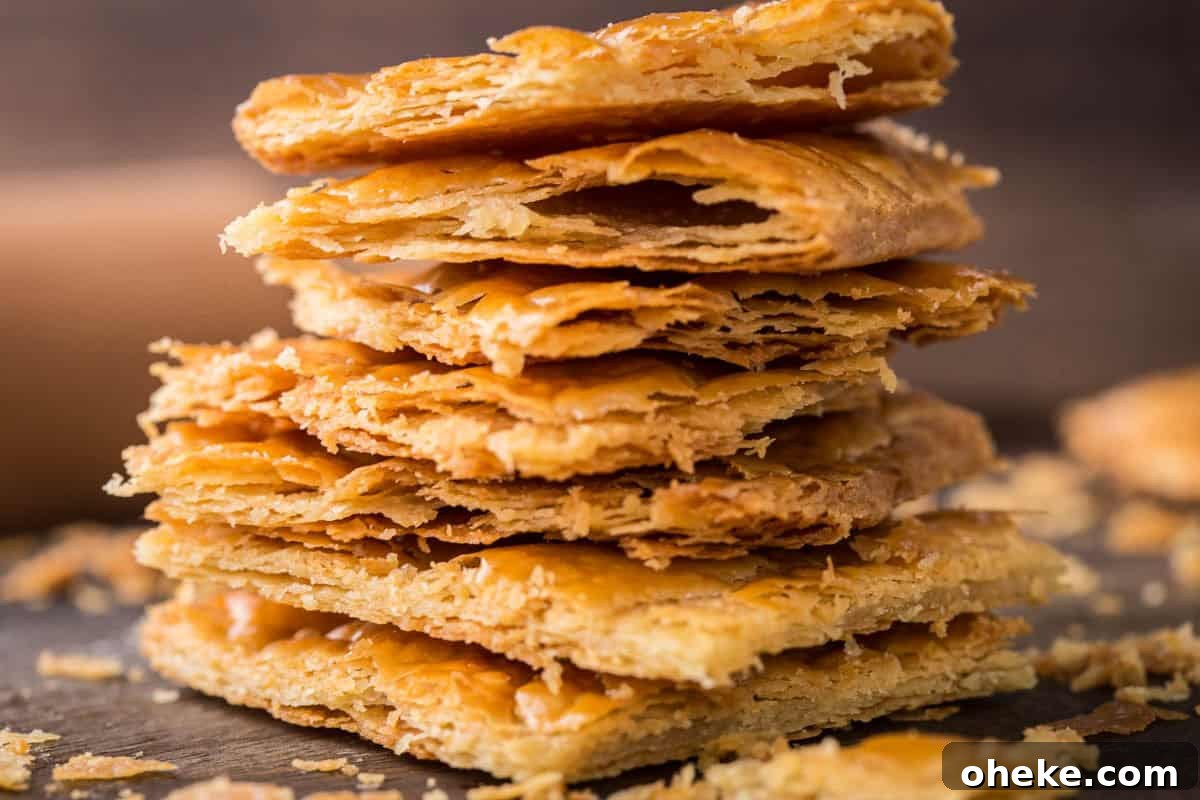
Why You’ll Love This Gluten-Free Puff Pastry
- Flaky layered texture. Produces a crisp, gluten-free pastry with visible layers.
- Buttery flavour. A higher fat-to-flour ratio gives a rich taste you won’t get from store-bought vegetable-oil alternatives.
- Versatile dough. Suitable for both sweet and savoury bakes.
- Beginner friendly. The method is forgiving — follow the steps and tips for great results on your first try.
- No xanthan gum required.
Watch the Recipe Video
Seeing the technique can be helpful. Watch the recipe video to follow each step visually as you make your pastry.
Ingredients Needed
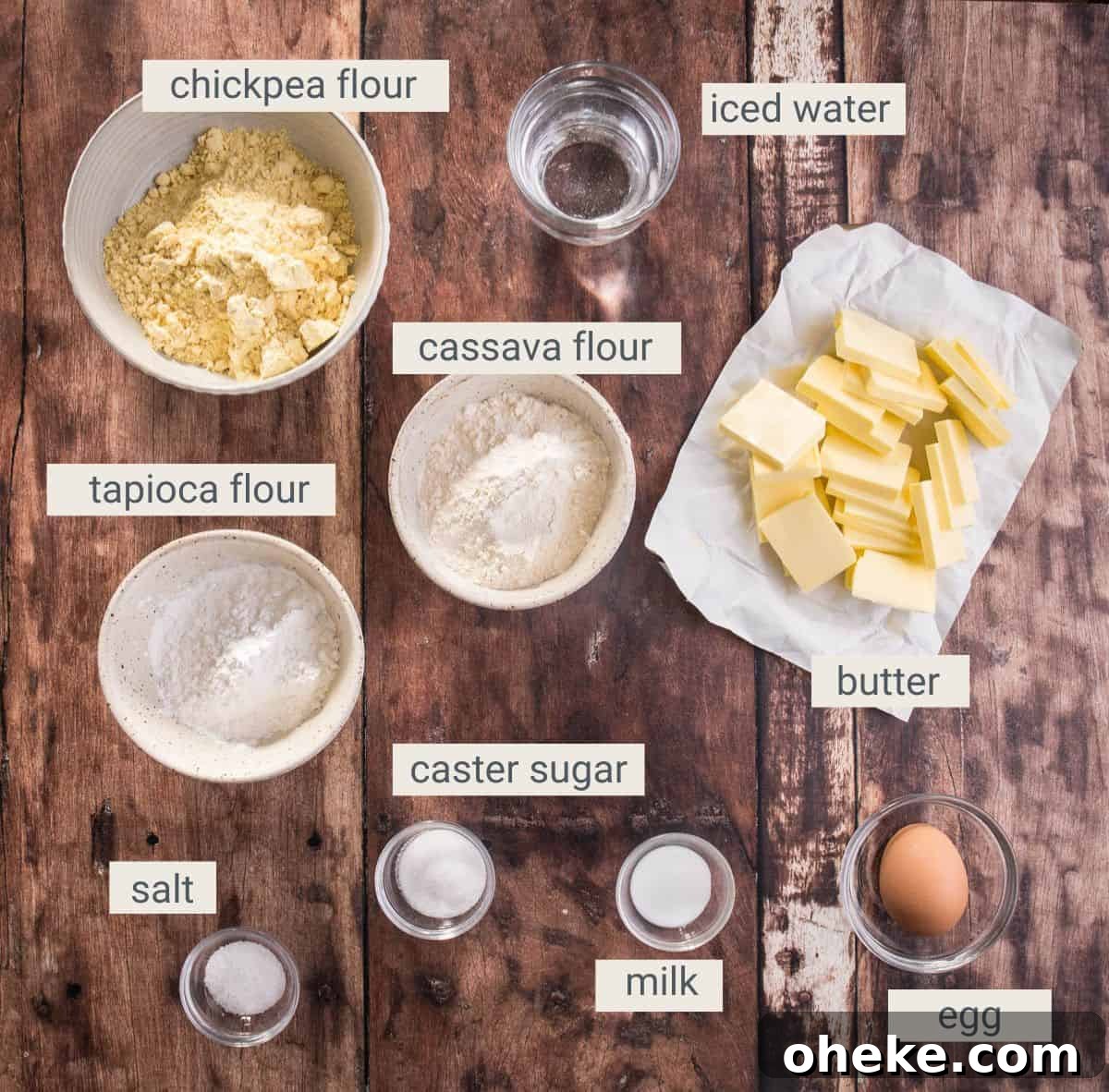
Chickpea flour (gram flour, besan). Adds protein and structure with a mild nutty note that stabilises the blend without overpowering the final pastry.
Cassava flour. A starchy, neutral-flavoured flour that contributes stretch and elasticity, making the dough easier to roll.
Tapioca starch (tapioca flour). Provides binding and helps the pastry brown to a golden colour.
Caster sugar. A small amount promotes browning and improves crisping; it won’t make the pastry sweet for savoury uses.
Salt. Use kosher or another neutral salt to enhance flavour.
Unsalted butter. Use very cold butter, sliced thinly and returned to the fridge before use. Do not substitute margarine or a non-dairy spread if you want the same texture and flavour.
Cold water. Use ice-cold water; add ice cubes to keep it chilled while measuring.
Egg yolk and milk. For an optional egg wash to give the pastry a glossy, golden finish.
Flour Substitutions
I don’t recommend using a generic gluten-free all-purpose flour for this recipe — the balance of protein and starches is important. If you must substitute due to dietary needs, consider these swaps at a push:
- Chickpea flour: Defatted almond flour (not standard almond flour).
- Cassava flour: Sweet rice flour (not plain rice flour).
- Tapioca starch: Potato starch (not potato flour).
How To Make Quick Gluten-Free Rough Puff Pastry
For full recipe details, follow the recipe card below.
1. Mix the dry ingredients. In a large bowl whisk together chickpea flour, cassava flour, tapioca starch, caster sugar and salt.
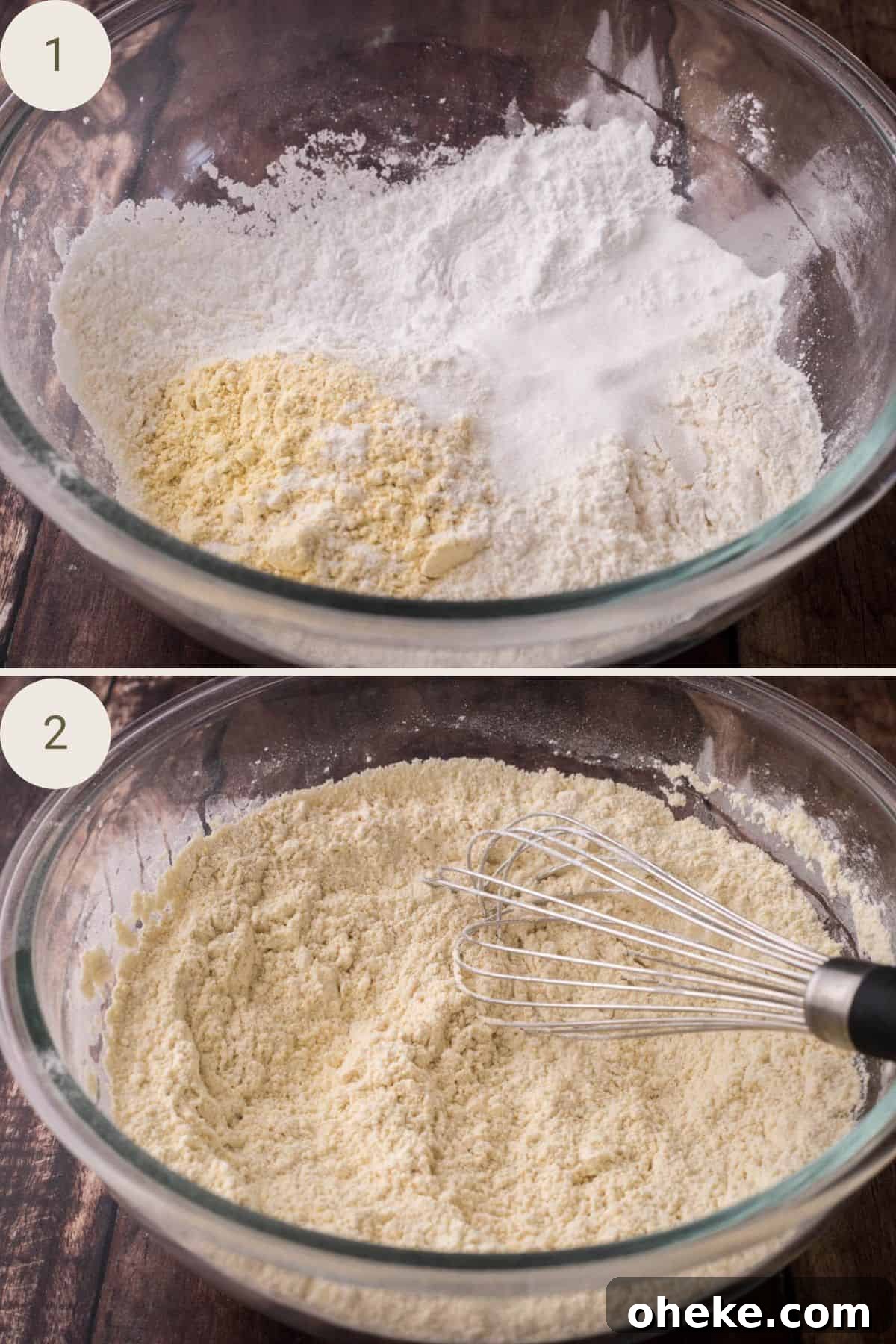
2. Add the butter. Toss the very cold butter slices into the flour mix so each piece is coated.
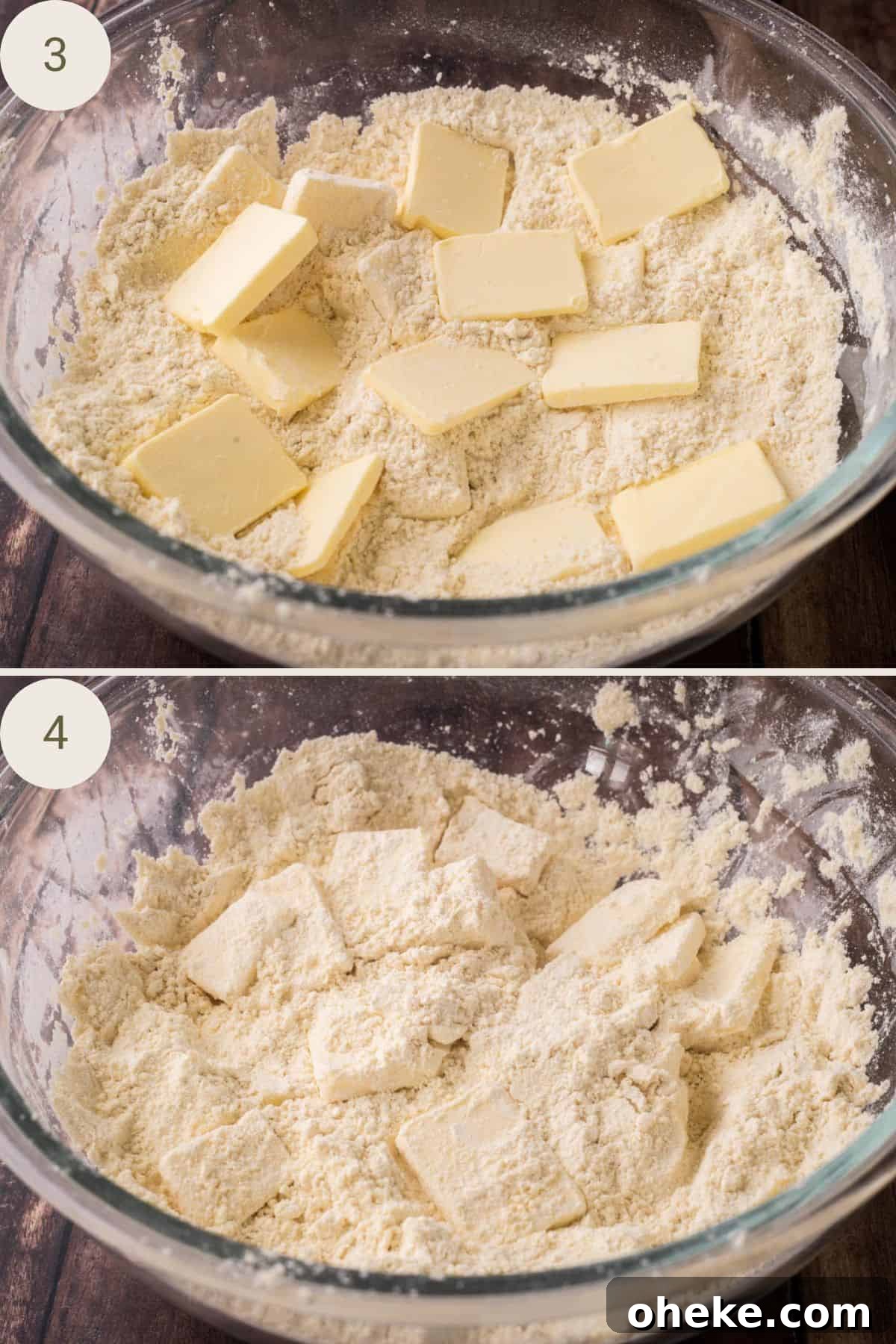
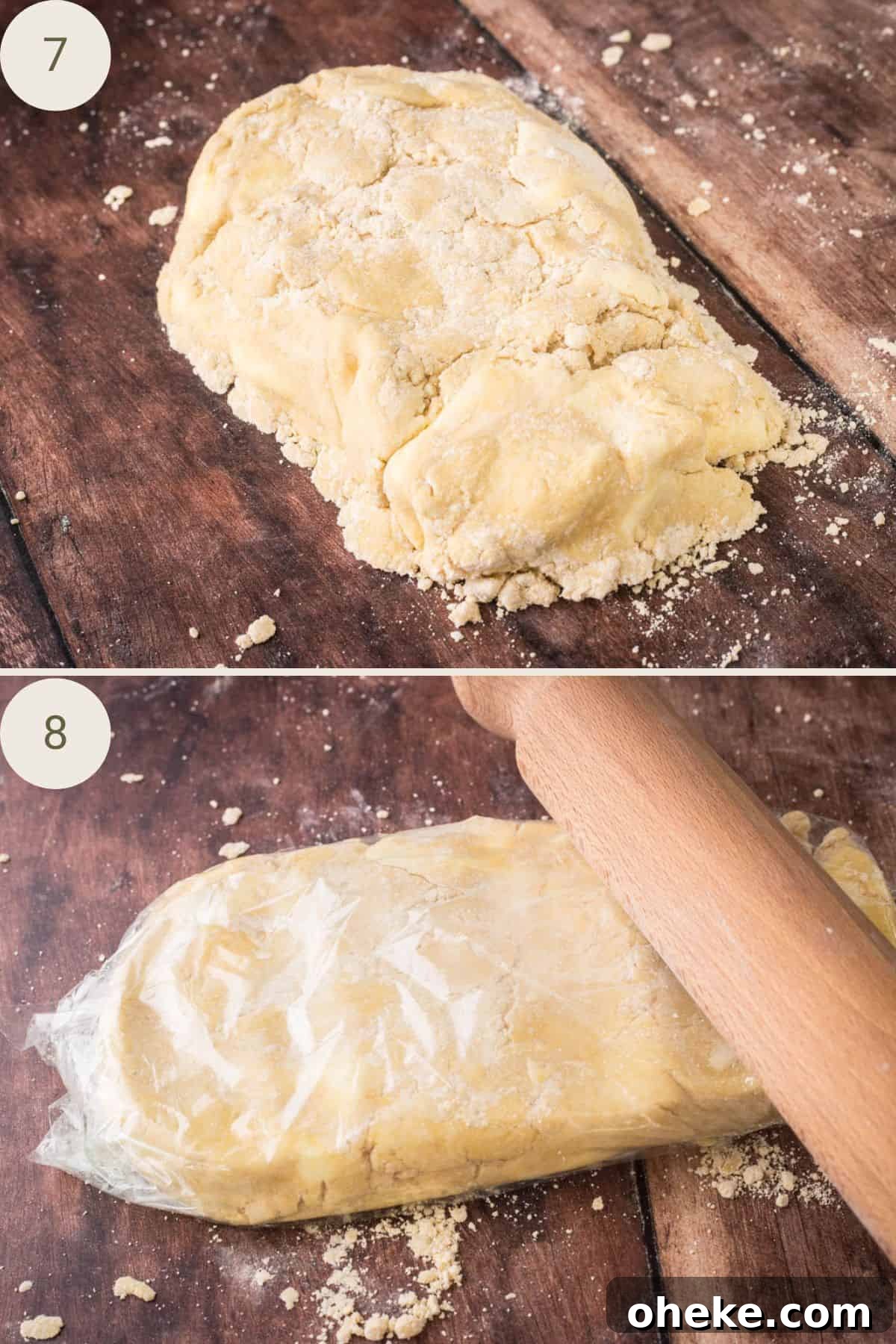
3. Make the dough. Add ice-cold water a little at a time, mixing with a fork until the dough just comes together into a loose, shaggy mix. Turn onto a clean surface, briefly press into a rough rectangle, wrap in cling film and use a rolling pin to flatten to about 1 inch (2–3 cm).
4. First chill. Chill the wrapped dough for 2 hours (or up to 48 hours) to firm up the butter.
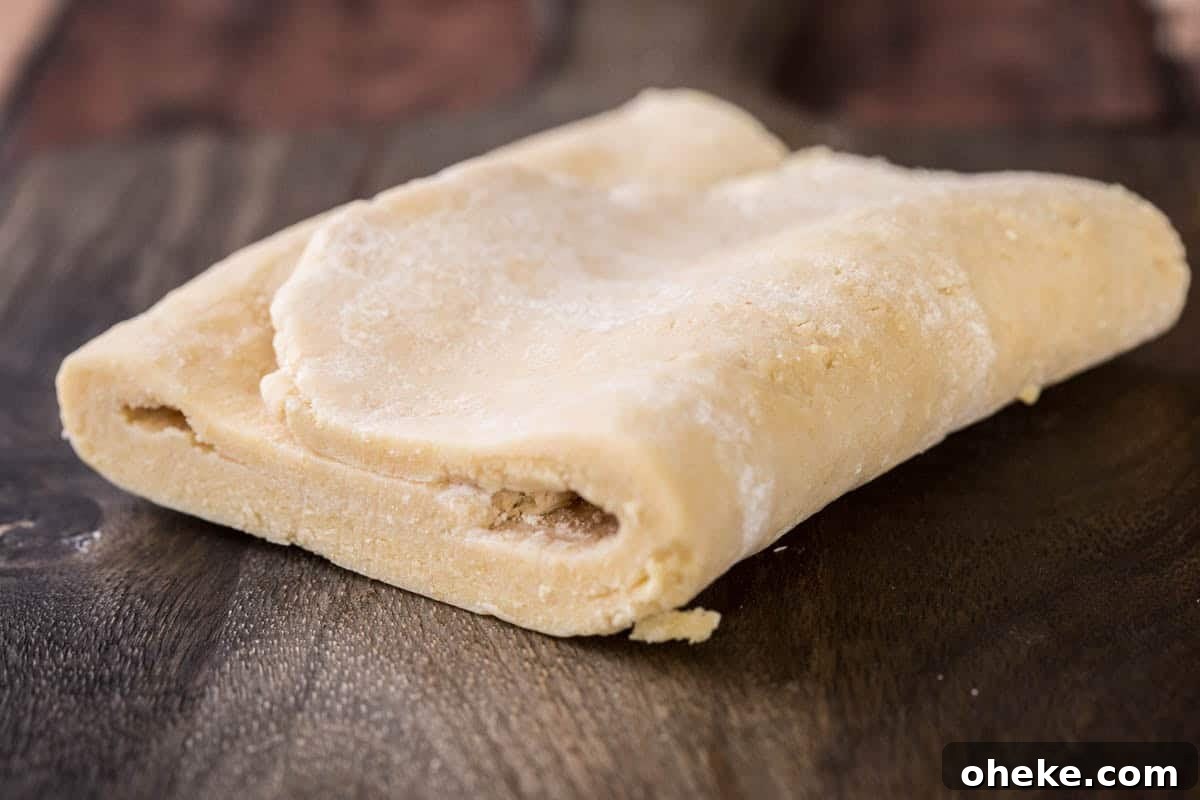
5. Roll and fold — first turn. Place the chilled dough between two sheets of parchment lightly dusted with tapioca flour. With the short edge facing you, beat the dough with a rolling pin to flatten, then roll to roughly 40cm x 20cm (about twice as long as wide). Remove the top sheet of parchment and fold one long edge to the centre, then fold the other edge over it like an envelope.
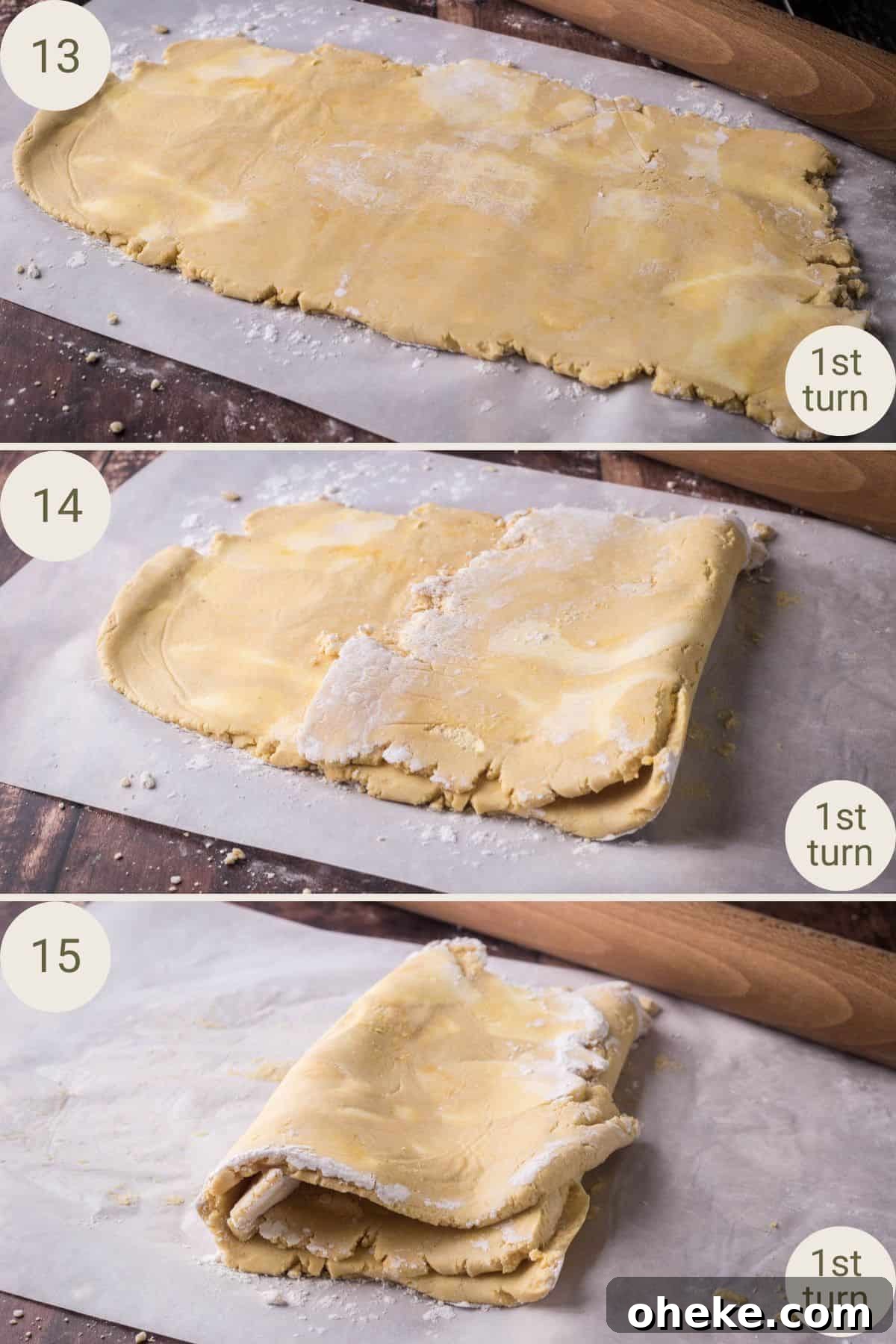
6. Rotate and repeat — second turn. Turn the dough 90 degrees, place parchment back on top, beat with the rolling pin, roll out to the rectangle again and fold as before.
7. Continue to 6 turns. Repeat rotating, beating, rolling and folding until you’ve completed six turns. After the third turn, if the butter begins to soften, wrap and chill the dough for 30 minutes to keep it cold before completing the remaining turns.
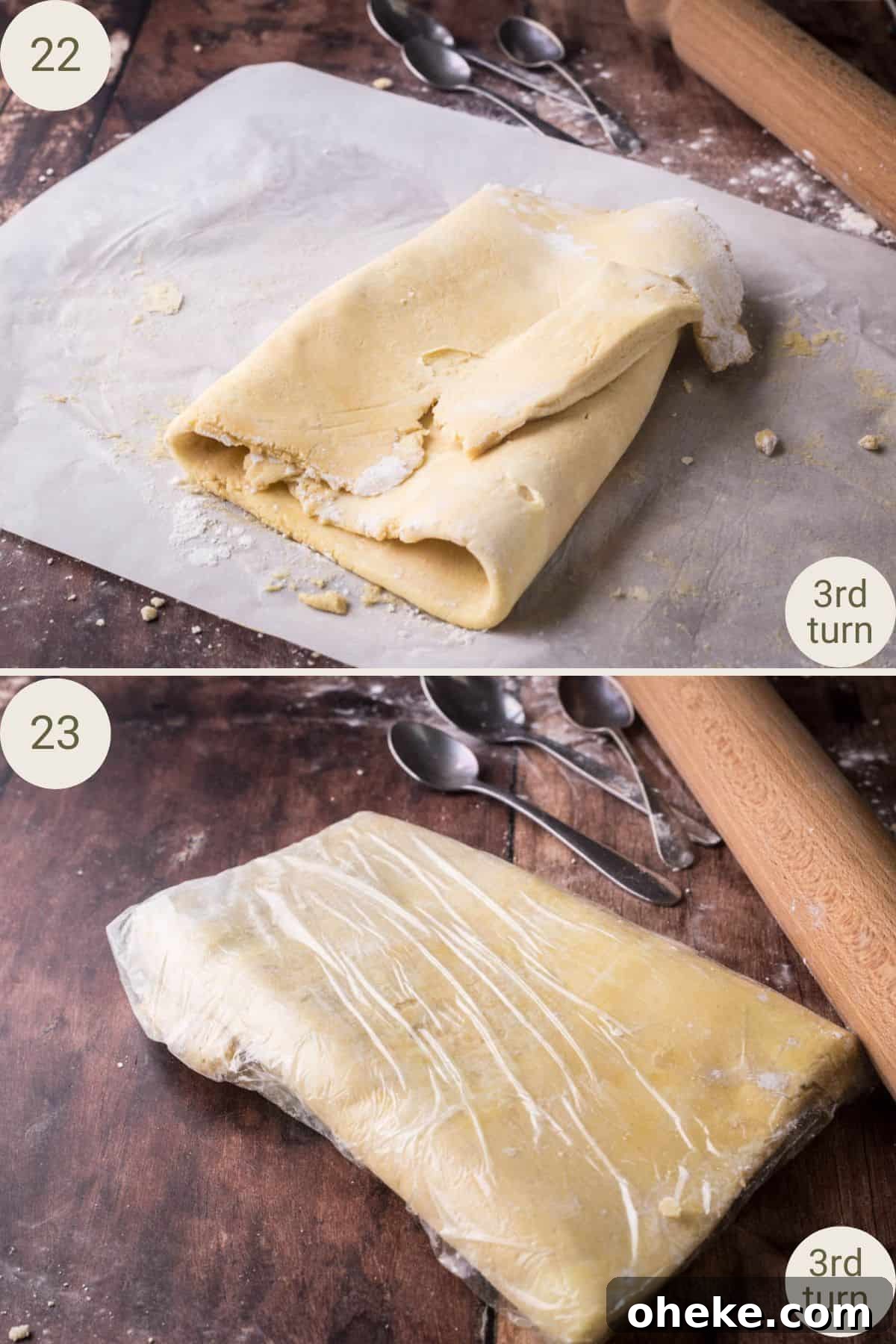
8. Final chill. After six turns chill for 15–30 minutes (or up to 48 hours) before using.
9. Using and baking the pastry. Roll the chilled block between two dusted sheets of parchment to the required shape and thickness. Chill the rolled pastry for at least 15 minutes before baking. For a simple sheet, preheat the oven to 220°C (200°C fan) / 425°F, brush with egg wash, place in the oven and immediately reduce the temperature to 200°C (180°C fan) / 400°F. Bake 20–25 minutes until crisp and golden.
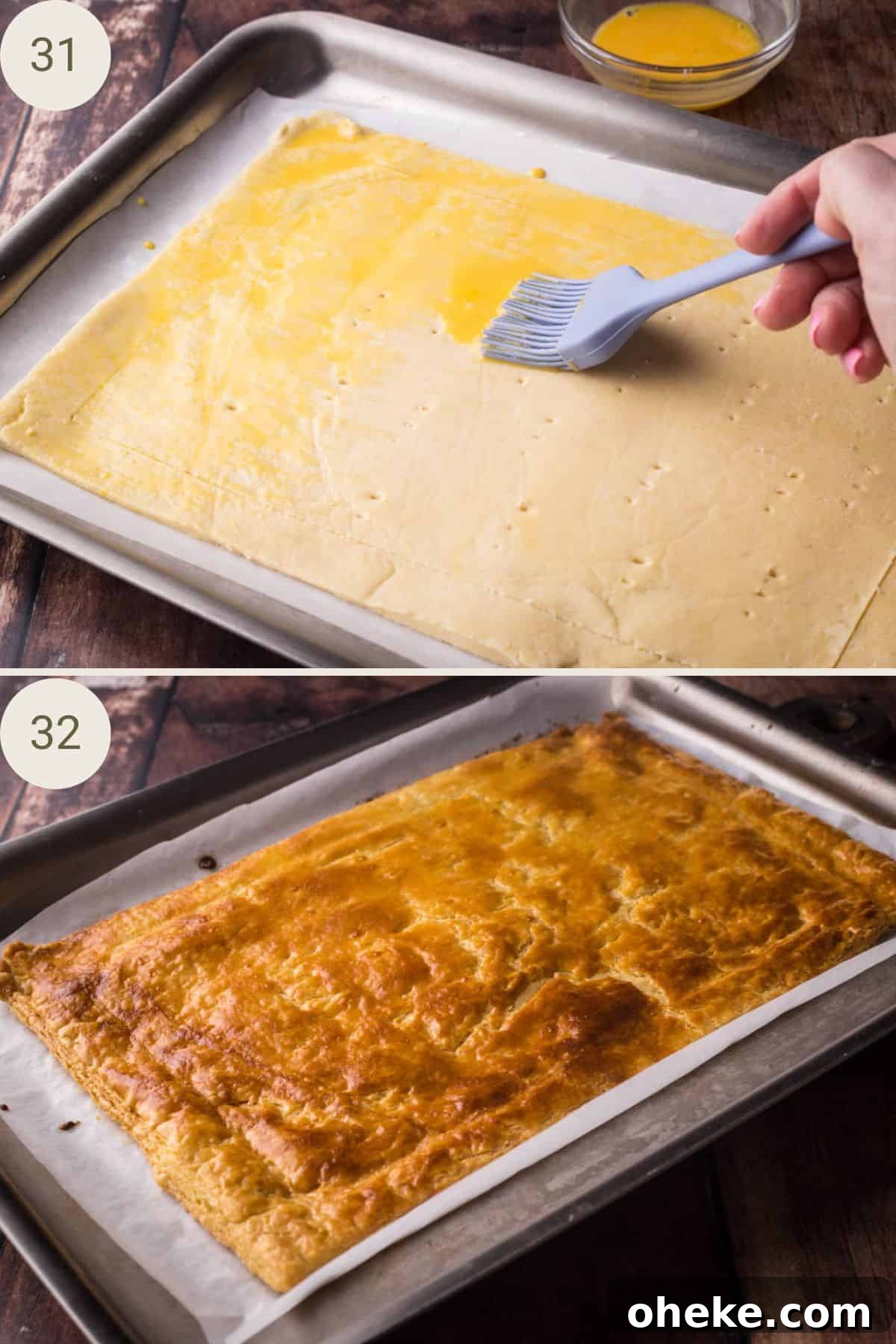
Expert Tips
Keep everything cold. If the dough warms at any point, chill it 15–30 minutes. Cold butter is essential to forming flaky layers.
If your hands warm quickly, wash them in cold water before handling the dough and avoid overworking it. I prefer wrapping the dough in cling film for chilling to keep the loose crumb together; a reusable zip bag also works.
Beat the wrapped dough with a rolling pin before rolling to make it more pliable while keeping the butter cold. Always roll between two sheets of parchment dusted lightly with tapioca starch to avoid adding excess flour, which can affect the layering. Brush off any excess starch after each turn.
Trust the process: the dough will look crumbly at first but will come together after several turns. To help count turns, use a simple cue such as moving a teaspoon into a cup after each turn so you don’t lose track.
When transferring the dough, peel the parchment away from the pastry rather than the other way around to avoid tearing. Use the pastry straight from the fridge and work quickly so the butter stays cold.
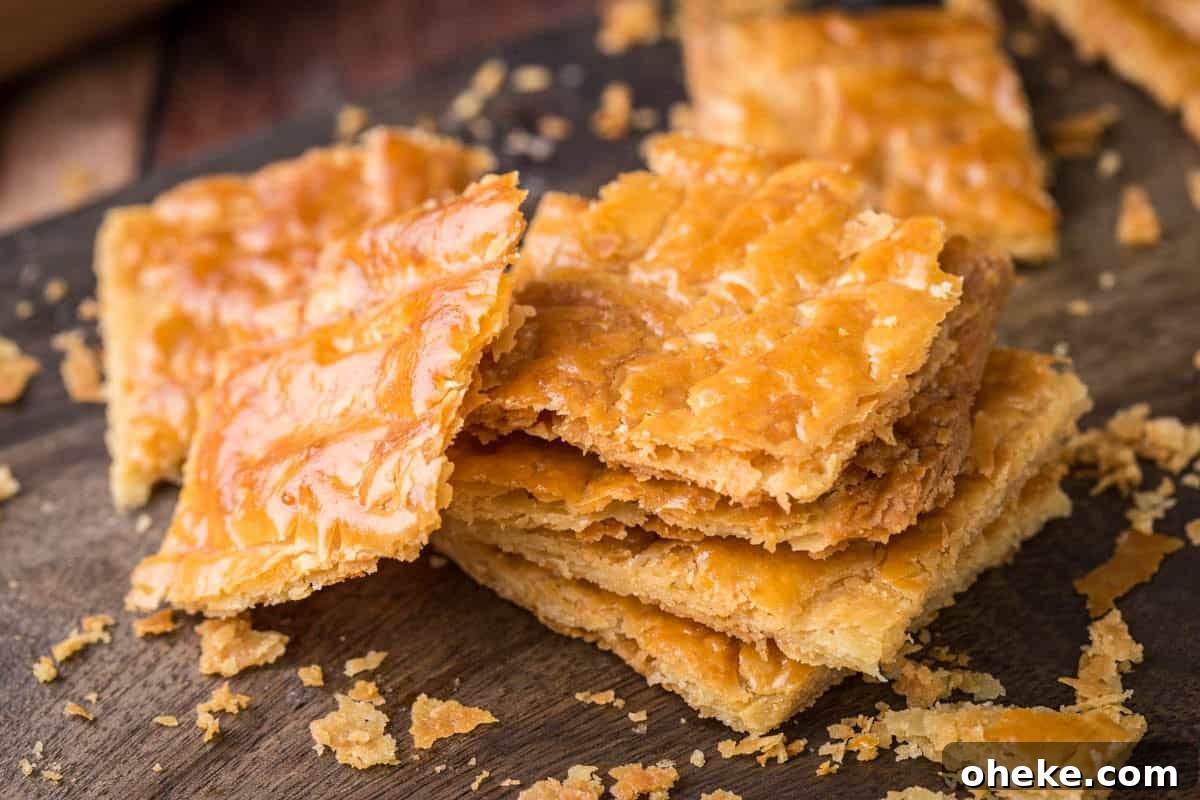
Why is my puff pastry doughy in the middle when baked?
- Keep the dough cold throughout preparation and chill it for at least 15 minutes before baking.
- Don’t roll the dough too thick; 4–5mm is a good target for most uses.
- Ensure adequate baking time — 20–25 minutes in a properly preheated oven helps the layers rise and crisp fully.
Why isn’t my pastry rising properly?
Rough puff rises less than classic puff pastry, and gluten-free versions can show slightly less lift. However, you should still see distinct airy layers. Common causes of poor rise:
- Butter warmed and softened during rolling — keep the dough cold and chill between turns if needed.
- Insufficient turns — aim for six turns for best layering.
- Oven temperature — start in a very hot oven (220°C / 425°F) and immediately lower to finish baking at 200°C / 400°F so the pastry lifts quickly then cooks through.
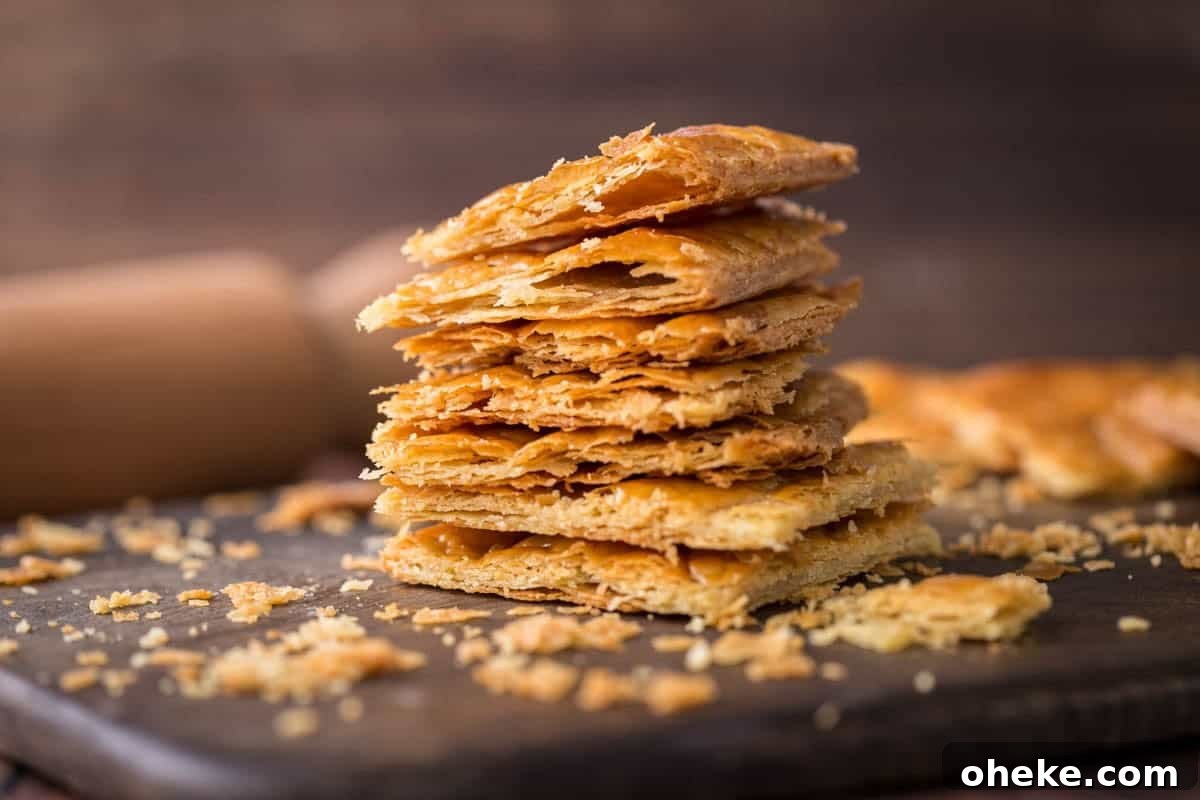
FAQs
Puff pastry is a layered pastry made by laminating dough and butter so that when baked it produces light, flaky layers that separate and crisp.
Classic puff pastry uses one solid block of butter folded into dough with chilling after each turn. Rough puff mixes small pieces of cold butter into the dough and requires fewer chill cycles, so it’s quicker though may rise a little less.
This recipe yields about 560g of pastry — roughly half that (280g) for a tart base serving 4–6, or about 360g for a 23cm pie lid. It’s also sized for dishes like Beef Wellington or salmon en croûte.
Freeze any unused pastry, or use it for quick bakes like cheese straws or cinnamon palmiers.
Preheat the oven to 220°C / 425°F, then lower to 200°C / 400°F once the pastry goes in. Bake for about 20–25 minutes until crisp and golden.
Yes — this pastry is suitable for a wide range of sweet and savoury recipes and is comparable in quantity to many store-bought blocks.
Approximately 4mm for general use. For mille-feuille and thin tarts aim for 3–4mm; for sturdier pie lids or turnovers, around 5mm.
Yes. After completing the steps, wrap well and chill in the fridge for up to 3 days before you bake with it.
Yes. Freeze the completed pastry block double-wrapped for up to 2 months. Defrost overnight in the fridge before use.
Puff Pastry Recipe Ideas
This pastry is very versatile. Popular uses include:
- Beef Wellington
- Apple turnovers
- Eccles cakes (as a substitution)
- Sausage rolls
- Quick fruit tarts
- Savoury tarts (for example, beetroot and feta)
- Chicken and leek pie
- Mille-feuille
- Tarte Tatin
More Gluten-Free Pastry Recipes You’ll Love
- All-Butter Shortcrust Pastry
- Hot Water Crust
- Sweet Flaky Pastry
- Sweet Pastry Crust
Easy Homemade Gluten Free Puff Pastry
Ingredients
- 120 g chickpea flour
- 80 g cassava flour
- 60 g tapioca flour (plus extra for dusting)
- 2 teaspoons caster sugar
- 1 teaspoon kosher salt
- 200 g unsalted butter, sliced very thin and kept cold
- 150 g ice-cold water
Egg wash (optional)
- 1 egg yolk
- ¾ teaspoon milk
Instructions
- Mix the dough: Combine flours, sugar and salt. Add cold butter slices, ensuring each piece is coated in flour. Gradually add iced water, 2 tbsp at a time, mixing with a fork until the mixture forms a loose, shaggy dough. Turn out and press into a rough rectangle about 7–10 cm thick. Wrap and beat with a rolling pin to flatten slightly.
- 1st chill: Chill wrapped dough for 2 hours (or up to 48 hours).
- Roll and fold — 1st turn: Place dough between two sheets of parchment dusted with tapioca. With the short side facing you, beat the dough to flatten, then roll to approx. 40cm x 20cm. Remove the top sheet of parchment and fold each long edge to the centre, closing like an envelope.
- 2nd turn: Rotate the dough 90°, replace parchment, beat and roll to the rectangle again, then fold as before.
- 3rd–6th turns: Repeat rotating, beating, rolling and folding until you have completed six turns. After the third turn chill for 30 minutes if the butter softens, then continue with turns 4–6.
- Final chill: After six turns chill for 15–30 minutes (or up to 48 hours) before using.
- Using: Roll the chilled block between dusted parchment to the required shape and thickness. Chill for at least 15 minutes before baking.
- To bake a simple puff sheet: Preheat oven to 220°C (200°C fan) / 425°F. Brush pastry with egg wash, place in the oven and immediately reduce heat to 200°C (180°C fan) / 400°F. Bake 20–25 minutes until crisp and golden.
Notes
Flours: The recipe relies on the balance of these three flours. If necessary, possible swaps are defatted almond flour for chickpea flour, sweet rice flour for cassava, and potato starch for tapioca.
Tips: Keep dough cold, roll between parchment, beat before rolling to keep butter chilled, and mark turns to keep count. Scrape excess pastry from parchment sheets to keep them clean.
Quantity & Storage: Recipe makes 560g. Freeze double-wrapped for up to 2 months; defrost overnight in the fridge. Chill in the fridge for up to 3 days if making ahead.