By Kevin Williams
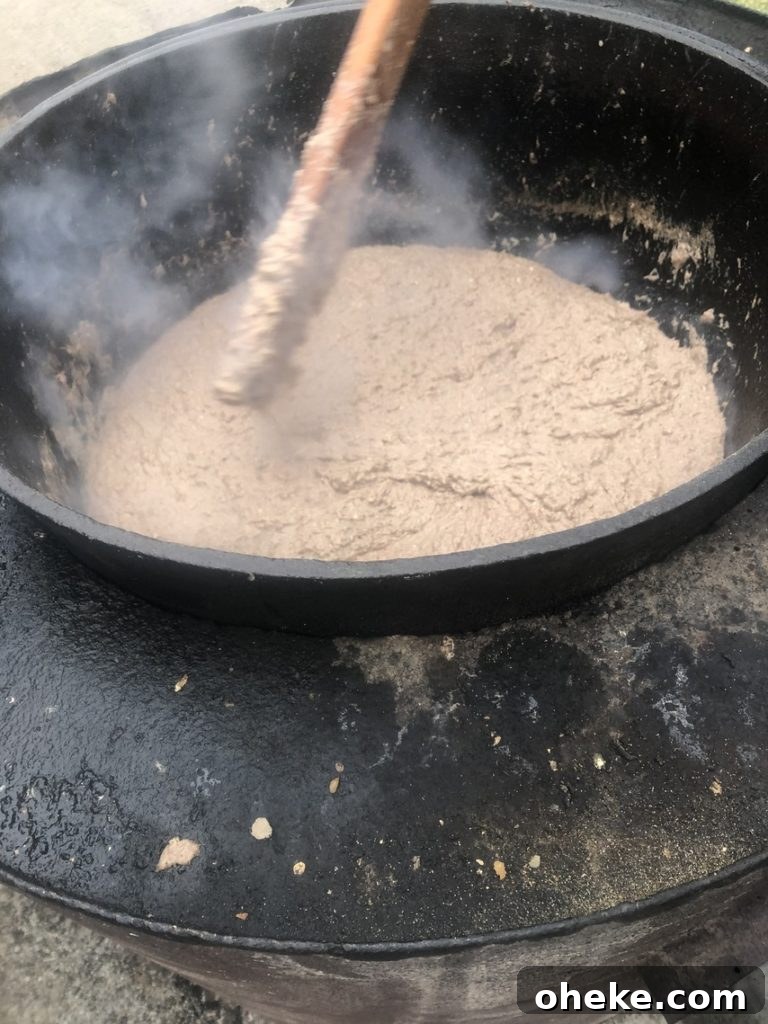
CLICK HERE TO WATCH A 17-SECOND VIDEO OF THE HEADCHEESE MAKING.
I was driving through an Amish settlement south of Kenton, enjoying the familiar sights—colorful laundry on clotheslines, hand-lettered signs advertising fresh eggs, and horse-drawn buggies on the lane—when something unusual caught my eye: a group of Amish people gathered around a giant kettle in a driveway, stirring whatever was cooking inside. I kept driving for a moment, then told myself I should turn back. This was my job: find out what they were making and tell readers about it. So I pulled into the driveway and approached the scene.
About a dozen Amish of varying ages looked up as I parked. I introduced myself, explained that I write, and asked what they were doing. Several recognized the Amish Cook column and were pleased to pose for photos; they even asked where the pictures would appear. I promised to try to get them into the nearby Kenton paper.
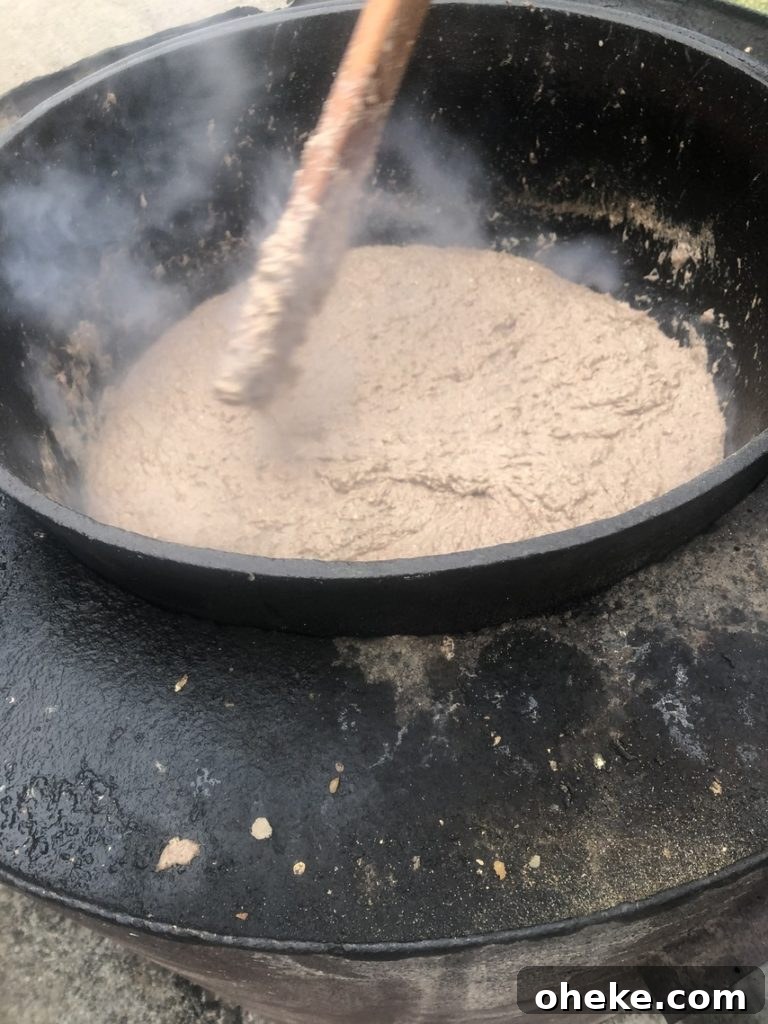
They were making headcheese, a traditional pork preparation made from assorted meat scraps. It closely resembles a dish many Amish call “pon haus,” but the main difference they pointed out is the absence of cornmeal in headcheese. The meat is boiled and seasoned over an open fire and stirred constantly with a large wooden oar.
An elderly man described how they test for doneness using what he called the “finger test”: someone carefully places a finger into the simmering mixture and counts to ten. If they can keep their finger in until they reach ten without a severe burn, the meat isn’t done; the proper point of doneness comes when the test indicates the mixture has reached the right consistency and temperature.
After cooking, the mixture is ladled into sterilized jars so the headcheese can be stored and enjoyed year-round. On the day I visited, they also offered a sample served on saltine crackers. It was flavorful, and I was struck by how welcoming and gracious everyone was toward a curious stranger.
They also shared how they commonly eat headcheese, which may seem surprising to outsiders: they make homemade pancakes, spread them with their apple butter, then layer on headcheese followed by ketchup and chopped onion. One man joked, “Now that is what we call a healthy start to the day!” He was teasing about the comment, not the recipe—it really is eaten that way by some.
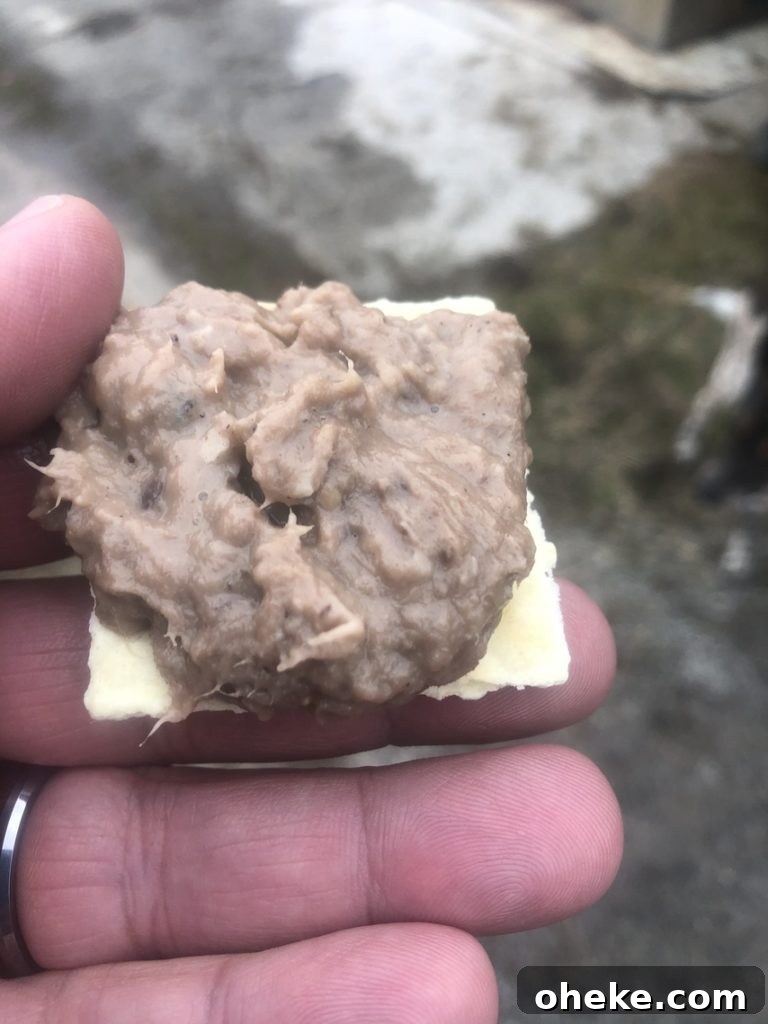
Headcheese, freshly cooked, served on a saltine.
Home-canned headcheese. The men handled the cooking, stirring, and seasoning while the women took care of the canning.
We shared stories and food, and I left feeling grateful for their hospitality. We parted as friends, and I drove away with a new appreciation for this traditional dish and the communal effort behind it.