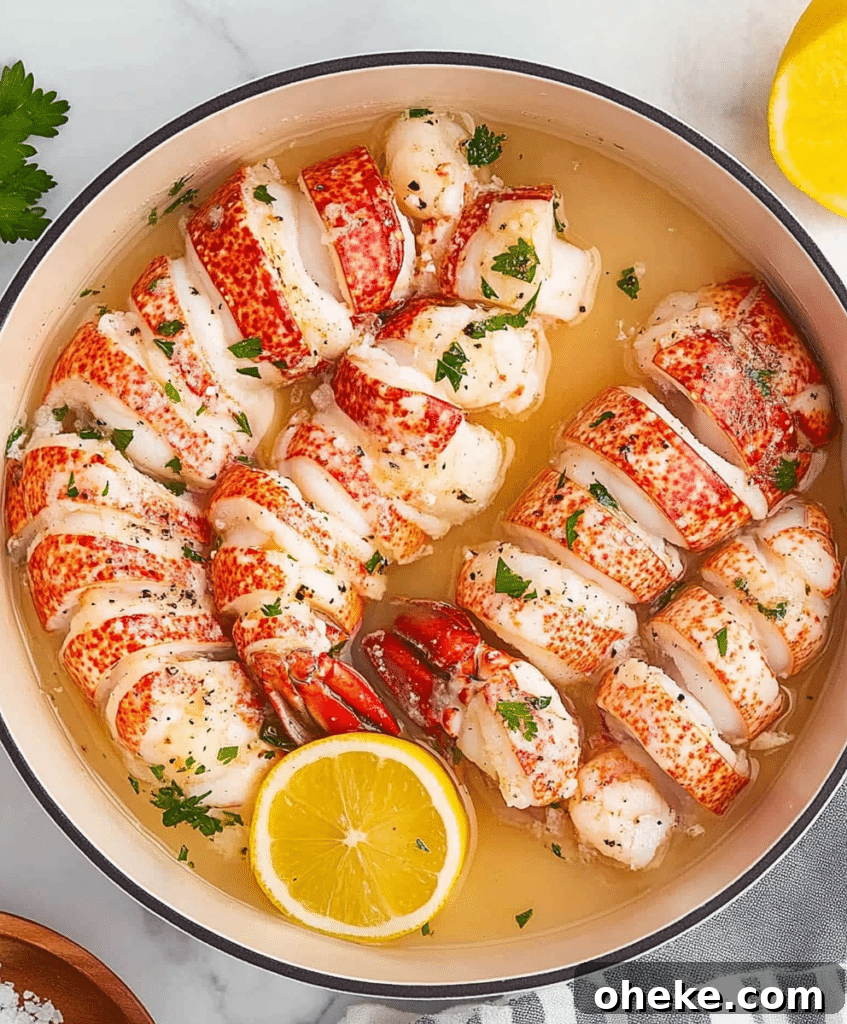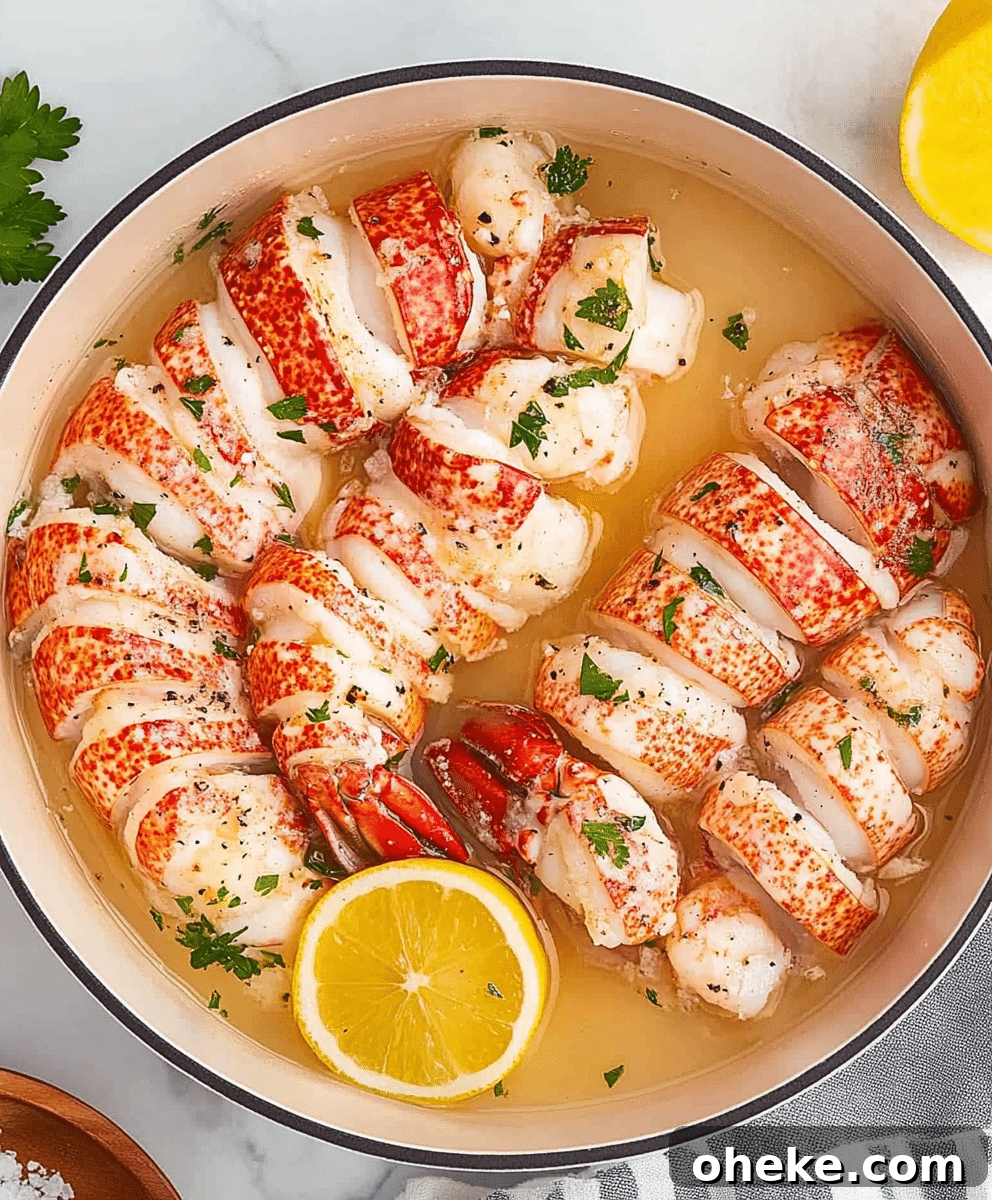
There’s something undeniably special about lobster. It feels like a celebratory dish even on an ordinary night. If lobster tails seem intimidating, here’s a secret: butter-poached lobster tails are simple to make at home and incredibly indulgent. Poaching lobster gently in butter brings out a rich, silky flavor that transforms the meat into a tender, luxurious centerpiece. Once you try it, you’ll want to make it again and again.
I still remember the first time I made butter-poached lobster tails at home. It was a spur-of-the-moment dinner—lobster tails from the freezer and a stick of butter in the fridge. The kitchen filled with the scent of garlic and butter as the lobster cooked, and the result was perfectly tender, deeply flavorful meat. That meal became a go-to for date nights and special family dinners because it looks and tastes impressive while being surprisingly easy.
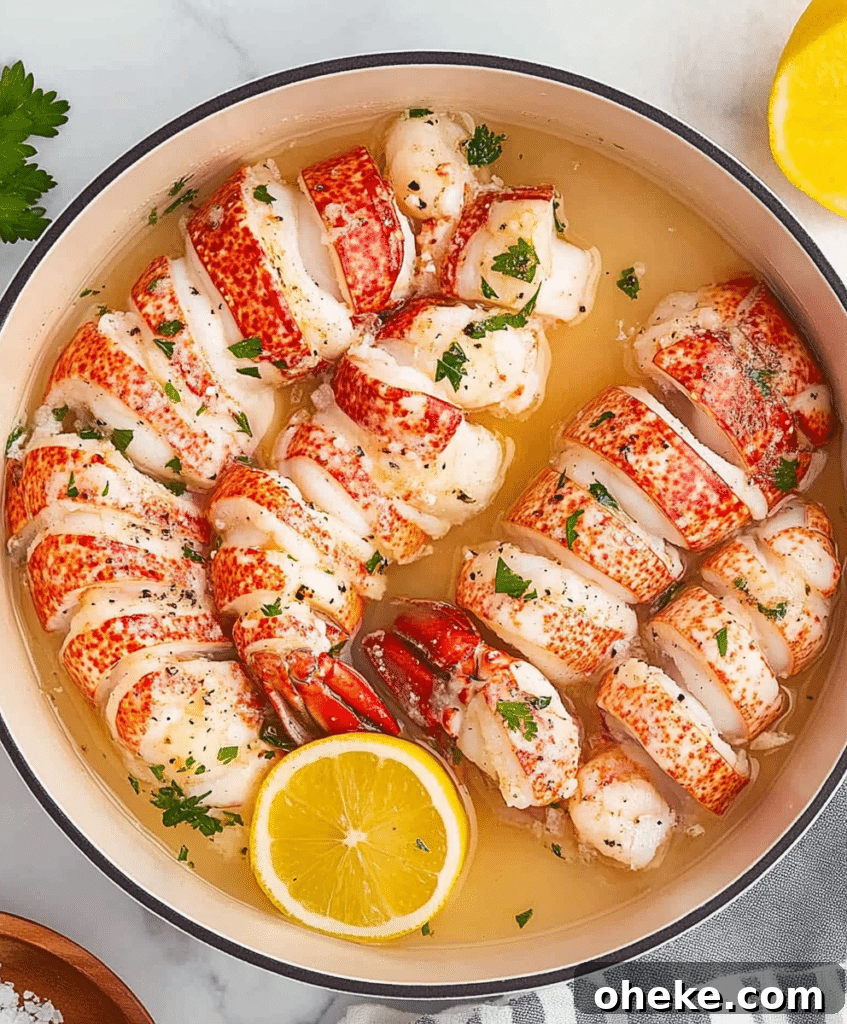
Why butter-poached lobster tails are a must-try
This method stands out for its elegance and simplicity. Lobster meat poached in butter becomes tender and moist while absorbing the buttery, garlicky flavors. A final squeeze of lemon brightens the dish. The technique is forgiving, so even first-time lobster cooks can deliver restaurant-quality results.
My first buttery lobster adventure
The first time I served this at a family gathering, I was nervous but excited. The aroma of garlic butter rising from the pan drew everyone in. Watching guests take their first bite and light up was priceless. They assumed I’d spent hours preparing it, when in reality it was one of the simplest meals I’d ever made. It quickly became a favorite and a dish that always sparks that same joyful reaction.
A brief note on lobster and butter poaching
Lobster’s status has changed a lot over time: once inexpensive and even used as feed, it’s now a celebrated delicacy. Butter poaching, influenced by classic French techniques, is ideal for shellfish because it cooks the meat gently while infusing it with rich flavor. The result is moist lobster with a delicate texture and enhanced taste.
Key ingredients: lobster, butter, garlic
This recipe uses a short list of ingredients whose quality matters:
- Lobster tails: Choose medium-sized tails (about 5–6 oz each). Frozen tails are fine—thaw completely before cooking.
- Butter: Unsalted butter lets you control seasoning. This recipe uses about 12 tablespoons (1.5 sticks) for a rich poaching bath.
- Garlic: Minced garlic adds aroma—cook it briefly to avoid bitterness.
- Kosher salt and black pepper: Simple seasoning to enhance the lobster’s natural sweetness.
- Parsley and lemon wedges (optional): Fresh parsley and a squeeze of lemon brighten the finished dish.
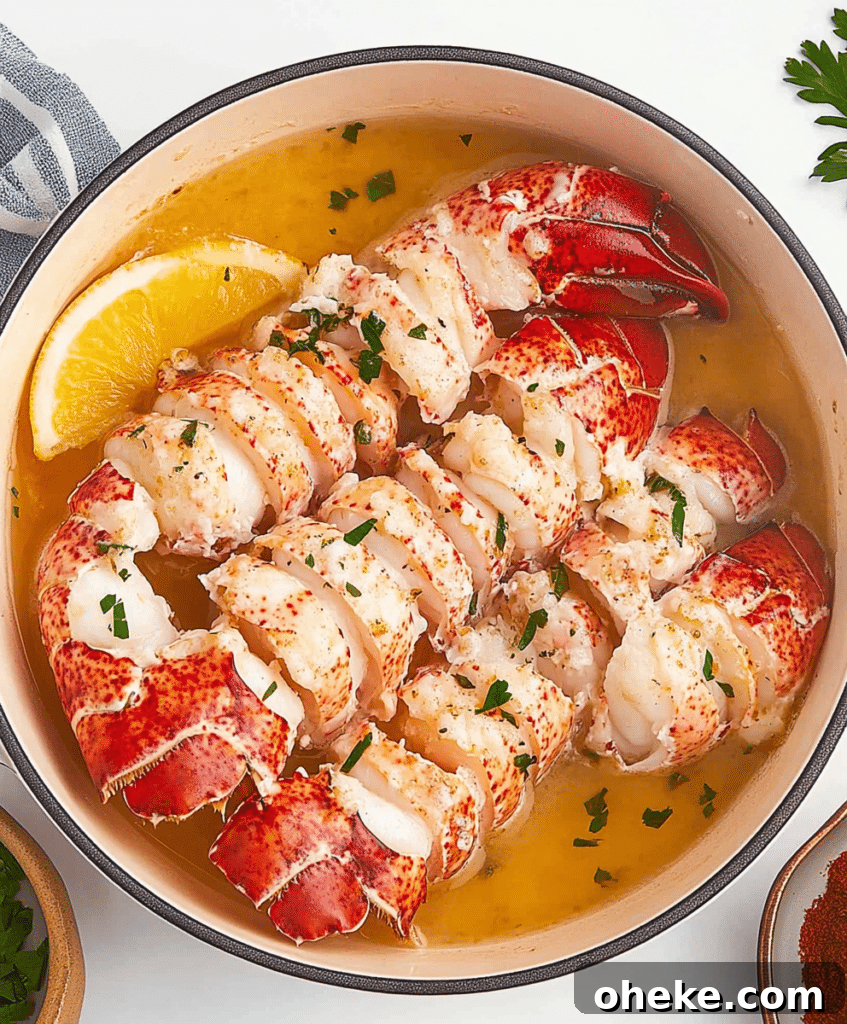
Useful tools
You don’t need fancy equipment—just a few practical tools make the job easier:
- Kitchen shears: For cutting through shells and exposing the meat cleanly.
- Large skillet: Big enough so the tails aren’t crowded.
- Tongs: Helpful for turning and handling the lobster gently.
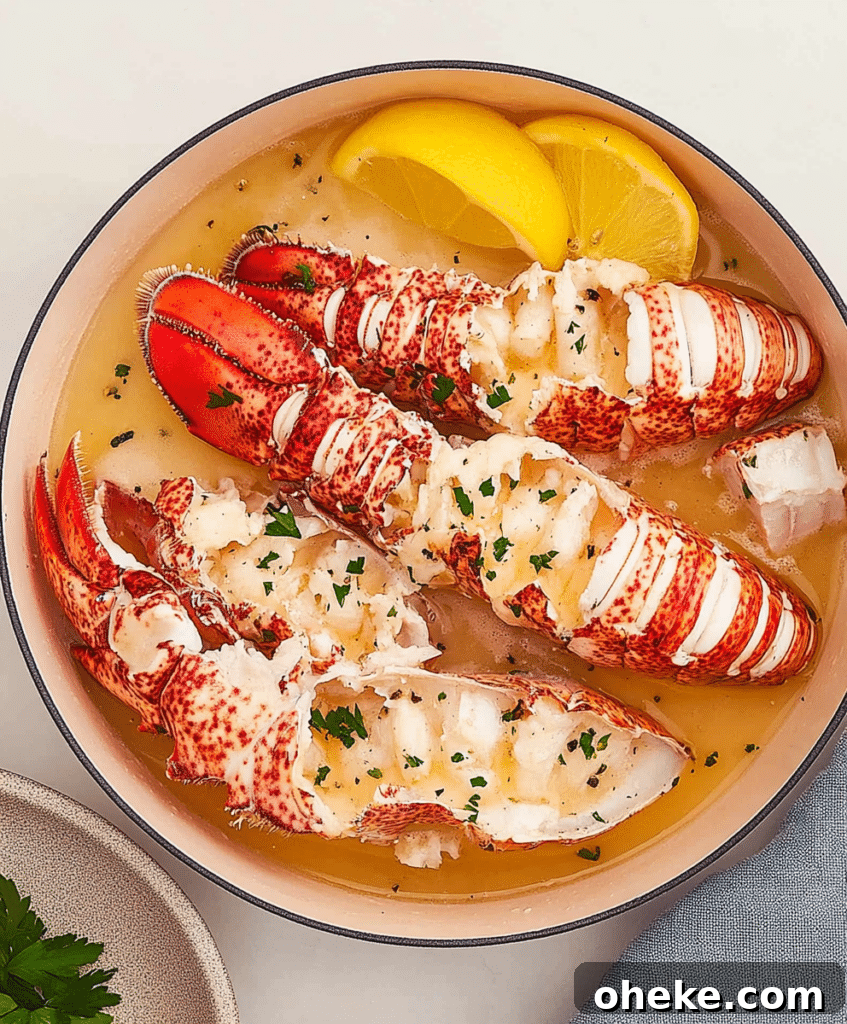
How to butter-poach lobster tails
- Prepare the lobster tails: Turn each tail over so the softer underside faces up. Crack the ribs gently and cut along the underside with kitchen shears from base to tail fin, avoiding the fin. Ease the meat out of the shell, keeping it attached at the base if possible. Pro tip: remove any dark vein along the back for a cleaner texture.
- Season the lobster: Pat the tails dry and season both sides with kosher salt and freshly cracked black pepper. Set aside while you melt the butter.
- Make the garlic butter: Melt butter in a large skillet over medium-low heat. Stir in minced garlic and cook just until fragrant—about a minute—being careful not to burn it.
- Poach the lobster: Place the tails in the skillet without overcrowding. Poach about 2–4 minutes per side, depending on size, until the meat turns opaque and curls slightly. Avoid overcooking; fully cooked lobster is opaque and tender. If cooking in batches, tent finished tails with foil to keep warm.
- Finish and serve: Squeeze fresh lemon over the cooked lobster, sprinkle with parsley if desired, and serve with the remaining garlic butter for dipping.
Variations and ideas
This technique adapts well to different flavors:
- Spicy: Add red pepper flakes to the butter for gentle heat.
- Herb-infused: Add fresh thyme or tarragon for an aromatic twist.
- Plant-based option: Use the same method with mushrooms or tofu for guests who prefer no seafood; adjust cooking times accordingly.
- Seasonal twist: A tiny pinch of nutmeg or warm spice can work well in cooler months.
Presentation and pairings
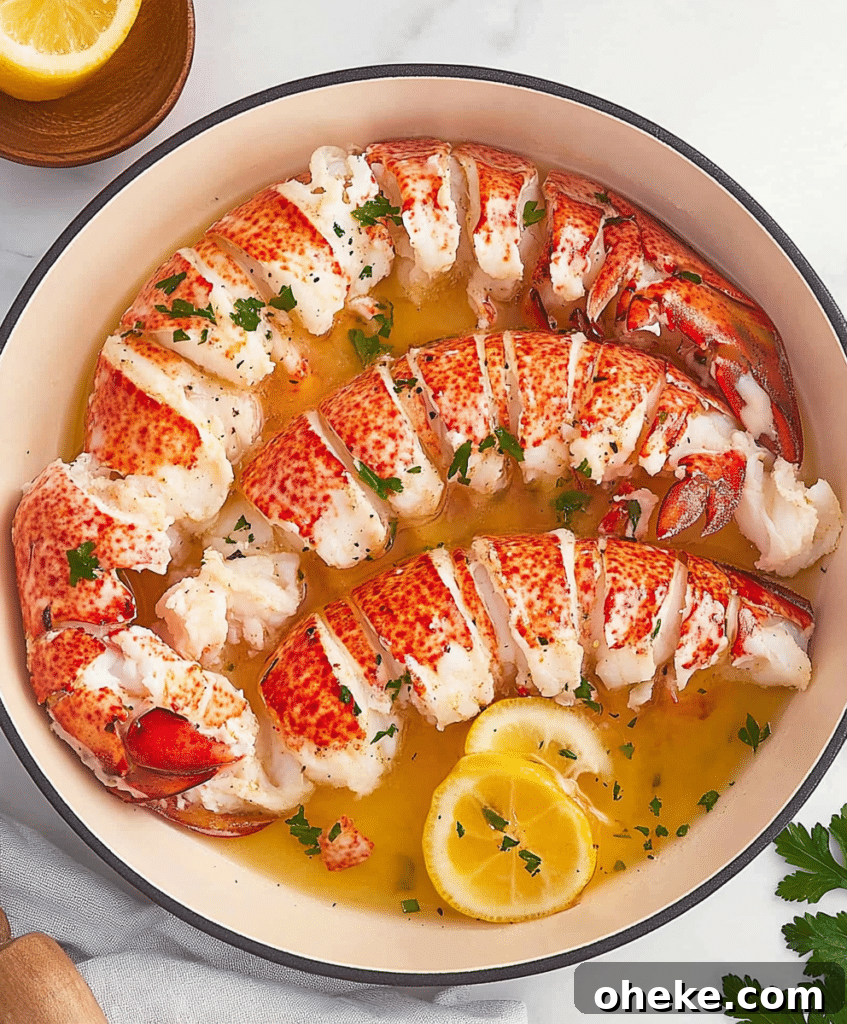
Serve the lobster on a large platter with lemon wedges and a sprinkle of parsley. Light, simple sides let the lobster shine—think buttery mashed potatoes, roasted asparagus, or a crisp green salad. For drinks, a chilled Chardonnay or Sauvignon Blanc pairs beautifully; sparkling water with lemon is a pleasant non-alcoholic option.
Storage and reheating
Leftovers can be stored in an airtight container in the fridge for 2–3 days (if left in the shell, aim for 1–2 days for best texture). Reheat gently in a skillet with a little melted butter just until warmed through to avoid overcooking.
Scaling the recipe
This recipe scales easily. For two, reduce the number of tails but keep the butter-to-garlic ratio. For larger groups, increase ingredients and cook in batches to avoid overcrowding the pan.
Final encouragement
Butter-poached lobster tails are an elegant, flavorful dish that’s easier than it looks. Try it, adapt the flavors to your taste, and make it a regular special-occasion—or any-night—meal. Your guests will be impressed, and you’ll gain confidence cooking lobster at home.
FAQs
- Can I use frozen lobster tails?
Yes—thaw them completely before cooking for best results. - What if I don’t have kitchen shears?
A sharp knife can work, but shears make shell preparation much easier. - How do I know when the lobster is done?
Cooked lobster turns opaque and white; it should be tender, not rubbery. - Can I add other seasonings?
Absolutely—paprika, cayenne, or fresh herbs can enhance the flavor. - What should I serve with butter-poached lobster?
Mashed potatoes, roasted vegetables, or a simple salad are great choices.
Recipe details: Total Time: 20 minutes — Yield: 4. Prep Time: 10 minutes — Cook Time: 10 minutes. Author: Jessica.