Smoking a brisket on a Big Green Egg is a rewarding challenge. The smoker’s insulated design makes it ideal for year-round low-and-slow cooking, but the difference between a good brisket and a competition-worthy one is largely in the preparation. Below is a clear, practical guide to preparing and smoking brisket on a Big Green Egg, distilled from the techniques used by experienced Eggheads and competitive pitmasters.
1. Choose Your Brisket
Choosing the right brisket is the most important step. Look for even marbling—those thin streaks of fat that melt during cooking and keep the meat juicy and flavorful. If you’re feeding a crowd, buy the best quality you can afford. If budget is a concern, prioritize a brisket with some fat under the flat, since the flat can dry out. Aim to keep a thin, even fat cap rather than a thick layer.
2. Trim Your Brisket
Trim most of the excess fat but leave a thin layer—about 1/4 inch—on the fat cap. Preserve the fat under the point to prevent it from drying out. Too much fat on top prevents smoke penetration and can inhibit bark development, so remove the bulk while leaving a protective layer.
3. Inject
Injecting is optional but common in competition-style brisket. Injecting with a flavorful liquid—broth, seasoned marinade, or a commercial injection—adds moisture and depth. Meat injectors are inexpensive and simple to use; inject evenly throughout the thicker sections to distribute flavor and moisture into the interior.
4. Brine
Brining with salt helps the brisket retain moisture and enhances flavor. Rub kosher or sea salt over the meat, cover, and refrigerate overnight. If your rub already contains salt, reduce or skip the dry brine to avoid over-salting.
5. Slather
Apply a thin binder before the rub so the spices adhere and form an even bark. Common binders are yellow mustard, olive oil, or even a light water mist. The binder’s flavor usually won’t be noticeable once cooked; its job is to hold the rub in place.
6. Rub
Coat the brisket evenly with your chosen rub. A classic, simple rub is just kosher salt and coarse black pepper; you can add garlic powder, onion powder, or paprika as desired. Whether you use a homemade mix or a commercial blend, ensure full coverage and press the rub lightly so it sticks to the binder.
7. Wood
Brisket pairs well with many woods. Hickory, post oak, pecan, and mesquite are popular choices—mesquite gives a strong Texas-style flavor but can become bitter if overused. Mix and match woods for a balanced smoke profile and avoid overpowering the meat.
8. How To Light Your Big Green Egg For Low-and-Slow Brisket
- Open the bottom vent fully when lighting to get the fire established.
- Fill the Egg to the first ring with smaller pieces of lump charcoal.
- Add larger lump pieces upright in the middle to form a solid fire bed.
- Use a fire starter or automatic igniter beneath the larger charcoal pieces.
- Allow around 20 minutes for the central coals to establish a steady burn.
- Spread the lit coals evenly with a fire tool once fully ignited.
- Place about four wood chunks around the coals for consistent smoke—one in the middle and the rest scattered around the fire.
9. Insert The Diverter Plate
Place the ceramic diverter (plate setter) above the coals once the fire is established. The diverter creates indirect heat, protecting the brisket from direct radiant heat and helping maintain the low temperatures needed for long cooks. To avoid drying out the meat, keep the cooking temperature steady between 220°F and 250°F—using a diverter makes this much easier on a kamado-style cooker.
10. Water Pan
A water pan is optional but useful for stabilizing temperature and adding humidity. Moisture circulating inside the Egg can promote smoke adhesion and a juicier result. If you use a water pan, check it periodically and top it up as needed throughout the cook.
11. Adjust The Vents
After the fire is established and the Egg is near your target temperature, adjust the vents to maintain a steady low-and-slow range (220°F–250°F). Close the top vent to a narrow crack—enough for gases to escape—and set the bottom vent to roughly a one-inch opening to supply sufficient airflow. Small adjustments will keep temperature swings to a minimum.
12. Mopping/Spritzing
Every hour, spritz or mop the brisket until it’s time to wrap. Simple spritz liquids include apple juice, beer, or apple cider vinegar; use a spray bottle for easy application. If you prefer a spice-heavy mop sauce, use a mop and bucket to avoid clogging the spray nozzle. Regular spritzing helps maintain surface moisture and encourages smoke adhesion.
13. Wrap
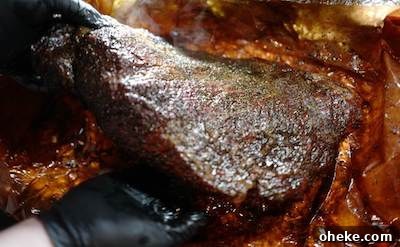
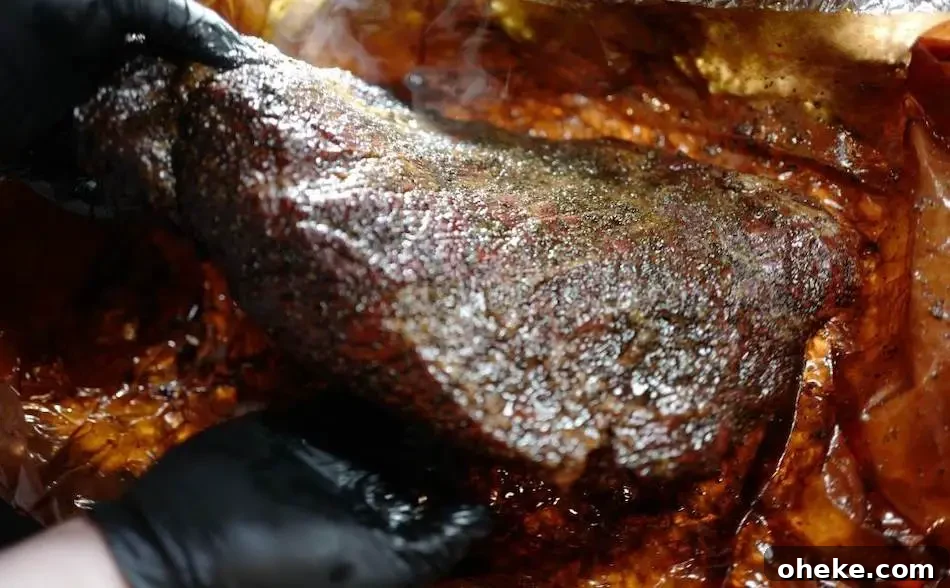
After roughly five to six hours when the bark is dark and firm and the internal temperature is about 150°F, wrap the brisket. Use three layers of heavy-duty aluminum foil for a tight seal, adding a spritz or mop inside before sealing. Many pitmasters prefer unwaxed butcher paper (peach paper) for a better bark and some breathability—both methods work; choose according to your texture and bark preferences.
14. Brisket Done Temp
Finish the brisket at around 203°F for optimal tenderness and juiciness. Use an instant-read thermometer to check several areas—the flat and the point will read differently. As the internal temperature approaches the 190°F range, check every 5–10 minutes to avoid overshooting the target, since temperatures can climb quickly near the end of the cook.
15. Rest
Let the brisket rest 30 minutes to an hour before slicing to allow juices to redistribute. Slicing too soon causes juices to run out and results in dryer meat. Resting is critical for serving a tender, succulent brisket.
16. Hold
If you need to hold the brisket, keep it wrapped, wrap a towel around it, and place it in a dry cooler. Leaving a probe thermometer in the meat helps monitor temperature. Properly wrapped and insulated, a brisket can hold for several hours while staying hot, though you should avoid unsafe long-term holding conditions.
17. Slice
Always slice against the grain for the most tender bites. Identify the grain direction and cut across it. If you won’t consume the whole brisket in one sitting, avoid slicing the entire point and flat; sliced leftovers dry out more quickly than whole pieces.
Recommended Tools For Brisket
Here are practical tools that help produce consistent brisket results: a reliable meat injector for interior flavor and moisture; unwaxed butcher paper for wrapping if you prefer a breathable finish; a dependable dual-probe thermometer to monitor both smoker and meat temperatures; and a fast instant-read thermometer for final checks. Advanced users may benefit from multi-channel temperature controllers for set-and-forget capability on longer cooks.